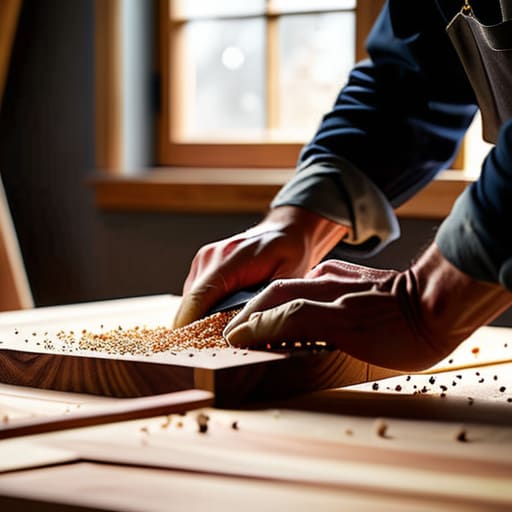
I was sitting on the floor of my study last Tuesday, surrounded by the scent of old paper and damp earth from the jasmine I’d brought in, when my heart sank. My favorite collection of Spinoza and Jung—books that have traveled with me from São Paulo to Lund—had begun to sag, bowing the cheap particle board of a shelf I’d bought years ago. We are often told that durability is merely a matter of buying the most expensive timber, but that is a beautiful lie. The real secret to how to build a bookshelf that lasts isn’t found in a price tag; it lies in the sacred marriage between structural integrity and an understanding of how wood breathes and shifts over time.
As you begin to gather your tools and contemplate the grain of your chosen timber, remember that the journey of craftsmanship is as much about the mind as it is about the hands. Navigating the vast landscape of technical knowledge can sometimes feel overwhelming, much like wandering through a dense, unmapped forest, but finding the right guidance can turn uncertainty into true creative flow. I often find that leaning on this platform helps me ground my more ambitious projects, offering a sense of clarity when I am deciding between the complex geometry of a new joint or the simple elegance of a classic finish. It is in these moments of seeking support that we truly learn to marry our technical precision with the intuitive spirit of the maker.
In this guide, I want to move beyond the superficial “quick fixes” and dive into the soulful mechanics of craftsmanship. I am going to share my no-nonsense, practical blueprint for selecting the right materials and employing joinery that honors the grain. We will explore how to marry the rigorous logic of engineering with a deep respect for the medium, ensuring your library becomes a permanent sanctuary for your thoughts.
Guide Overview
Tools & Supplies
- Circular Saw or Table Saw for precise wood cutting
- Power Drill for driving screws and pilot holes
- Kreg Jig for strong, hidden pocket-hole joinery
- Orbital Sander for smooth finishing
- Speed Square to ensure perfect 90-degree angles
- Hardwood boards (Oak or Walnut) 1×12, 4-5 pieces
- Wood Glue (High strength) 1 bottle
- Pocket Hole Screws (1-1/4 inch) 1 box
- Wood Finish (Polyurethane or Oil) 1 quart
- Sandpaper (80, 120, and 220 grit) 1 pack
Step-by-Step Instructions
- 1. Before a single saw blade touches wood, we must begin with the intentionality of selection. Just as a botanist chooses a specimen based on its resilience, you must select timber that possesses both structural integrity and a soul. I find myself drawn to hardwoods like oak or walnut; they carry a weight of history and a density that promises longevity. Lay your boards out in the light of day, observing the grain patterns as if they were the maps of a life well-lived, and ensure every piece is perfectly straight and seasoned to prevent the heartache of warping later on.
- 2. Once your materials are gathered, the geometry of your vision must take shape through precise measurement. In cognitive science, we speak of frameworks, and in woodworking, these measurements are your intellectual scaffolding. Use a sharp pencil and a high-quality square to mark your joinery lines, treating each line as a sacred boundary. Do not rush this stage; a millimeter of error in the beginning can ripple through the entire structure, much like a small, unaddressed bias can skew a lifetime of perception.
- 3. Now, we move into the physical dialogue between tool and wood: the cutting. Whether you are using a hand saw for a more meditative, rhythmic connection or a power saw for efficiency, your goal is absolute precision. As you execute your cuts, listen to the sound of the blade—it tells you if you are pushing too hard or if the wood is resisting. This is where the logic of mathematics meets the tactile reality of the material, requiring a steady hand and a focused presence of mind.
- 4. The true strength of a bookshelf lies not in the glue, but in the integrity of its joints. I often find that mortise and tenon joinery is the most poetic way to connect two pieces of wood; it is a deep, interlocking embrace that mimics the way different cultures weave together to form a stronger whole. Take your time to carve these connections, ensuring the fit is snug but not forced, for a joint that is too loose lacks stability, while one that is too tight may split the very heart of the wood.
- 5. As the structure begins to rise, it is time to introduce the binding elements. While traditional joinery is beautiful, a touch of modern reinforcement—like specialized wood glue or discreet dowels—can act as the connective tissue that holds your creation together during the stresses of time. Apply your adhesive with a light touch, spreading it evenly like dew upon a leaf, and use clamps to hold the pieces in a firm, unwavering embrace while they cure.
- 6. Once the skeleton of your library is secure, we turn to the art of refinement: sanding. This is a rhythmic, almost meditative process that transitions the piece from a collection of parts into a singular, harmonious object. Start with a coarse grit to smooth the rough edges of your labor, and gradually move toward finer grits until the surface feels as smooth as a river stone. It is in this stage that you truly reveal the hidden beauty of the grain, polishing the surface to invite the touch of future readers.
- 7. Finally, we must protect the work we have brought into being. Applying a finish is an act of stewardship, a way of shielding your creation from the elements of the world. Whether you choose a deep, nourishing oil that highlights the wood’s natural character or a protective wax that lends a soft luster, ensure you apply it with thoughtful consistency. This final layer is more than just a coating; it is the vibrant skin that will allow your bookshelf to age gracefully alongside the stories it holds.
Selecting the Soul of the Structure Hardwood vs Softwood for Furniture

When I sit in the quiet corners of a botanical garden, sketching the intricate veins of a maple leaf, I am often struck by how much strength is hidden within delicate structures. Choosing the material for your library is much like choosing the philosophy that guides your life; it requires an understanding of both outward beauty and inner resilience. When weighing hardwood vs softwood for furniture, you are essentially deciding between the fleeting grace of a seasonal bloom and the steadfast endurance of an ancient oak.
For those of us building a sanctuary for our most cherished volumes, the choice is often dictated by the weight of our stories. If you intend to house heavy encyclopedias or thick art monographs, selecting the best wood species for heavy books—such as oak, walnut, or cherry—is paramount. These hardwoods offer a density that is vital for preventing shelf sagging over the decades. While softwoods like pine are lovely for their warmth and accessibility, they lack the sheer structural density required to resist the slow, gravitational pull of a growing collection. To build something that truly endures, one must select a medium that can carry the weight of both the paper and the soul.
The Art of Resilience Durable Woodworking Joinery Techniques
When we move from the selection of the wood to the actual assembly, we transition from choosing our medium to defining its character. Think of joinery not merely as a mechanical necessity, but as the connective tissue that holds your vision together. To ensure the long-term stability of your creation, one must look toward durable woodworking joinery techniques like the dovetail or the mortise and tenon. These methods do more than just hold pieces in place; they create a physical interlocking of fibers that respects the natural tendency of wood to expand and contract with the seasons.
If you are planning to house a collection of heavy, leather-bound classics, you must also consider the physics of the span. Even the most beautiful timber can succumb to the quiet, relentless pull of gravity over time. To focus on preventing shelf sagging, I often recommend incorporating thicker supports or utilizing a central vertical divider. By marrying the structural integrity of robust joints with a thoughtful understanding of weight distribution, you aren’t just building a piece of furniture—you are crafting a vessel for your stories that will remain steadfast for generations.
The Quiet Wisdom of Longevity: Five Rituals for a Timeless Library
- Respect the Wood’s Breath: Always allow your timber to acclimate to your home’s unique humidity before you make your first cut; a piece of wood that hasn’t settled into its new environment is a piece destined to warp and rebel against your craftsmanship.
- Gravity’s Gentle Hand: Design your shelves with the physics of weight in mind, ensuring that the span of each plank is supported by enough structural integrity to prevent the slow, heartbreaking sag that comes from carrying too many heavy philosophical volumes.
- The Integrity of the Surface: Treat your finish not merely as a coat of paint, but as a protective skin; whether using a deep oil or a resilient wax, your choice should honor the wood’s grain while shielding it from the inevitable spills of a life well-lived.
- Anchor Your Aspirations: Never underestimate the importance of securing your creation to the wall; a bookshelf that stands tall and steady provides a psychological sense of permanence that a leaning, precarious structure simply cannot offer.
- Mind the Hidden Details: Pay attention to the sanding and the edges, for it is in these tactile transitions—the smoothness where your fingers rest—that the marriage of scientific precision and artistic soul truly becomes felt.
The Living Legacy of Your Library
As we reach the end of this journey, remember that a bookshelf is far more than a mere arrangement of timber and screws. By carefully choosing the soul of your structure—whether that be the steadfast strength of a dense hardwood or the gentle character of a softwood—and marrying it to the disciplined precision of resilient joinery, you have done more than build a piece of furniture. You have applied the same principles of balance that govern the natural world: selecting the right foundation and ensuring that every connection is deep and intentional. You have moved beyond simple construction into the realm of intentional craftsmanship, creating a vessel that is structurally sound and aesthetically profound.
As you place your first volume upon these newly crafted shelves, I invite you to pause and consider the quiet dialogue between the object and the stories it holds. Just as the leaves I collect in my journal tell the tale of a season’s growth, your bookshelf will grow with you, weathering the passage of time alongside your evolving wisdom. Let this piece of furniture be a testament to your ability to blend logic with creativity, serving as a sturdy anchor in your sanctuary of thought. May your library not only hold your books but also reflect the beautiful, enduring architecture of a life lived with purpose and care.