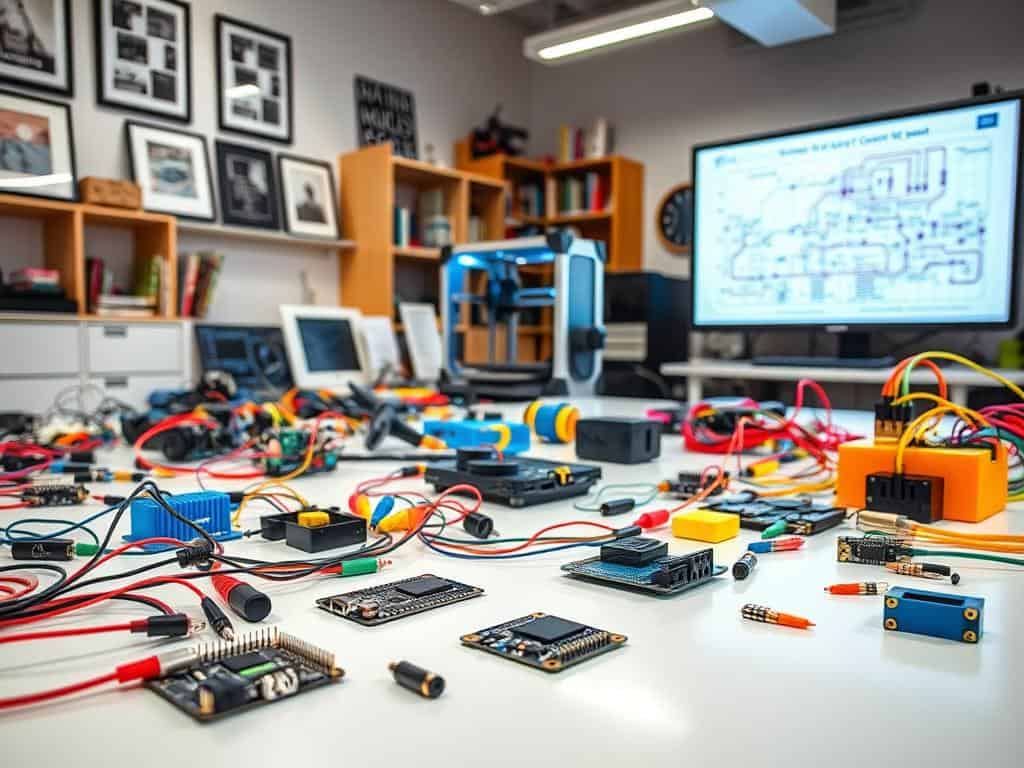
Did you know over 70% of smart home users want to make their own gadgets? The DIY smart home market is booming. People love making devices that fit their unique needs.
Not only can you make your home smarter, but you can also make tech that fits your life perfectly. This is a great way to add innovation to your home.
Building a DIY smart thermostat can cost less than $5. This is much cheaper than buying one for over $100. You can use affordable tools like Arduino and Raspberry Pi for projects. These projects can range from smart light bulbs to advanced home security systems.
This article will show you how to start with DIY smart tech. We’ll also look at some cool projects to bring your ideas to life.
Key Takeaways
- The DIY smart home market is growing rapidly.
- More than 70% of smart home users want to build their own gadgets.
- Creating a DIY smart thermostat can cost under $5.
- Raspberry Pi projects can significantly reduce energy consumption.
- Security systems make up 30% of smart home device usage.
Understanding the Basics of DIY Smart Tech
Exploring DIY Smart Tech lets me make gadgets that fit my life perfectly. It’s about making smart devices for better home control and ease. With more people wanting smart homes, about 70% of homeowners plan to get them in the next five years.
What is DIY Smart Tech?
DIY Smart Tech means making smart devices that fit right into my home. I use things like microcontrollers and sensors to make them work. As the smart home market grows to $174 billion by 2025, my projects help and let me make tech that’s just right for me.
Benefits of Creating Your Own Smart Devices
Doing DIY projects has many perks, like saving money and making things just how I want them. For example, smart lights can save up to 30% energy. Plus, smart devices can save 20 minutes a day, making life easier.
Essential Components for DIY Smart Tech Projects
To start DIY Smart Tech, I need to know the key parts. I use tools like Arduino or Raspberry Pi, sensors, and Wi-Fi or Bluetooth. Knowing these helps me make gadgets that work well and fit my home perfectly.
Top DIY Smart Tech Projects You Can Create
DIY Smart Tech projects can make life better in many ways. They let you get your hands dirty and see the results of your work. Here are some cool ideas to make your home smarter with Arduino and Raspberry Pi.
Arduino Automatic Smart Plant Watering System
This Arduino project helps keep your plants watered right. It uses sensors and coding to water plants automatically. This means your plants stay healthy even when you’re not around.
Raspberry Pi as a Smart Home Hub
Using a Raspberry Pi as a smart home hub is a great idea. It connects all your smart devices in one place. This makes managing your home easier and more convenient.
Creating Your Own Smart Thermostat
Building a smart thermostat is easy and can save you money. It starts at just $5. This lets you control your home’s temperature and save on energy bills.
DIY Smart Pet Feeder
A DIY smart pet feeder is a big help for pet owners. It costs about $30 to make, which is much cheaper than buying one. It lets you feed your pets on time and control their food portions from anywhere.
Building a Smart Security System with Raspberry Pi
Creating a smart security system with a Raspberry Pi is affordable. It costs under $50. This system has features that are as good as expensive ones. It keeps your home safe and shows off your tech skills.
Conclusion
Starting a DIY smart tech project opens up a world of possibilities for your home. It shows how you can save money and control your devices just the way you like. Homeowners can cut costs by 20% to 50% compared to hiring pros.
This guide has shown us fun projects that use creativity and solve common problems. DIY projects can take 10 to 30 hours, but the feeling of having a home that’s yours is priceless. Yet, about 60% of DIY projects run into integration issues, so planning is key.
The DIY smart tech movement is about making my home more convenient and comfortable. It’s about using technology to create solutions that fit my life. Whether I do it myself or get help, the goal is the same: a smart home that’s a true reflection of me.
