
Did you know the cost of solar electricity has dropped by nearly 90% from 2010? This huge drop has made solar energy about one-third cheaper than fossil fuels. We’re on the edge of a sustainable energy future, thanks to tech breakthroughs. The shift to solar is key in fighting climate change and gaining energy freedom.
In this article, we’ll dive into the latest solar tech innovations. These advancements are making solar energy more efficient and sustainable. From new thin-film perovskite materials to printable solar options, the progress is exciting. We’ll look at how these technologies can help cut global carbon emissions.
Key Takeaways
- Solar energy costs have decreased nearly 90% from 2010.
- New thin-film perovskite materials reach energy efficiency levels above 27%.
- Solar electricity is now significantly cheaper than fossil fuels.
- Investment in renewable energy is set to double that in fossil fuels by 2024.
- The European Union met 50% of its power needs with renewable energy in early 2024.
- Floating solar could greatly benefit energy generation in Africa.
Innovations in Solar Energy Technology
The world of solar energy is seeing big changes. These changes make solar energy more efficient and open up new possibilities. Two key areas are thin-film perovskite materials and printable solar cells.
The Development of Thin-Film Perovskite Materials
Thin-film perovskite technology is a big step forward. It makes solar panels more efficient, reaching over 27% efficiency. This is as good as traditional silicon panels.
This material is very thin, less than one micron. It could get even better, reaching up to 45% efficiency. It’s also flexible, making it easy to use on different surfaces.
Companies like Oxford PV are already making these cells on a large scale in Europe. This could change how we use solar energy.
Printable and Paintable Solar Options
Printable solar cells are changing how we think about solar energy. Researchers at City University of Hong Kong have made printable solar materials that work well, reaching 26% efficiency. This is like printing newspapers.
This technology could be used to make solar coatings for buildings and cars. It could make solar energy more accessible to everyone. This could lead to a big shift towards sustainable energy.
Solar Energy Efficiency and Sustainability
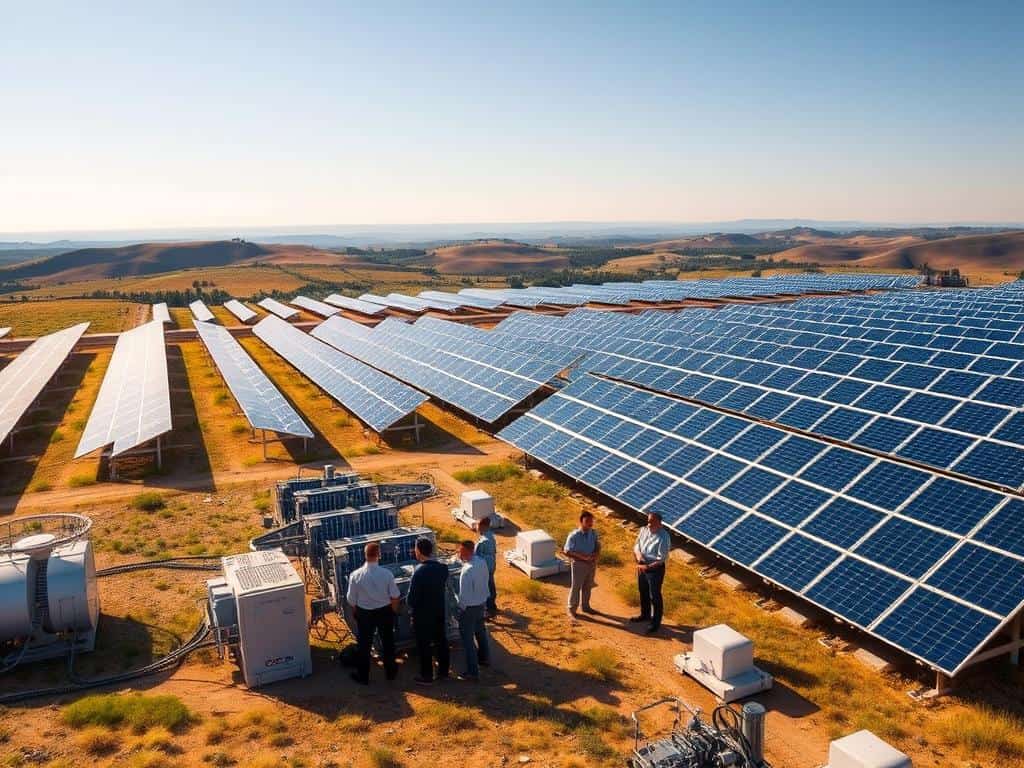
Solar energy has made big strides, becoming a strong contender against old energy methods. Most solar panels today can turn 15% to 18% of sunlight into electricity. The best ones can even reach up to 22%. This progress cuts costs and highlights the need to compare solar power with fossil fuels.
As solar energy costs fall, more people can use it. This makes it a key player in sustainable power.
Comparative Efficiency with Traditional Methods
New breakthroughs show solar energy can hold its own against fossil fuels. Traditional energy often harms the environment more. But, leading solar companies are focusing on being green.
Some panels are made from recycled materials, reducing waste. This change in how they’re made shows a big step towards being eco-friendly. Companies like Freyr Energy are making solar energy more appealing by being both affordable and sustainable.
The Impact of Solar Energy on Global Emissions
Switching to solar power can greatly help cut down global emissions. The EU aims to get half its power from renewables, which is a big step against climate change. A solar plant in China will stop millions of tons of CO2 from being released every year.
Solar energy is also versatile. It can power cars and help make hydrogen. This shows its role in making our planet greener and reducing our need for dirty fossil fuels.
Conclusion
Looking at the big steps in solar tech, I’m hopeful for solar energy’s future. New materials like thin-film perovskites and printable solar panels are big wins. They help make solar power more efficient and popular.
Solar power is leading the way to a greener world. In 2023, it made up over three-quarters of new renewable energy. This shows solar’s key role in our shift to clean energy.
The rise in solar energy is huge, with a 270 TWh jump in 2022. It’s key in cutting down global emissions. Moving away from fossil fuels, which make up 99% of Equinor’s energy, is essential. Solar energy helps us be energy-independent and cut down on carbon.
Supportive policies, like tax credits and subsidies, are key. They help more people and businesses use solar power. This boosts investment and adoption.
More research and development are needed to reach solar energy’s full promise. We need to make solar panels better and cheaper. This will help solve problems like storing energy. With hard work, solar will be a big part of our green future.
