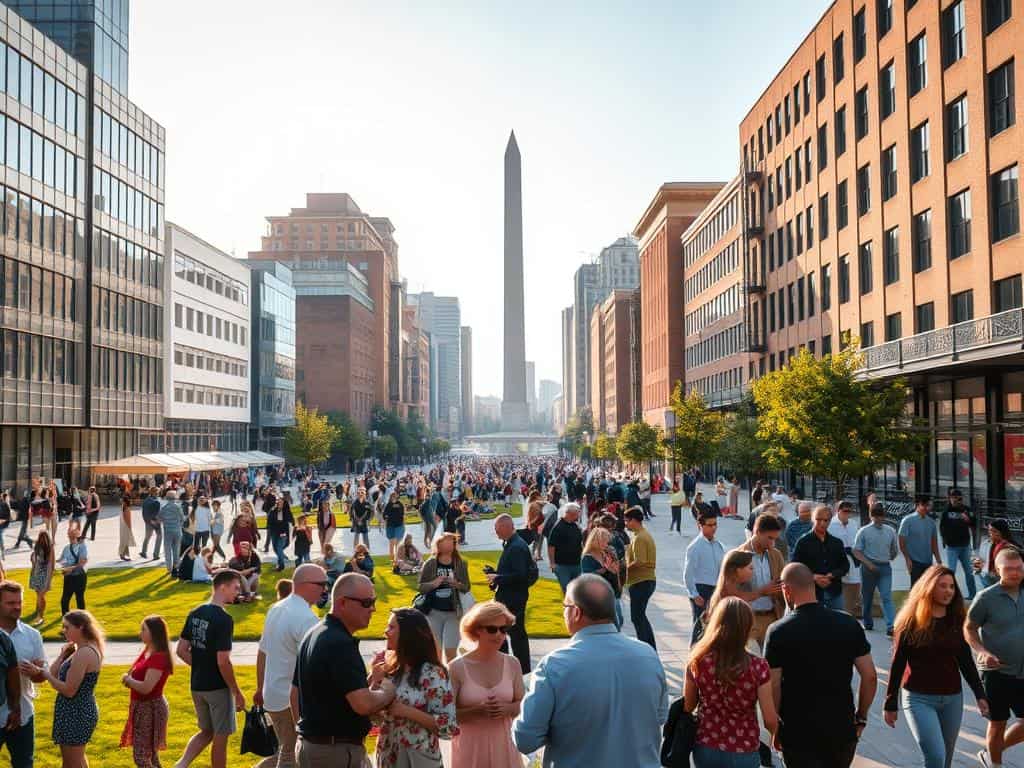
Did you know about 25% of city folks felt lonely during the COVID-19 pandemic? This fact shows how important public spaces are for bringing people together. They’re not just places; they’re key spots for people to meet and share cultures. This helps everyone feel part of a community, as Émile Durkheim said, keeping communities strong and happy.
After recent global issues, we see how vital these areas are. Cities with lots of public spaces help people recover and rebuild. They’re key to making cities better and healthier for everyone.
Key Takeaways
- Public spaces enhance social cohesion, fostering a sense of community among residents.
- COVID-19 has highlighted the necessity for accessible public spaces in maintaining social interaction.
- Research links proximity to green spaces with improved psychological well-being and community engagement.
- Public open spaces are essential for promoting positive social behavior within urban environments.
- Studies show that urban parks contribute significantly to combating feelings of loneliness and social isolation.
- Social cohesion in neighborhoods supports better health outcomes across various demographic groups.
- Well-designed public spaces can reduce stress levels and enhance overall quality of life.
Understanding the Role of Public Spaces in Social Cohesion
Public spaces are key to building strong communities. They are places where people from all walks of life come together. These areas are open to everyone, making them perfect for socializing.
There are different types of public spaces, each with its own purpose. Knowing what makes a space public helps us see how it brings people together. It shows how these areas help build connections between different groups.
The Definition of Public Spaces
Public spaces are essential for community bonding. They are where people meet, talk, and form friendships. These spots, known as third places, are different from home and work.
They offer a relaxed setting for socializing. Parks, plazas, and other areas are examples. These places add to the city’s life and help people feel connected.
Historical Context and Evolution of Public Spaces
Public spaces have changed over time, reflecting society’s values and needs. Old town squares and parks were once the heart of community life. Now, cities focus on creating spaces that welcome everyone.
Urban design experts have shown how these areas have evolved. They’ve become places that serve many purposes, helping to bring communities together.
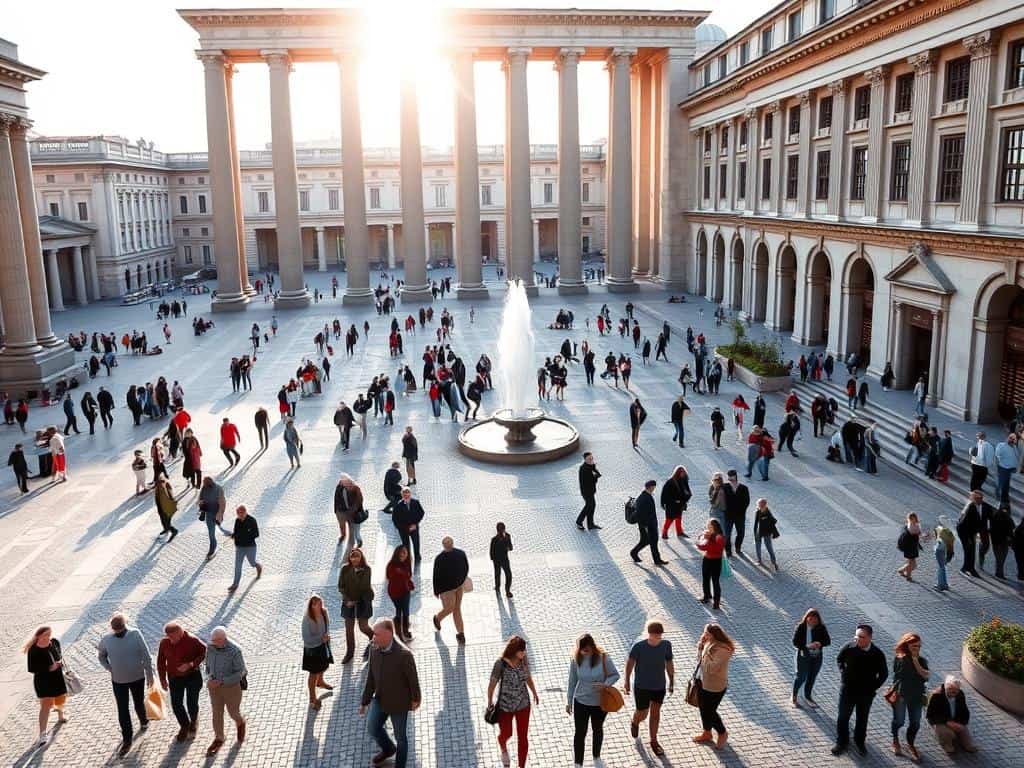
Public Spaces and Urban Planning: Shaping Community Interaction
Public spaces and urban planning are closely linked. They show how well-designed areas can boost community interaction. Good public spaces encourage people to come together, making places lively and safe. It’s key to follow design principles that meet everyone’s needs in cities.
Design Principles that Enhance Social Behavior
In urban planning, using design principles like accessibility and beauty is vital. For example, making paths easy to walk and adding comfy seats can help people meet. Green spaces are also important, as they improve health and bring people together.
These principles should make sure everyone can use the spaces. This means making sure they are welcoming to all.
Case Studies: Effective Public Space Designs Promoting Socialization
Looking at case studies shows how design affects socializing. The Metrocable in Medellín, Colombia, made it easier for people to get around. This led to fewer crimes in poor areas, showing how planning can change communities.
In Santiago, Chile, making Las Condes better brought more people and less crime. The Warwick Junction Market in Durban was also improved, turning it into a lively place. These examples show how good planning can make communities stronger.
Conclusion
Public spaces are key for social interactions and community wellbeing. They are more than just places; they spark cultural exchange and social bonds. They also encourage active citizenship.
Research shows that well-designed public spaces boost community engagement by up to 30%. They also reduce stress by 15% by providing access to nature. This makes cities more resilient.
Well-kept public areas also bring economic benefits. Properties near lively public spaces can see a 20% value increase. Local businesses can see a 10-20% revenue boost from more foot traffic.
This shows that inclusive public spaces greatly improve our cities. They make life better for everyone living there.
I believe urban planners and policymakers should focus on public spaces. By making them accessible and safe for all, we can keep them as community centers. This will help our cities grow stronger and improve everyone’s life.
