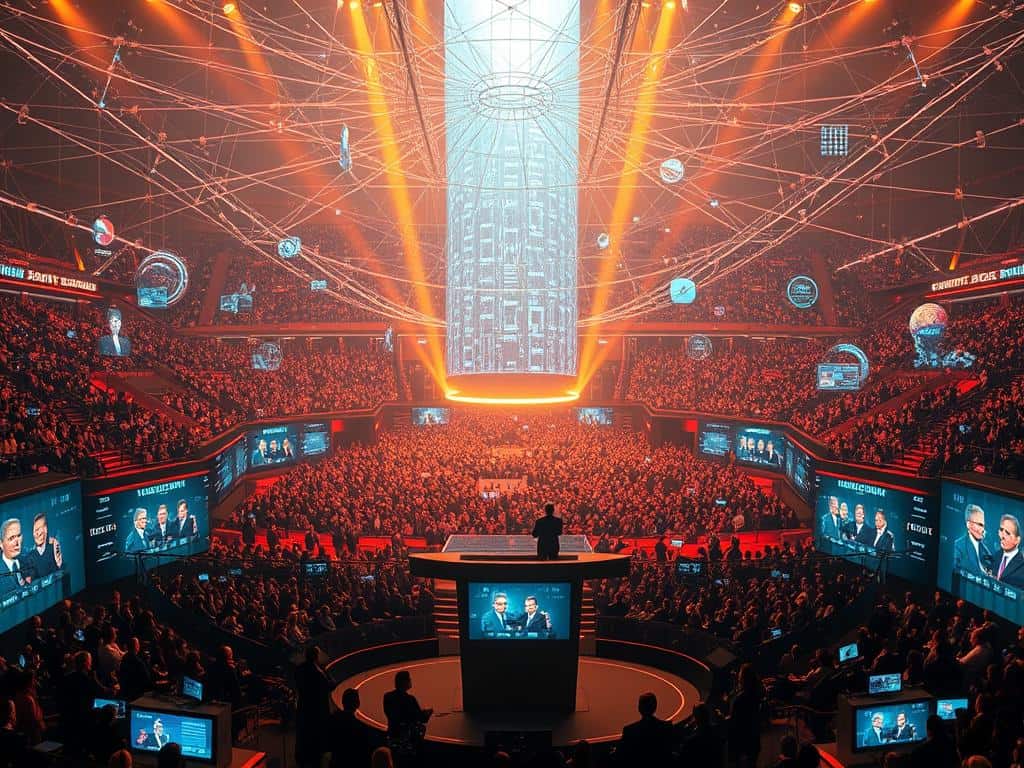
Did you know that about 61% of experts think digital spaces will change a lot by 2035? This change will help the public a lot. Digital Democracy is becoming real and is changing how we govern and get involved in politics.
Over 40 years, digital democracy has grown. It started with electronic democracy, then virtual democracy, and now web 2.0/network democracy. Each step shows how technology is making politics more open and people more involved.
The first big step was deliberative polling in 1988. It used technology to get more people involved in democracy. The early 1990s brought the “global village,” making democracy global. Now, the web 2.0 lets people create content, not just read it.
Technology in politics is promising but also brings big challenges. Misinformation and changes to old political ways are big issues. As we move forward, understanding these challenges will be key to a better future in politics.
Key Takeaways
- The evolution of digital democracy comprises three historical phases.
- Deliberative polling and the “global village” have played critical roles in boosting democratic participation.
- Web 2.0 ushered in an era of user-generated content.
- Digital democracy enhances transparency but also tests traditional political systems.
- Advances in technology will likely redefine democratic practices by 2035.
Understanding Digital Democracy
Digital democracy mixes technology with old democratic ways. It changes how people talk to their government and make decisions. This new way of doing things makes politics more open and fair.
The Concept of Digital Democracy
Digital democracy uses tech to get more people involved in politics. It lets people share their opinions and vote in new ways. This helps connect citizens with their government, making politics more open and powerful.
Historical Context and Evolution
The idea of digital democracy started with the internet’s role in politics. From 2014 to 2021, more studies were done on this topic. This shows how tech and politics are becoming more connected.
This change has made politics more active in places like Denmark, France, and the U.S. It’s a big step forward in how we govern ourselves.
Advantages and Challenges
Digital democracy has many good points, like making it easier for people to get involved. But, there are also problems to solve. For example, keeping elections fair and making sure people are who they say they are.
Looking at these points, it’s clear we need to keep improving our democratic systems. We must find a balance between new tech and old democratic values.
The Impact of Technology on Political Engagement
Technology has changed how we engage in politics. Social media is key, changing how we see and share political news. Many see it as a good thing, making democracy better by letting more people join in. But, there are problems like fake news and mean talk that can hurt democracy.
Social Media’s Role in Modern Politics
In 11 countries, 44% think the internet has made politics better, while 28% think it’s worse. Social media lets regular people be heard more, with 57% saying it helps them. But, many worry about fake news and how politicians might use it to trick people.
AI and its Influence on Democratic Processes
Artificial intelligence could make things more complicated for politics. It could make it easier to get information, but it also risks spreading false news. A big worry is that 72% think technology makes it easier to spread rumors, which could harm democracy.
Public Online Spaces: Challenges Ahead
Online spaces face big challenges that make it hard for people to participate in democracy. A lot of people, 58%, think technology makes us more divided. While 52% believe it helps us see different views, the danger of fake news is real. We need to find ways to keep the good parts of social media while fixing the bad.
Conclusion
Digital democracy is changing politics and how we engage with our communities. Technology is making our interactions with governments and each other different. A G7 statement called for protecting digital spaces, showing the importance of technology that respects human rights.
This is key to fixing issues like unequal access to culture during the pandemic. Those without internet felt left out, making things worse for the most vulnerable.
Different countries show the good and bad sides of digital democracy. Taiwan uses open data to empower citizens, while the UK faces challenges in sharing information. The U.S. Digital Corps and Digital Open Champions could help make government more accessible and trustworthy.
But, we must watch out for the dangers of technology. Analysts warn that democracy could weaken by 2030. It’s important to balance the benefits of digital democracy with ways to hold people accountable.
I think our success in digital democracy will depend on how well we handle these challenges. By promoting fair access and civil discussion, we can create a more inclusive political world.
