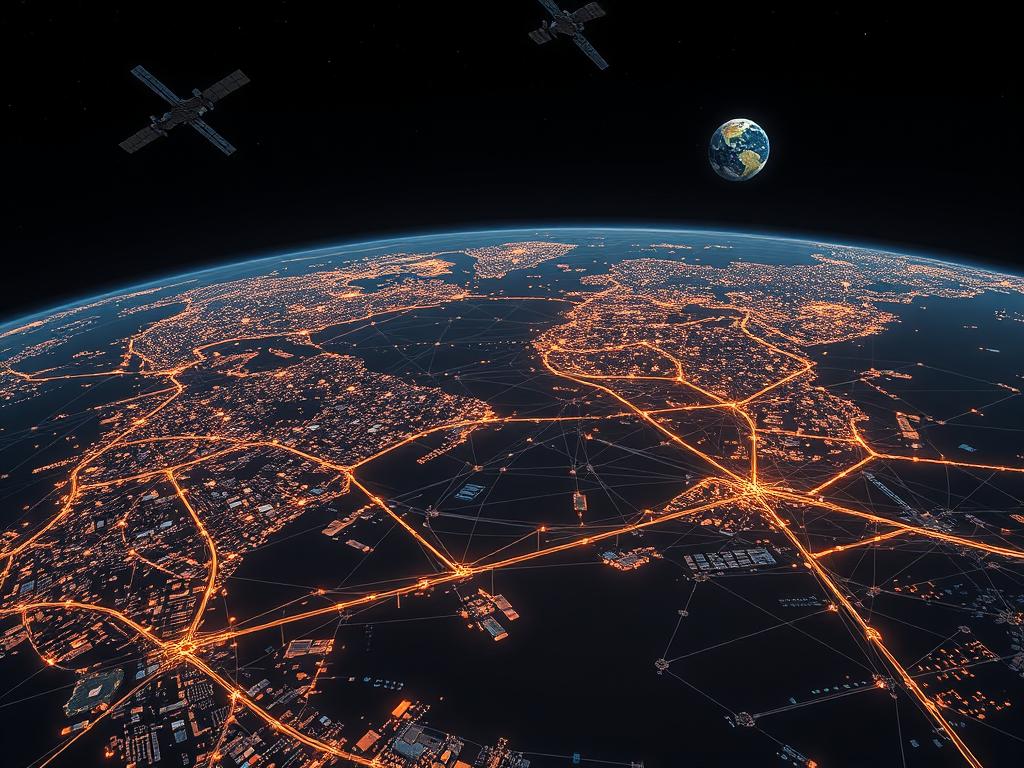
Did you know that during the COVID-19 pandemic, knowledge and service flows grew faster than goods? This shows how our global society is changing. Globalization is making us trade and share ideas, cultures, and resources more than ever before. It’s amazing how our lives are connected by technology, economic practices, and cultural exchange.
Technology has made it easier to communicate and access things worldwide. This has broken down barriers to international work together. The increase in cross-border trade and information exchange is changing how we see globalization. It’s clear that globalization is not fading; it’s just taking on new forms and shaping our world in deep ways.
Key Takeaways
- Globalization is evolving, leading to a greater focus on services and knowledge exchange.
- Advancements in technology play a critical role in boosting global interconnectedness.
- Cultural exchange is becoming more common, shaping lifestyles and views globally.
- Interconnectedness boosts trade and cooperation, driving economic growth.
- The COVID-19 pandemic has shown both challenges and chances for future connections.
Understanding Globalization’s Impact on Connectivity
Globalization has changed how we connect with each other. It has made the world more connected, affecting how countries, businesses, and people work together. This change has come from important events and new technologies, making our world more united and dependent on each other.
The Historical Evolution of Globalization
Globalization started long ago with trade between ancient civilizations. The late 1800s to early 1900s were known as the golden age of globalization. This was a time of great economic unity and shared goals.
New technologies like computers and the internet in the 1980s sped up this connection. These tools improved communication and helped grow the economy worldwide.
Key Factors Driving Global Interconnectedness
Several things have made the world more connected. The internet and cheap flights have made it easier to reach out across the globe. This has changed how we shop and get services online.
For example, Amazon has millions of sellers worldwide, showing how e-commerce has grown. The latest internet technologies, like 4G and 5G, have also improved how we communicate and share information.
Trade and Economic Integration
Trade is key to economic unity. The G20, which includes 80% of the world’s people and 75% of global exports, plays a big role. It also makes up 85% of the world’s GDP.
Companies like McDonald’s and Ford show how important global supply chains are. But, trade also has its challenges, like making it hard for small businesses to compete. The debate over globalization’s impact on economies continues.
Technology’s Role in Connecting the Global Society
In today’s world, technology is key to connecting us all. It has changed how we talk and share with each other. Now, about half of people in developing countries use digital tech, showing its big impact.
The Rise of Communication Technologies
Technology keeps getting better, changing how we talk and work. Fast internet, like 5G, lets us chat and meet online easily. This means we can work together, no matter where we are.
Apps like Slack and WhatsApp are also big hits. They let us talk and share things fast. During the COVID-19 pandemic, online activity went up a lot. This shows how important tech is for staying in touch.
Impact of Social Media on Cultural Exchange
Social media helps us connect across the world. Almost half of everyone uses it to talk and share. It lets people from different places learn from each other.
In Spain, for example, people value their friends a lot. Social media helps build communities based on common interests. It lets us see different cultures and understand the world better.
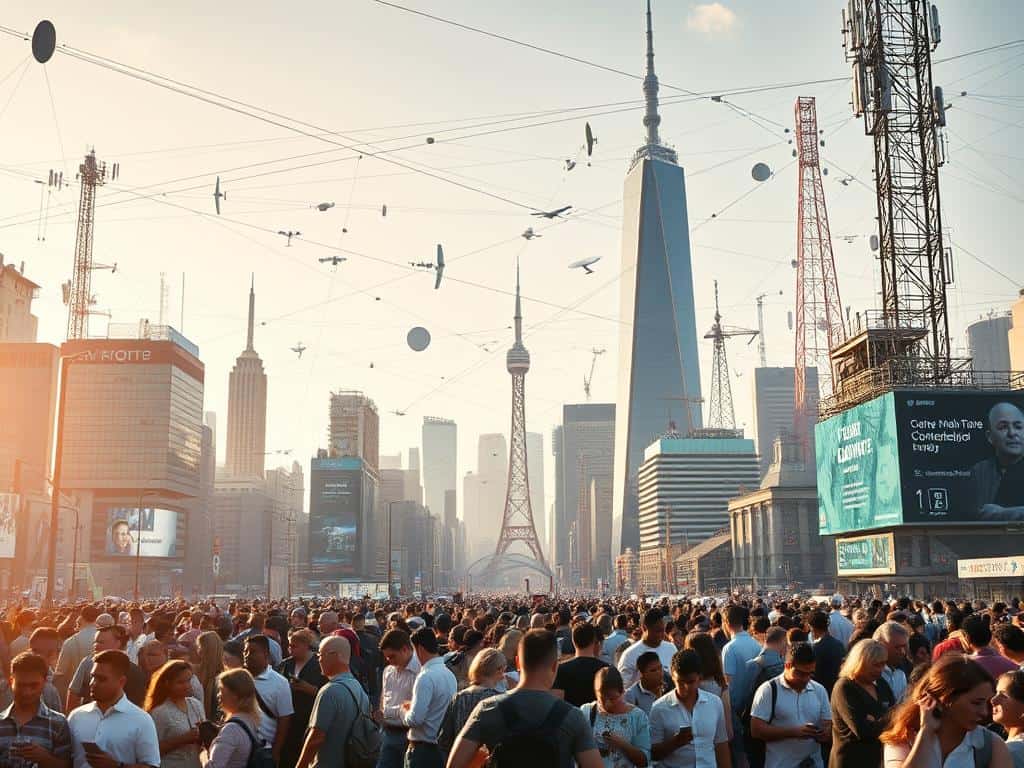
The Global Society: Interdependency and Resource Sharing
In today’s world, we all depend on each other for basic needs. Goods and services flow across the globe, connecting us all. This web of exchange drives innovation and opens up new economic chances.
Global Flows of Goods and Services
Global flows show how connected we are. Regions get many of their needs from other parts of the world. This sharing brings diversity and shows we all rely on each other.
For example, countries work together to ensure everyone has enough food. They trade food and technology, helping to avoid shortages.
The Importance of Cross-Border Collaboration
Working together across borders is key to solving today’s problems. The COVID-19 pandemic showed us the importance of global cooperation. It helped us share knowledge and resources.
This teamwork makes us stronger against global threats. It shows how important it is to work together. By doing so, we can find solutions that help everyone.
Challenges Arising from Global Interconnectedness
While being connected has its perks, it also comes with challenges. Misinformation can spread fast, causing confusion. Also, relying on international trade can make us vulnerable to privacy and security issues.
Environmental problems caused by transportation and production add to the complexity. It’s important for us to understand these challenges and find ways to deal with them.
Conclusion
We are moving towards a world where everything is more connected. This is thanks to *globalization* and new *technology*. This change is real and has changed how we talk, trade, and work together.
The rise of new communication tools has opened up new ways for us to share ideas. Cultures are now exchanging values and ideas more than ever before.
But, with these new ways of connecting, we also face challenges. Our world is more dependent on each other, which means we need to work together better. It’s important for us to understand our roles in this global society.
Looking ahead, I believe using *technology* and working together can lead to a better future. By focusing on inclusivity and global conversations, we can overcome challenges and grow together.
