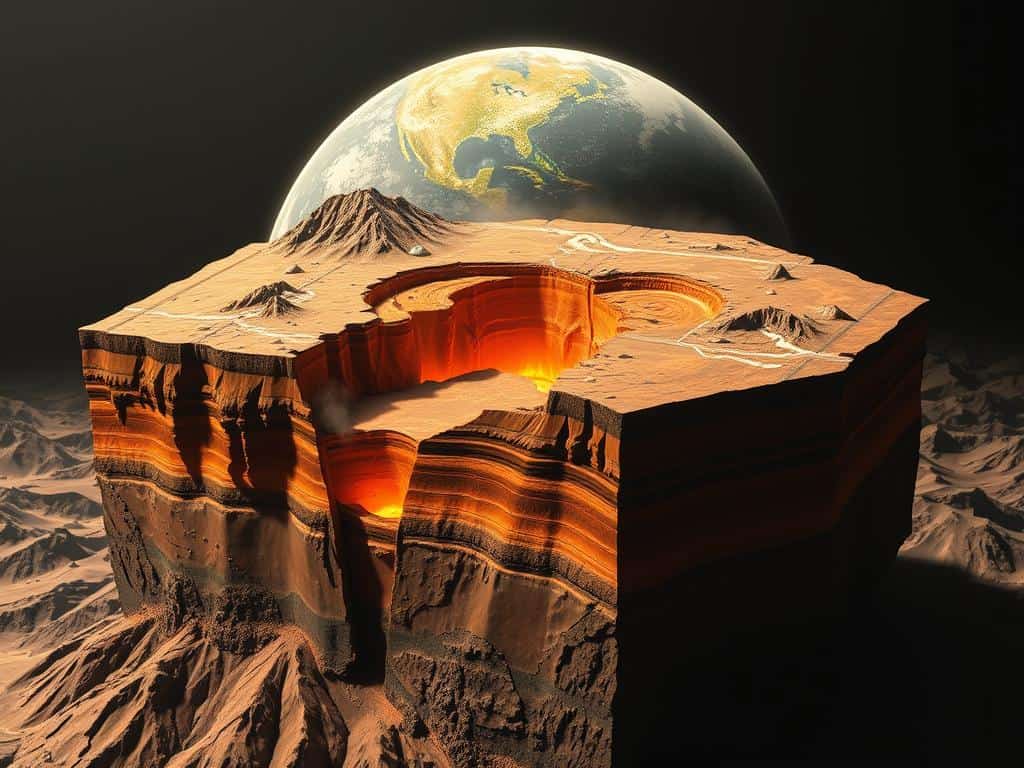
Did you know that about 70% of the Earth’s surface is covered by oceans? Yet, the depths beneath our feet are just as fascinating. Geophysics is a science that explores the Earth’s physical properties and processes. It helps us understand the Earth’s forces, revealing its complex composition and structure.
This field uses physics and seismology to map the Earth’s interiors. It offers insights for both research and practical uses, like managing natural disasters and resources.
As someone involved in earth science, I’ve seen geophysicists’ valuable work. They monitor natural hazards and help explore natural resources and protect the environment. Geophysics is key in our daily lives and future progress. It’s essential for keeping us safe and sustainable on Earth.
Key Takeaways
- Geophysics combines physics and earth science to study the Earth’s structure and processes.
- Understanding Earth’s forces is key for predicting natural disasters like earthquakes and volcanic eruptions.
- Techniques in geophysics aid in exploring natural resources and environmental protection.
- Geophysicists use advanced technology for data analysis and improving natural hazard monitoring.
- Rising salaries and diverse applications make geophysics a growing field.
The Basics of Geophysics
Geophysics helps us understand the Earth’s makeup and layout. It studies the physical aspects of our planet. This field uses many methods to learn about the Earth’s inside, like rocks and minerals.
Understanding Earth’s Composition and Structure
Geophysics basics involve studying the Earth’s depths. These methods can reach tens of meters deep. They help us see what’s under the surface.
Techniques like magnetic and electrical surveys are key. They show us the layers of the Earth. This knowledge is vital for understanding our planet.
These methods are also cheaper than digging. They show how effective geophysics can be.
The Role of Physics in Geophysics
Physics is essential in geophysics. It helps us understand forces like plate tectonics and volcanoes. The physics in surveys helps us see how energy moves through the Earth.
This knowledge helps us predict things like earthquakes. Analyzing data from these surveys is complex. It helps us understand the Earth’s structure and its physical processes.
Techniques and Instruments in Geophysics
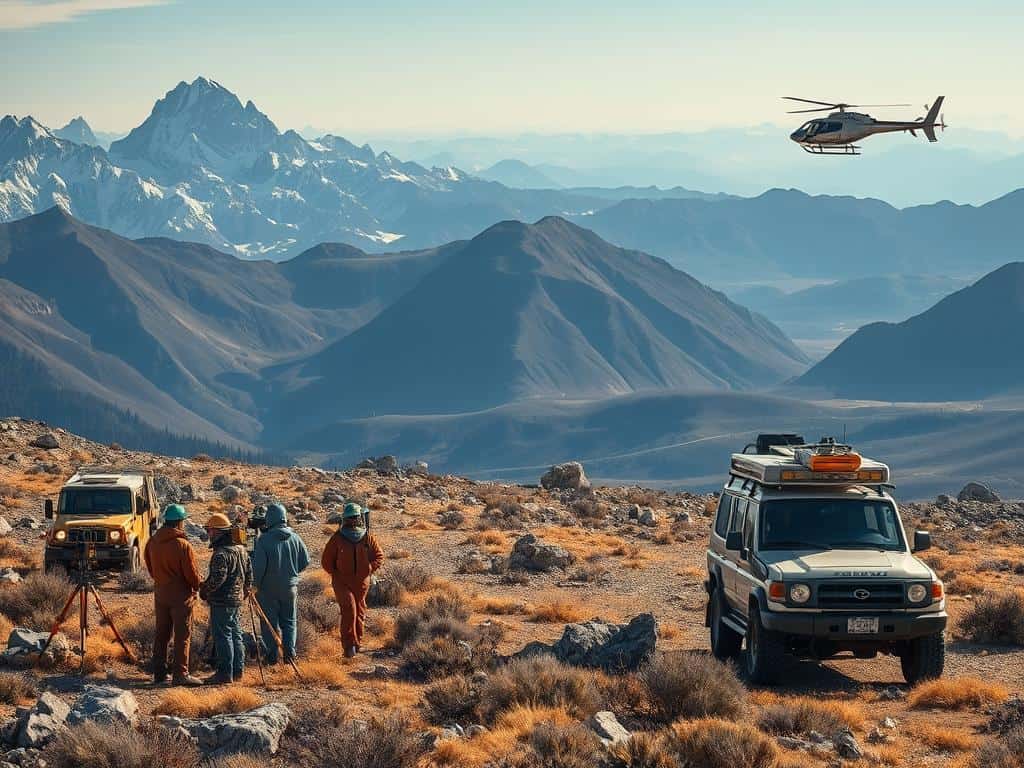
Geophysics uses many techniques and instruments to study the Earth’s subsurface without harming it. Each method helps us understand the Earth’s structures and resources. These tools collect data that guides us in studying the Earth.
Major Geophysical Methods
Seismology is key for studying seismic waves and the Earth’s layers. It helps find faults. Electrical Resistivity Tomography (ERT) uses current to see what’s underground. Ground penetrating radar (GPR) sends pulses to show what’s beneath the surface.
Electromagnetic methods, like Time-Domain Electromagnetics (TDEM) and Frequency-Domain Electromagnetics (FDEM), explore the ground with electrical currents. Magnetometry looks at the Earth’s magnetic field to find buried metal. Gravity methods and self-potential measurements also help us understand the Earth.
Aside on Ground Penetrating Radar
Ground penetrating radar is a key tool in geophysics. It sends radar waves into the ground and reads the signals that come back. This method is great for finding structures, layers, and even hidden objects without drilling.
GPR is used in many fields, from environmental studies to archaeology. It shows how non-invasive methods can provide a lot of information. Using GPR helps geophysicists plan their work carefully, keeping the environment safe.
Applications of Geophysics in Natural Disaster Prediction
Geophysics is key in predicting natural disasters. It uses different methods to study the Earth. This helps us guess when earthquakes and volcanoes might happen. Knowing this helps communities get ready and stay safe.
Identifying Earthquake Risks
Geophysics helps us understand earthquake risks. Earthquakes happen at different depths, affecting how they impact us. Shallow ones might cause tsunamis, while deeper ones shake more intensely but for less time.
Knowing where earthquakes happen is important. This area, called the seismogenic zone, is between 5 km and 50 km deep. It helps us guess how big an earthquake might be.
Volcanic Monitoring and Eruption Prediction
Watching volcanoes is also important in geophysics. Scientists look at gas emissions, ground changes, and seismic signals. These signs help predict eruptions and warn of dangers.
For example, new models help us understand volcanoes better. This knowledge helps communities prepare for eruptions. It’s a big step in keeping people safe from natural disasters.
Conclusion
Geophysics is key to understanding Earth’s systems. It helps us know more about the Earth’s structures. It also gives us important info for dealing with natural disasters.
Tools like GNSS and InSAR are very useful. They help us watch big changes in the Earth and the environment. This helps us get ready for disasters and reduce risks.
Geophysics is more important than ever because of climate change. It helps us understand big events like earthquakes and sea level rise. For example, it helps us track how sea levels are going up, about 3.3 millimeters a year.
This info helps local leaders make better choices. It helps make communities stronger and more ready for disasters.
Using different geophysical methods helps us deal with natural hazards. It also helps us use resources better in farming and taking care of the environment. As challenges grow, geophysics will keep helping us understand our planet. It will help us respond to natural disasters better.
