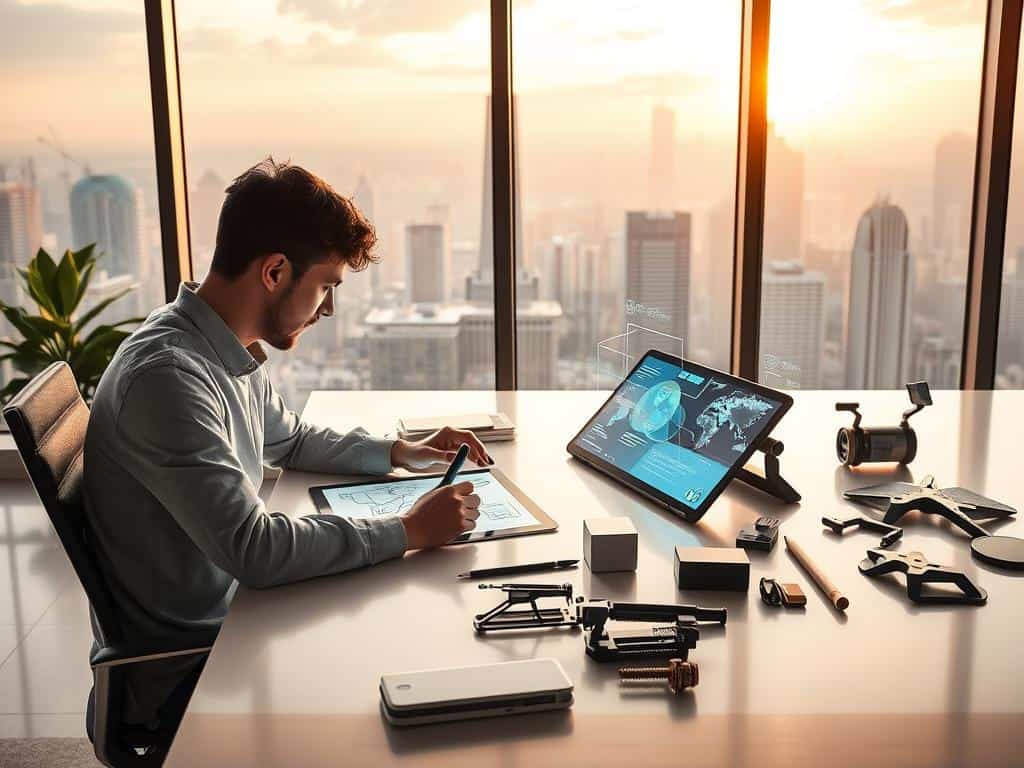
Less than 20% of people in a LinkedIn Poll think AI harms creatives. This shows more people are okay with AI in creative fields. AI and Creativity are changing how we make art. Instead of replacing us, AI helps us work better and think more creatively.
AI makes it easier for everyone to create high-quality art, not just trained artists. It might change some jobs, but it also makes our work better and more fun. For example, AI helps with boring tasks like color correction and video editing. It also helps us come up with new ideas and find trends.
AI and automation are changing the art world for the better. They make our work more efficient and creative.
Key Takeaways
- AI is transforming the creative industries by automating repetitive tasks and improving efficiency.
- The acceptance of AI among creatives is rising, with many recognizing its benefits.
- AI tools are democratizing access to creative capabilities for individuals lacking formal training.
- Job displacement concerns may intensify, particularily for entry-level roles.
- AI advancements aid in identifying trends and generating innovative ideas.
- Embracing AI technologies could lead to greater productivity and artistic exploration.
The Impact of AI on Creative Industries
As I look into the changing world of creative industries, AI’s role is clear. AI tools are changing how artists work, opening up new ways to express creativity. By looking back at past changes, we see how AI is affecting the arts today.
Historical Context of Technological Disruptions
Technology has always changed creative fields. The printing press made books more accessible in the 15th century. Now, AI is changing how we create, but it won’t replace the human touch in art.
Examples of AI Tools in Creativity
AI tools are making a big difference in many creative areas. For example, DALL·E can create images from text, helping artists explore new ideas. In music, AI can create melodies from existing songs, giving musicians new ideas.
In movies, AI helps with scripts and character development. This opens up new ways to tell stories. AI also helps in graphic design, making it easier for designers to work on trends and user preferences.
AI and Creativity: Empowering Individual Artists
Artificial intelligence is becoming a key partner for artists, opening new doors for creativity. It helps artists work together in ways that were not possible before. This partnership brings fresh ideas and makes creative tools available to more people, not just big studios.
AI as a Collaborative Partner
AI is a great partner for artists, not a replacement for their creativity. For example, OpenAI’s GPT-4 helps writers by suggesting new ideas to get past creative blocks. This lets artists explore new paths.
In filmmaking, AI makes special effects easier for indie creators to use. This shows how working together can make art better.
Democratization of Creative Tools
Now, more people can create thanks to AI. Tools like Canva and Adobe Spark use AI to make it easier for anyone to make great visuals. This means more people can share their ideas.
Events like Ken Goldberg’s “Telegarden” show how people connect with technology through art. The success of AI-generated art, like Edmond de Belamy, shows growing interest in this new kind of creativity.
Streamlining Creative Processes with Automation
Automation tools are changing the game in the arts and design. They make repetitive tasks easier, freeing up time for creativity. This shift can change how we make and enjoy different forms of art.
Time-Saving Automation Tools
AI graphic design tools have changed how we work. Tasks like resizing images or changing colors take minutes now. This means more time for creativity.
Tools like Adobe Photoshop’s Content-Aware Fill and Canvas Magic Resize make things faster. They let designers try new things without getting stuck on details.
Optimizing Workflows for Creatives
AI helps teams work better than ever. It uses data to improve web design. Tools like Grid.io and Adobe’s Sensei make layouts better by analyzing text.
Automation ensures designs look good on all devices. It also helps designers work together better. This leads to new ideas and trends in design.
Conclusion
The mix of AI and creativity is changing the creative world. It shows a future where tech and art go hand in hand. Looking at AI’s role, we see both good and bad sides. But the good, like new tools and better teamwork, outweighs the bad.
AI can make music fast and help tell stories, boosting creativity by 10% to 11%. This change in the creative field reminds us of past tech changes. People doubted digital photos and Photoshop at first. But now, they’re key to art.
AI could make creativity more open and innovative. It could let more people share their art, making the world of art more diverse. As we look ahead, it’s key for the creative world to welcome and use AI wisely. This way, we can keep art alive and exciting, blending human creativity with AI’s growth.
