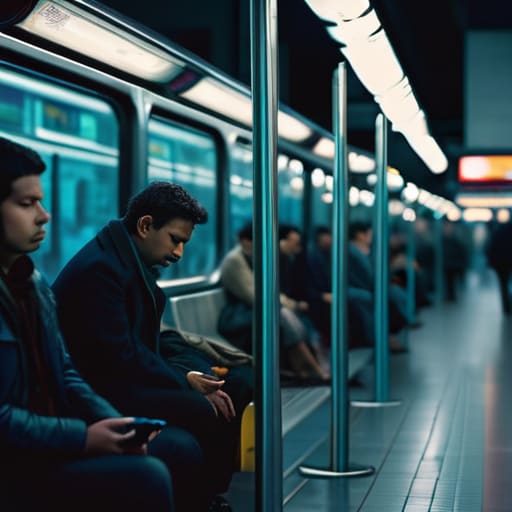
I was sitting in a quiet corner of the botanical gardens yesterday, sketching the intricate, serrated edges of a fern, when I realized how much the texture of human interaction has frayed. I watched a young couple sitting on a nearby bench, their bodies physically close but their spirits seemingly miles apart, tethered to the glowing rectangles in their palms. It made me wonder: as we navigate this strange, digital-first era, have we actually lost the art of the spontaneous encounter, or have we simply forgotten how to read the subtle, unwritten cues of a face-to-face conversation? We often talk about technology as the culprit, but I believe the truth of what changed about meeting people this decade is far more complex, rooted in a fundamental shift in our collective cognitive rhythm and how we perceive social safety.
I’m not here to offer you a collection of hollow “hacks” or to tell you to simply “put your phone down.” Instead, I want to bridge the gap between the science of how our brains process connection and the beautiful, messy art of being present. I promise to share a no-nonsense exploration of these shifting social landscapes, blending my background in cognitive science with the lived wisdom of a traveler, to help you rediscover how to forge genuine, soulful connections in a world that feels increasingly fragmented.
The Decline of Third Places and Our Vanishing Commons
As I sat in a quiet corner of a local conservatory yesterday, sketching the intricate veins of a Monstera leaf, I found myself reflecting on the physical spaces that once anchored our social lives. There is a profound, quiet ache in observing the decline of third places—those vital, neutral grounds like neighborhood cafes, community halls, and public squares that exist outside the pressures of home and work. These were the ecosystems where spontaneous encounters bloomed like wildflowers, requiring nothing more than a shared glance or a brief comment on the weather. Without these communal soil beds, our social interactions have become increasingly scheduled, curated, and, frankly, sterile.
We are witnessing a shift from organic gathering to digital compartmentalization. As our physical commons shrink, we find ourselves retreating into specialized silos, often replacing the serendipity of a bustling town square with the hyper-targeted algorithms of our devices. This loss of “unstructured togetherness” makes the prospect of meeting someone new feel less like a natural occurrence and more like a calculated task. When we lose the places that allow us to simply be alongside others, we lose the very fabric that binds a community together.
The Impact of Dating Apps on Social Interaction
While I was sketching a particularly intricate fern in the garden yesterday, I found myself thinking about how much of our “searching” has moved from the physical world into the palm of our hands. The impact of dating apps on social interaction is something I feel deeply; we have traded the serendipity of a shared glance in a bookstore for the calculated efficiency of a swipe. There is a certain clinical coldness to it—a way of turning the beautiful, messy complexity of a human soul into a curated gallery of highlights. We are no longer discovering people; we are filtering them.
This digital mediation has fundamentally altered our social muscles. When we rely on algorithms to curate our intimacy, we lose the vital, spontaneous practice of navigating the “unplanned encounter.” I often worry that in our quest for the perfect match, we are inadvertently fueling a sense of post-pandemic social anxiety, where the unpredictability of a real-life conversation feels more daunting than a text bubble. We have become experts at digital presentation, yet we find ourselves increasingly unpracticed in the delicate, unscripted dance of genuine human presence.
Cultivating Your Own Social Ecosystem: Five Ways to Reclaim Connection
- Seek out “Micro-Third Places” in your daily rhythm. If the grand community halls have faded, look to the smaller, more intimate corners—the local plant nursery, the quiet corner of a neighborhood cafe, or a community garden. These small pockets of shared space allow for the spontaneous, low-stakes interactions that nourish our social souls.
- Practice the Art of Uncurated Presence. In an era of digital perfection, there is a profound beauty in being unpolished. When you step out into the world, try to leave the “digital shield” of your phone in your pocket. Allow yourself to be seen in your natural state, open to the beautiful, messy, and unpredictable rhythms of real-time human encounter.
- Embrace the “Slow Social” Approach. We have become accustomed to the instant gratification of a swipe or a text, but true connection often requires the slow growth of a perennial plant. Give yourself permission to engage in long-form conversations and repeated, gradual encounters. Depth is rarely found in the rapid-fire exchange of data; it is grown in the quiet intervals of shared time.
- Leverage Technology as a Bridge, Not a Destination. Use digital tools as the seeds of connection rather than the soil itself. Let an online interest group or a local community app be the catalyst that leads you to a physical meeting. The goal should always be to move from the screen to the shared sunlight of a real-world experience.
- Curate Intentional Vulnerability. In our hyper-connected yet lonely decade, the bravest thing we can do is offer a genuine piece of ourselves. Whether it’s sharing a thought on a book or admitting a small struggle, vulnerability acts as the sunlight that allows the roots of friendship to take hold in the often-barren soil of modern social life.
Reclaiming the Art of Encounter
As I sit here, looking at the pressed fern I found this morning tucked between the pages of my Spinoza, I am reminded that our social landscape has undergone a profound metamorphosis. We have navigated the erosion of our physical “third places,” the loss of spontaneous communal rhythm, and the digital mediation of our most intimate desires through dating apps. These shifts haven’t just changed where we go; they have fundamentally altered the cognitive architecture of how we perceive the “other.” We have moved from a world of accidental, organic encounters to one of curated, algorithmic selections, often trading the messy beauty of human unpredictability for the sterile comfort of a screen.
Yet, even in this fragmented era, there is a quiet, resilient hope blooming in the cracks of our digital concrete. Just as a plant finds its way toward a sliver of light in a dense forest, we possess an innate, biological drive to connect that no algorithm can fully replicate. I believe our task now is to become intentional architects of intimacy, consciously carving out spaces for the unplanned and the unoptimized. Let us step out of the digital shadows and back into the sunlight of real-world presence, rediscovering the magic that happens when we allow ourselves to be truly, vulnerably seen by another soul.
As we navigate these fragmented digital corridors, I often find myself yearning for the kind of spontaneous, tactile connection that once bloomed so effortlessly in our physical neighborhoods. It can feel quite daunting to reclaim that sense of community on our own, but sometimes, leaning into curated spaces designed for genuine human encounter can act as a vital bridge back to the real world. For those feeling the weight of this modern isolation, exploring local Atlanta meet-ups can be a wonderful way to rekindle that lost spark of face-to-face intimacy, allowing us to step out from behind our screens and back into the warmth of shared presence.