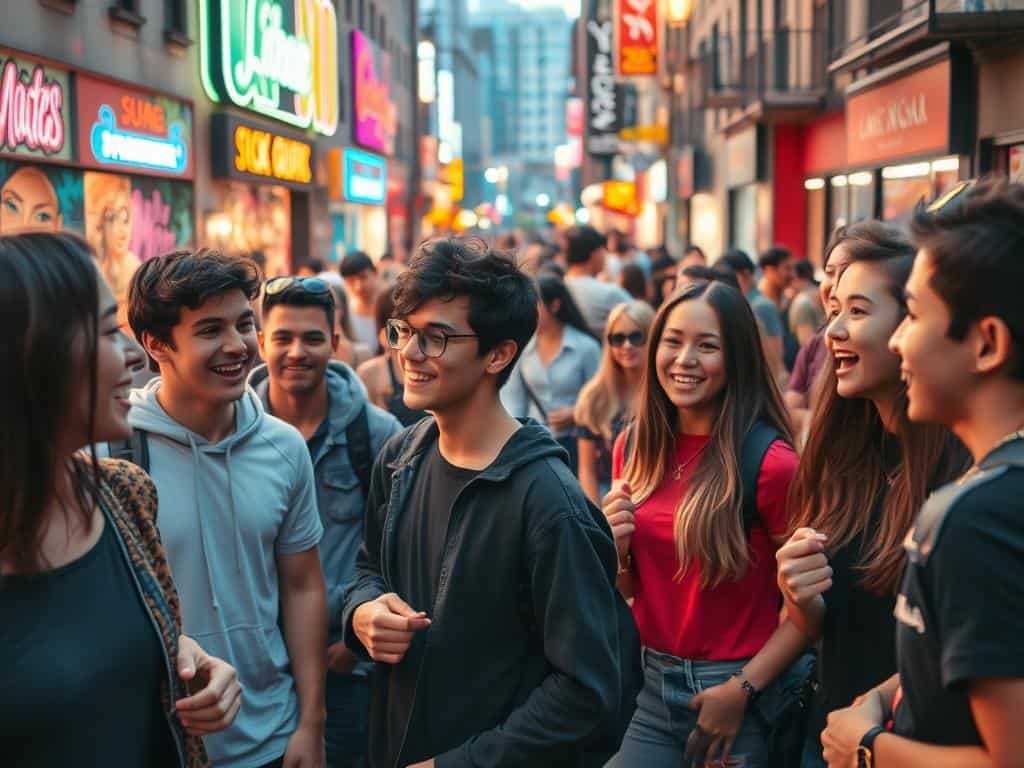
Did you know over 70% of American high school students have tried alcohol before graduation? This shows how much youth culture is shaped by their surroundings and society. The rise of technology and social media has changed how young people live and interact.
Today’s youth don’t rebel like past generations did. They don’t form their own subcultures like punks or goths. Instead, they spend a lot of time on Instagram and TikTok. Here, they often follow trends and seek approval online.
Young people today are looking up to traditional authority figures more than before. They face a mix of hopes and worries. They’re not just passive; they’re shaping culture, pushing for causes like saving the environment and fighting for justice online.
As we dive into this changing world, I invite you to explore youth culture with me. Let’s uncover what makes it unique in today’s society.
Key Takeaways
- Youth culture is heavily influenced by technology and social media.
- The perception of authority has shifted, with increased support for traditional figures.
- Today’s youth engage in eco-friendly practices and advocate for sustainability.
- Social media serves as a platform for both self-expression and social pressure.
- Individuality is often overshadowed by trends within online communities.
- The dynamics of rebellion have transformed, reflecting new forms of social control.
Technology’s Impact on Youth Culture
Today’s tech-savvy generation is deeply influenced by technology. Smartphones are key for communication, entertainment, and learning. They change how young people interact with the world.
This smartphone and tablet use is more than a trend. It shows how digital life is part of our daily routines.
The Role of Smartphones and Tablets
Smartphones are not just for talking and texting. They’re also key for learning. Young people use online platforms for school, accessing lots of new resources.
This change brings multimedia learning. It meets different learning styles, making learning fun and creative. Private spaces become media centers, letting teens dive into content without adult watch.
Online Education and Learning Tools
Online tools meet the needs of digital natives. They offer interactive learning, teamwork, and skill-building. This shift lets teens learn at their own speed and style.
It shows our ability to learn and create. We’re not just consumers; we’re creators too.
Gaming Trends Shaping Youth Identity
Gaming trends shape who we are, with many teens in online gaming communities. Games like Fortnite create social bonds and shared experiences. They help form our identities.
Games offer a way to express ourselves and solve problems. They improve our thinking and help us relax. Gaming also gives us a sense of belonging, shaping how we see ourselves and others.

Social Media as a Defining Element
Social media is key in today’s world, giving young people a place to express themselves. Sites like Instagram, Snapchat, and TikTok let them share thoughts and support causes. About two-thirds of teens use these platforms to see different views.
They can share their creativity and feel part of a community. This is important for their self-expression.
Platforms Used for Self-Expression
TikTok is a big deal for new trends. It makes challenges and dances go viral fast. But, it also makes young people feel like they must fit in online.
Wanting likes and followers can make them feel bad about themselves. Editing selfies with filters can make body image issues worse.
The Influence of TikTok on Trends
Social media helps people connect, but it also has its downsides. Almost 50% of teens have faced cyberbullying, with LGBTQ+ and BIPOC teens being hit hard. The fear of missing out (FOMO) keeps them up late, hurting their sleep and mental health.
It’s important to understand both sides of social media. This helps us talk about how to use it in a healthy way.
Social Pressure and Conformity in Online Spaces
Most teens say social media is good for them, but it’s not without its costs. The need to always be online can be stressful. This stress affects their mental health.
This shows how social media shapes who they are. We need to create a space where they can be themselves without the dangers of the internet.
