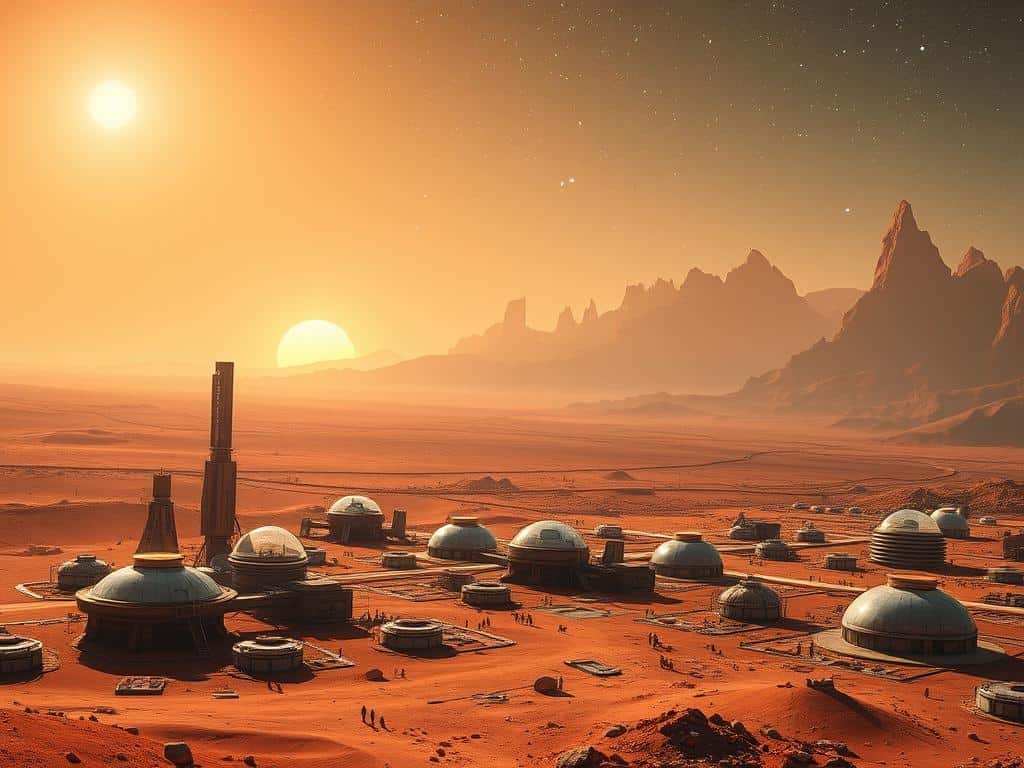
Did you know Mars is between 33 million to 249 million miles from Earth? Its distance changes, showing the huge challenge we face. Mars is close enough to Earth to be our next home, thanks to its similarities to our planet.
Mars has lots of resources like carbon, nitrogen, and water ice. This makes it perfect for research. It could help us learn about life beyond Earth and solve problems here. Living on Mars is now closer to reality, thanks to new tech and missions.
In this section, we’ll look at why we want to colonize space, the hurdles we’ll face, and the tech that will help us get to Mars. Let’s see if humans will make it on Mars.
Key Takeaways
- Mars is the closest candidate for long-term human colonization.
- The distance to Mars varies significantly, impacting mission planning.
- Technological advancements are essential for making human life on Mars feasible.
- Understanding Mars can provide insights into Earth’s challenges.
- Human exploration of Mars requires overcoming significant environmental challenges.
The Vision for Space Colonization
Space colonization is a dream for many. Mars is a key focus, attracting scientists and fans. It’s a chance to explore and learn, helping us understand Earth and the universe.
Exploring the Scientific Importance of Mars
Mars research is key to learning about our solar system and life. Scientists study Mars to find answers about life’s origins. Their work helps us prepare for future space missions and understand life on Earth.
Innovative Technologies Driving Exploration
Getting to Mars requires new tech, thanks to NASA and SpaceX. They’re working on better rockets, homes in space, and air systems. For example, MOXIE makes oxygen from Martian air, essential for human survival.
This teamwork between government and private groups is changing space travel. It’s opening up new possibilities for Mars exploration.
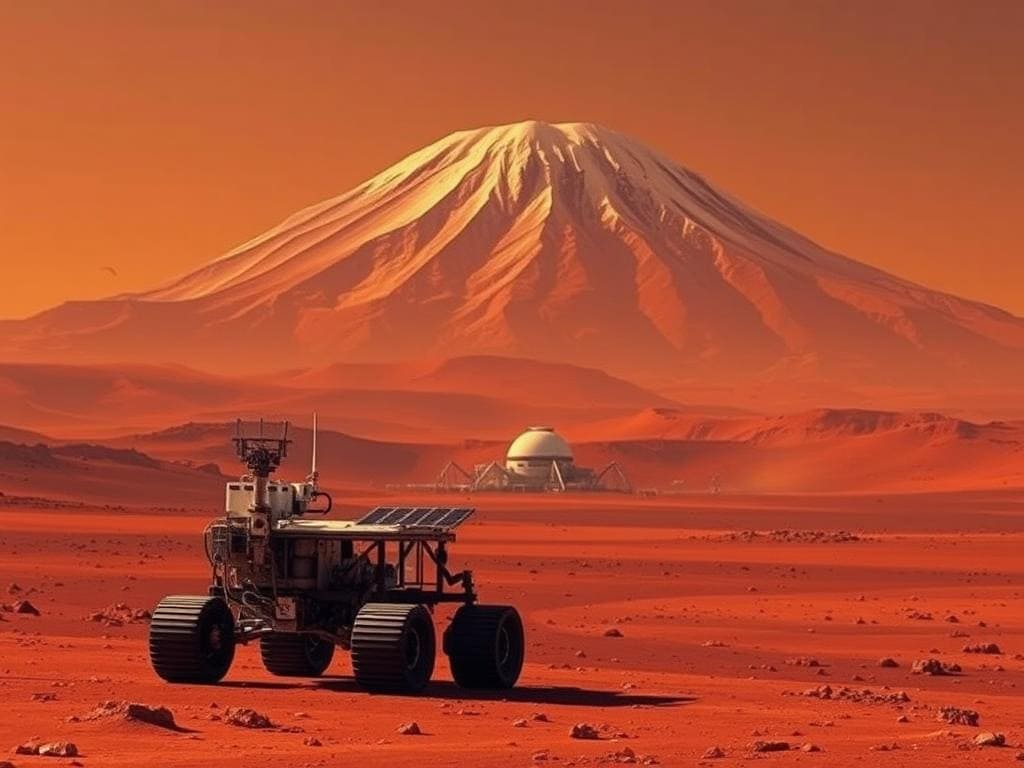
Challenges to Colonizing Mars
Exploring Mars is a huge challenge. The extreme weather and thin atmosphere make it hard for humans to live there. Temperatures can drop to -284°F or rise to -86°F. The atmosphere is mostly carbon dioxide, requiring advanced tech and careful planning.
Communication with Earth is slow, taking 4 to 24 minutes. This makes it hard to coordinate and get supplies. Every 26 months, solar conjunction causes a complete communication blackout.
Physical Challenges of Living on Mars
Every part of a Mars mission faces physical challenges. Astronauts need a vehicle that’s 50 to 100 metric tons to carry supplies and stay safe. The thin atmosphere makes landing a spacecraft very difficult.
NASA is testing an inflatable system to help with landing. This could be a key solution to the landing problem.
Psychological Impacts of Extended Space Missions
Space missions also affect the mind. Living in space for a long time can cause stress and loneliness. The long wait for messages from Earth can hurt performance and thinking.
Studies like Mars 500 show that teamwork suffers in space. This highlights the need for strong mental health support for astronauts.
Health Risks and Safety Concerns
Health risks are a big worry on Mars. The radiation is much higher than in space stations. This increases the risk of serious health problems like cancer and vision loss.
Getting medical help from Earth is hard because of the distance. For missions up to three years, it’s vital to understand and manage these risks. This is key to keeping astronauts safe and making Mars colonization successful.
