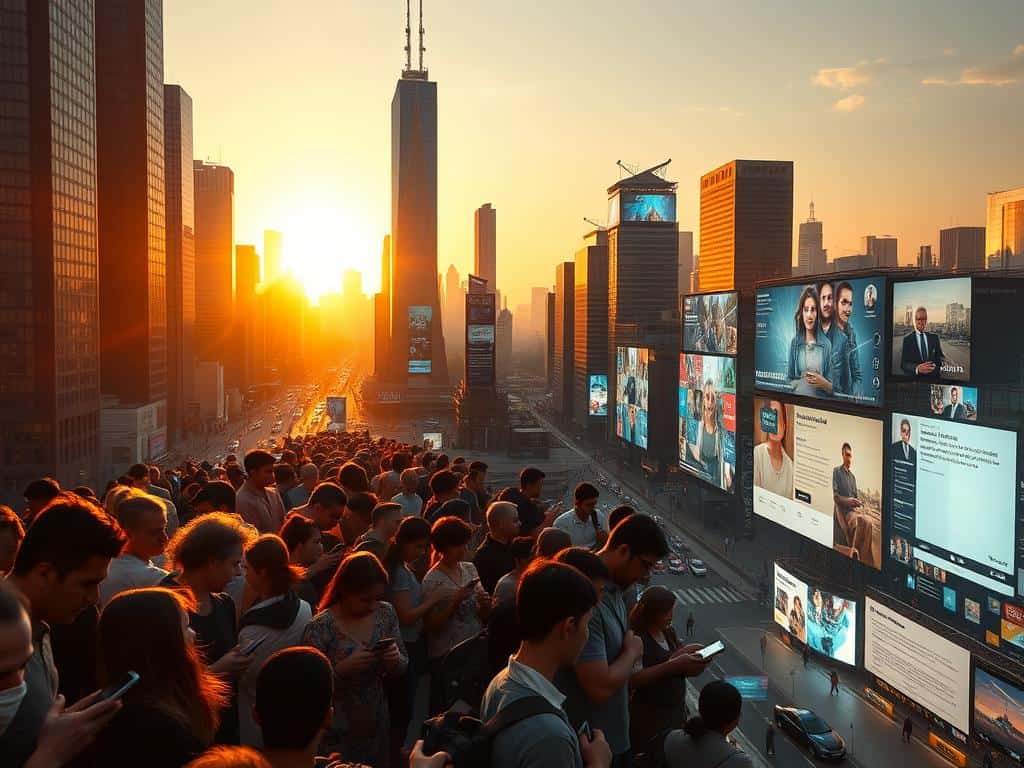
In 2005, only 5% of adults in the U.S. used social media. By 2023, that number soared to about 70%. This huge jump shows how much our lives have changed. Now, we use platforms like Facebook, Instagram, and Twitter for everything.
These tools help us stay in touch with family and friends. They also let us join in on big conversations and share our thoughts. I want to explore how social media has changed our world.
This article will show how social media has changed how we talk to each other. It has changed how we see and understand the world.
Key Takeaways
- The percentage of adults using social media in the U.S. has jumped from 5% in 2005 to about 70% in 2023.
- Social media platforms play essential roles in family communication, political activism, and marketing.
- The rise of social media reflects a growing preference for digital connections over traditional face-to-face interactions.
- Social media profoundly influences our culture, shaping how we view issues and interact with one another.
- Understanding its evolution is vital to grasping its full significance in modern society.
Understanding Social Media’s Evolution
The journey of social media is truly captivating. It started with the internet, changing how we talk to each other. This change led to many social media sites we use today. Each new technology has made connecting with others easier, affecting culture worldwide.
The Historical Context of Social Media
In the late 1990s, SixDegrees launched, starting the social networking era. Soon, Friendster and MySpace followed. By 2006, MySpace was the top site, but Facebook soon took over.
By early 2020, Facebook had nearly 1.7 billion users. In 2005, only 5% of Americans used social media. But by 2019, that number jumped to 72%.
Major Players in the Social Media Landscape
Today, Facebook, YouTube, and TikTok lead the social media world. Instagram and TikTok have over 1 billion users each. LinkedIn has over 675 million users, focusing on professional networking.
These sites have changed how we connect and have big impacts on culture. They also raise privacy and censorship issues. With over 3.2 billion users, marketing has shifted to focus more on video, a $135 billion industry in the U.S. in 2020.
Social Media’s Impact on Society
Social media has changed how we connect with each other. It brings both good and bad sides. Platforms help us make friends and join communities, even from far away.
More than half of the world uses these sites, spending hours each day. A 2020 study showed 73% of people keep in touch through tech. Social media is key for staying connected, like during the COVID-19 pandemic.
It’s also a place for important movements like #MeToo and #BlackLivesMatter. These movements raise awareness and push for change.
But, social media also has downsides. Cyberbullying is a big problem, hitting teens hard on sites like Facebook and Instagram. The anonymity online can lead to bad actions, like doxxing.
Also, false information spreads fast. The COVID-19 pandemic showed how fast lies can spread, like about vaccines. Social media sites have been criticized for showing users extreme content.
Meta has started to offer help to fight extremism. We need to be careful and aware when using social media. This way, we can use it to build communities while avoiding its dangers.
Conclusion
Social media has changed how we communicate and live together. It has brought us closer and given us new ways to express ourselves. Yet, it also brings challenges like cyberbullying and fake news.
It has helped people stay in touch, even when they’re far apart. Businesses use it to reach more customers and build stronger relationships with them.
But, there are downsides too. Online bullying is a big problem, hitting many, but young people the hardest. Spending too much time online can make us feel anxious and lonely.
Studies show that using social media wisely can help. Finding a balance is key to staying mentally healthy.
As we move forward, we must use social media’s good sides while fixing its bad ones. We need to create a healthier online space. This way, social media can truly help us all.
