
Did you know the energy sector is the world’s largest supply chain? This fact shows how big of an impact energy has on our lives and the planet. As we strive for a greener future, companies are adopting Smart Energy Solutions. These solutions use automation and the Internet of Things (IoT) to make energy use more efficient and cut down on carbon emissions.
Automation is key in helping meet the United Nations’ Sustainable Development Goals. Goal 7 aims for affordable and sustainable energy for everyone by 2030. In this article, we’ll look at how these new technologies are changing the energy world. We’ll also talk about the challenges they bring, like job losses and security risks.
Key Takeaways
- The energy sector is the largest supply chain globally, stressing its importance.
- Smart grid solutions use digital tech for better energy management.
- Automation boosts efficiency and cuts emissions.
- The IoT helps with predictive maintenance and real-time monitoring.
- Optimizing renewable energy is vital for sustainability goals.
- Smart energy solutions can save money in the long run, even if they cost more upfront.
The State of Automation in the Energy Sector
Automation in the energy sector has seen big changes. At first, it was just basic mechanization. Now, it uses advanced tech like AI and machine learning. This change lets energy companies use data to work better and more efficiently.
Advancements in Automation Technologies
AI is changing how the energy sector works. For example, predictive maintenance can cut downtime by up to 15%. This means companies can keep running without stops. AI also boosts labor productivity by up to 20%.
AI helps save money too, cutting new equipment costs by 3%-5%. Big names like General Electric say AI can save a lot of money. This shows AI’s economic benefits.
Current Trends Shaping the Industry
By 2024, almost 10,000 big solar projects will be up and running in the U.S. This is a big move towards clean energy. The growth of smart grids also matches the increase in solar power.
More than half of new power added in 2023 was clean. Companies like Shell have cut maintenance costs by 20% with AI. The U.S. Department of Energy is pushing for more advanced automation in grids. This shows a big push for better efficiency and green energy.
Benefits of Smart Energy Solutions
Smart Energy Solutions bring many advantages to energy management in industries. They improve how things work, cut costs, make things safer, and help the environment.
Enhancing Operational Efficiency
Automation in energy systems makes things run smoother and faster. This means less manual work and more reliable energy. It also helps adapt to energy changes, which can shift a lot in one day.
Cost Reduction and Energy Management
Smart solutions help save money by reducing labor and maintenance costs. Predictive maintenance can cut costs by up to 20%. By planning tasks during cheaper energy times, companies can save even more.
Smart algorithms give insights for better energy management. They offer a 48-hour forecast to plan energy use wisely.
Improved Safety and Environmental Impact
Automation makes work safer by taking on risky tasks. It also cuts down on energy waste, like machines using power when not needed. This leads to less pollution and supports sustainability goals.
These changes not only improve how things work but also meet social responsibility goals. It’s a win-win for companies and the planet.
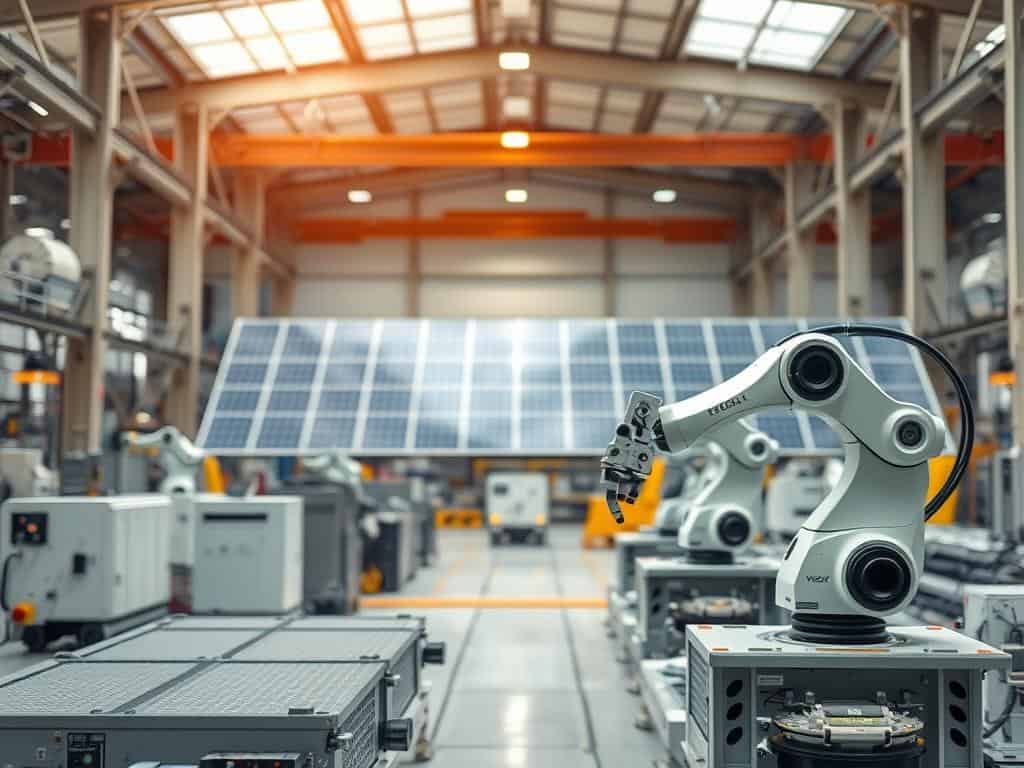
Smart Energy Solutions: Real-World Applications and Case Studies
Smart energy solutions are changing the game in many areas. They help make buildings and industries more energy-efficient. This leads to big steps towards a more sustainable future.
Energy Efficiency in Buildings
Smart home technologies are changing how we use energy. For example, Building Energy Management Systems (BEMS) help save energy. They work with smart thermostats to adjust settings based on who’s home and the weather.
This can cut energy use by up to 30%. These systems use advanced sensors and algorithms to control things like heating, cooling, and lights. They show a big push for saving energy in buildings.
Industrial Applications of Automation
Automation is making industries more energy-efficient. Predictive maintenance keeps an eye on equipment health, saving energy. This can cut energy use by 10% to 20%.
Companies like Schneider Electric and Rockwell Automation are using data analytics to improve energy use. They help industries become more sustainable.
Conclusion
Smart Energy Solutions, powered by automation, are leading us to a greener future. We’ve seen how technology, like AI and IoT, makes a big difference. These tools help us use energy better and cut down on harm to our planet.
For example, companies like Smart Energy Group Pty Ltd have helped over 25,000 homes save up to 80% on energy costs. This shows how these solutions can make a real difference.
But, there are hurdles to overcome, like making these solutions work together and training workers. To move forward, we need more innovation and education. This will help us build a sustainable future for energy.
Working together, we can make smart cities more sustainable. Renewable energy is growing, saving millions and creating jobs. I’m hopeful about the future of energy, thanks to these smart solutions.
Together, we can create cities that are strong and have clean, reliable electricity. This is a bright future for all of us.
