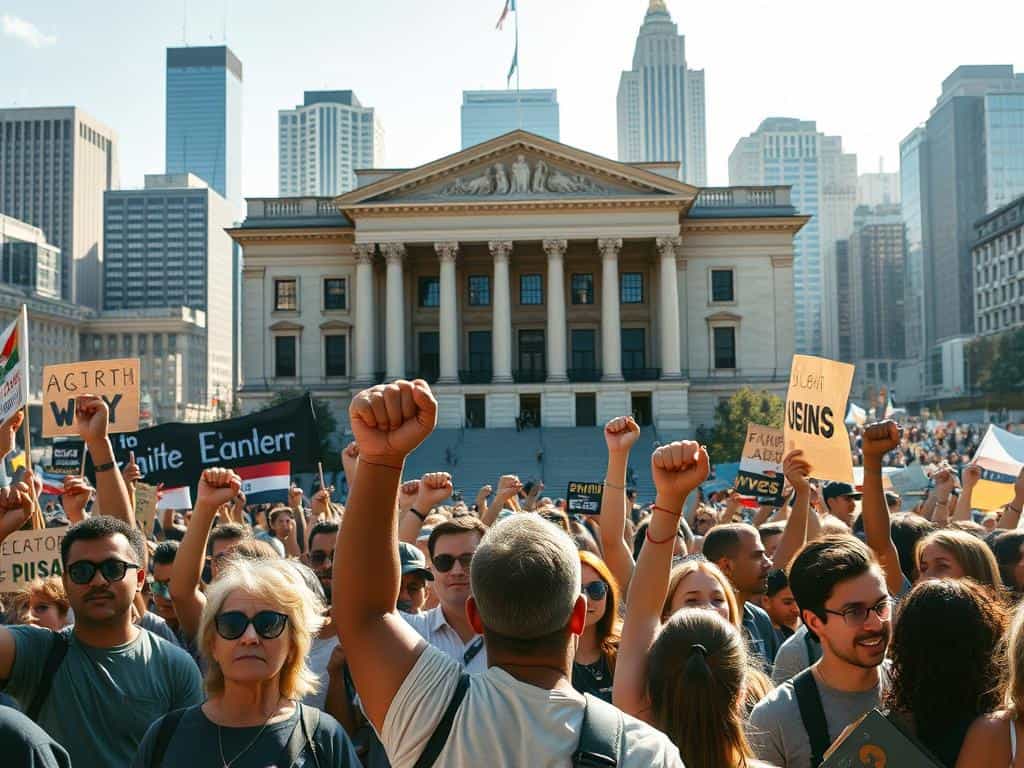
Did you know about 4.6 million Americans can’t vote because of felony convictions? This shows how complex civic rights are today. As a citizen, knowing my rights is key to justice and equality. Protecting these rights is not just a rule; it’s about my freedom and identity.
Civic rights are the foundation of our freedom, thanks to laws and amendments. They include voting rights, free speech, and protection from discrimination. The fight for these rights has been tough, but knowing them is vital for democracy. Today, it’s important to understand legal protections to ensure civic rights for all. My involvement is key to justice.
To be effective, I need to understand history and today’s challenges. This way, I can fight for equality and protect my and others’ rights in our community.
Key Takeaways
- Civic rights are essential for ensuring freedoms and protections in society.
- Understanding historical trends helps me appreciate current rights issues.
- Ongoing challenges such as disenfranchisement affect millions of Americans.
- Active participation in democracy is vital for upholding civic rights.
- Knowing legal protections helps me advocate for justice and equality.
The Importance of Understanding Civic Rights
Knowing about civic rights is key to being part of a democratic society. These rights protect us from government and social group overreach. They let us join in civic life without fear of being discriminated against or punished.
Definition of Civic Rights
Civic rights give us the freedom to fully take part in society. They are the base for standing up for ourselves and our communities. Knowing these rights helps us be informed citizens, which is critical for democracy.
The Historical Context of Civic Rights in America
The history of civic rights in America shows a journey from the Declaration of Independence’s ideals. Over time, these rights grew through amendments, like after the Civil Rights Movement. This period exposed injustices and worked to remove barriers to minority participation in government.
Acts like the Voting Rights Act were created to fight discrimination. They aimed to ensure every citizen could vote without fear.
Current Challenges to Civic Rights
Even with progress, civic rights face ongoing hurdles. Problems like voter suppression and discrimination against certain groups threaten democracy. A 2016 survey found 1 in 4 Americans didn’t know the three branches of government.
Only 17 percent of Americans trust the government to act in their best interests, as the Pew Research Center found in March 2019. These numbers show we need better civic education. It’s vital to stay informed and active to overcome these issues.
Key Areas of Civic Rights: Understanding Your Protections
It’s important to know about civic rights to understand our protections. Key areas include voting rights, freedom of speech, and rights for marginalized communities. These areas help keep our democracy strong and open to everyone.
Voting Rights and Representation
Voting rights are key for making sure every voice is heard. Laws and amendments protect these rights, ensuring fair voting for all. Advocacy for fair representation is vital, with recent laws aiming to make voting easier.
Groups that teach people about voting rights help a lot. They make sure everyone can vote and have a say in our democracy.
Freedom of Speech and Assembly
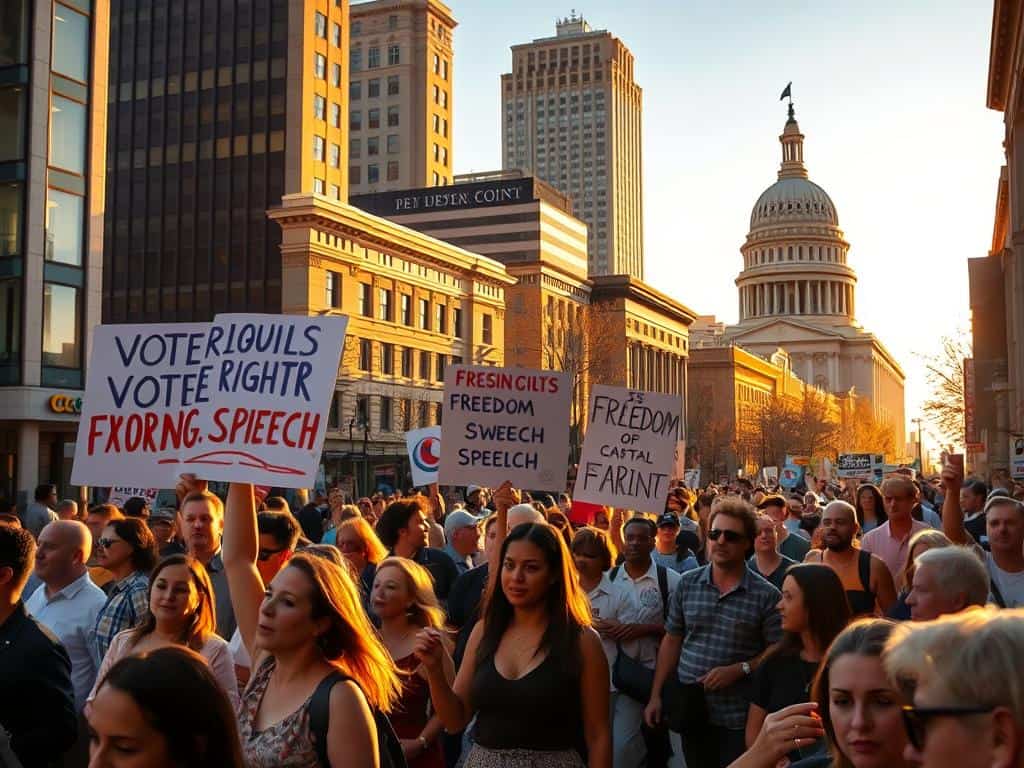
Freedom of speech is a basic right in a democracy. It lets us share our thoughts without fear of government punishment. The First Amendment also protects our right to gather peacefully.
These rights let us talk about important issues and protest when needed. It’s important to keep fighting for these rights so we can speak freely.
Rights of Marginalized Communities
Marginalized groups face special challenges in getting their rights. People of color, LGBTQ individuals, and those with disabilities often face big barriers. Laws like the Civil Rights Act of 1964 try to stop discrimination.
It’s key to know about these protections so these groups can fight for their rights. Being aware and active helps make sure everyone gets their civil liberties.
Conclusion
Understanding and fighting for civic rights is key today. These rights give us power to face unfairness and protect our freedoms. They remind us of the importance of justice for all.
By joining community efforts, I help make a difference. I work towards a society that values fairness and protects individual rights. This way, we all contribute to a better world.
Learning about civic rights is important. It makes me aware of my duties and rights. Knowing how to vote and follow laws is part of being a good citizen.
Education helps us understand our role in society. It teaches us to be active and responsible. This knowledge is essential for a healthy democracy.
Working together with the government and groups is vital. My advocacy and community work help strengthen these partnerships. Together, we can make sure everyone enjoys their rights.
