
Did you know that adults with the fewest social ties have a risk of death more than twice as high as those with the most social ties? This statistic shows how deeply health and society are connected. When we look at Health & Society, we see that our well-being is tied to our community’s structures and relationships.
The way our society develops is influenced by health factors. These include economic conditions and social inequalities that block community wellness. By tackling these health issues, we can make real progress in both personal health and societal advancement.
Key Takeaways
- Social connections significantly impact mortality risk among adults.
- Health determinants, including economic factors, shape community wellness.
- Understanding health behaviors is essential for reducing premature mortality rates.
- Chronic illnesses pose a substantial threat to older populations and can be managed.
- Relationships influence both mental and physical health outcomes.
The Influence of Social Determinants on Health
Social determinants of health (SDOH) are key in shaping health outcomes. They affect where and how we live, work, and age. They also impact our access to healthcare. It’s important to address these factors to achieve health equity and reduce disparities.
Understanding Social Determinants of Health
SDOH include economic stability, education, and healthcare access. These factors deeply affect our health. For example, being economically stable helps us get nutritious food and safe housing.
The World Health Organization says improving these determinants is key. It helps improve well-being and reduce inequalities in society.
Examples of Social Determinants
Everyday life shows examples of SDOH. For instance, having access to healthy food stores is vital. Without it, people may face higher risks of diseases like heart disease and diabetes.
Safe housing and clean environments also matter. They impact community health and stress levels. Education is also critical for future economic stability and health.
Health education programs help address these issues. They aim to promote health equity. Obesity and heart diseases are common, affecting marginalized groups.
Children and women often suffer from poverty’s effects. This can harm their health and education. Understanding these determinants is key to a healthier, more equitable society.
Health & Society: The Interplay Between Community Health and Development
Community health is key to societal progress. A healthier community means better health outcomes and more productivity. Strong public health policies help close health gaps, opening doors for social growth. Improving community health leads to better health behaviors and local needs-focused initiatives.
Impact of Community Health on Societal Progress
Investing in community health greatly benefits society. For example, the CDC’s REACH program works to improve health access for minority groups. It tackles chronic diseases and boosts nutritious food access, cutting mortality rates and improving well-being.
About 60% of Americans have chronic health issues, showing the need for specific help. Focusing on economic stability and education ensures lasting health gains.
Social Relationships and Health Outcomes
Strong social relationships are vital for good health outcomes. Studies show people with strong support networks have better mental and physical health. Social connections lead to healthier behaviors and lower death risks.
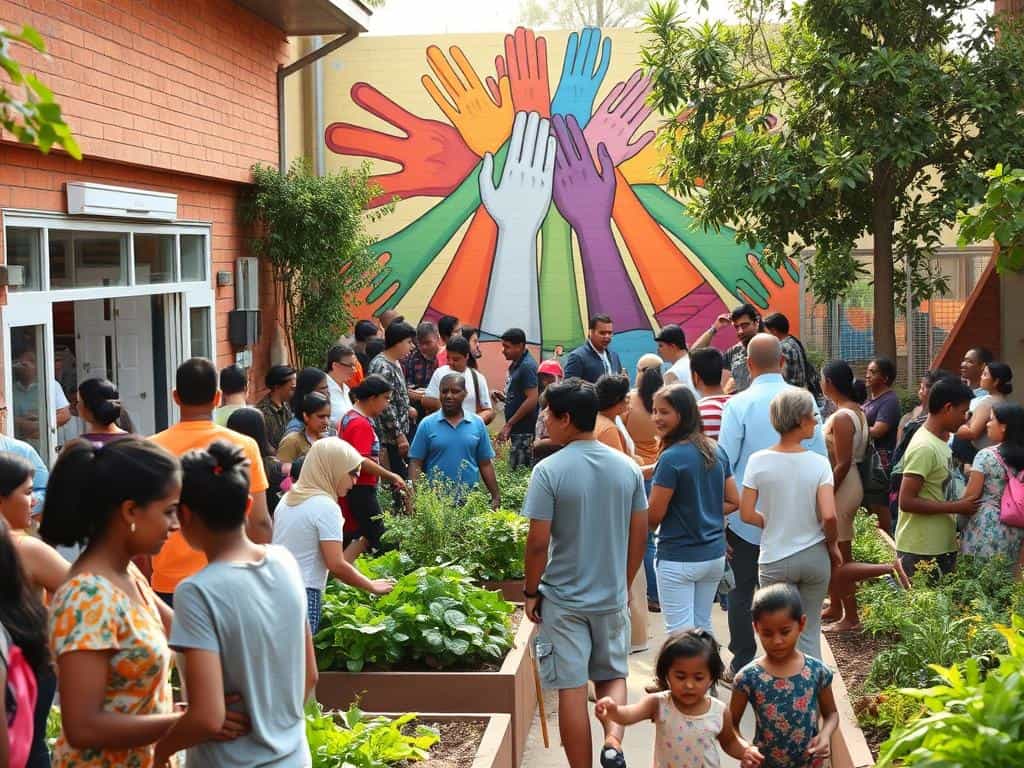
Building community engagement and coalitions is key to fostering these networks. Public health departments use GIS maps to find community needs, showing the link between social ties and health. As we focus on community health, understanding these connections is vital for building strong, healthy societies.
Conclusion
Looking at the connection between health and society, we see that social factors are key. Things like education, income, and fairness in society greatly affect our health. When communities lack good schools and jobs, health problems grow, showing we need big changes.
Working together across different areas is vital for better health in communities. We need a common goal to fight health gaps. This means creating places where health thrives and laws that support it.
Putting health first in our communities is more than just personal gain. It’s a key step for society to grow stronger. By linking health with fairness, we can build a future where everyone is healthy.
