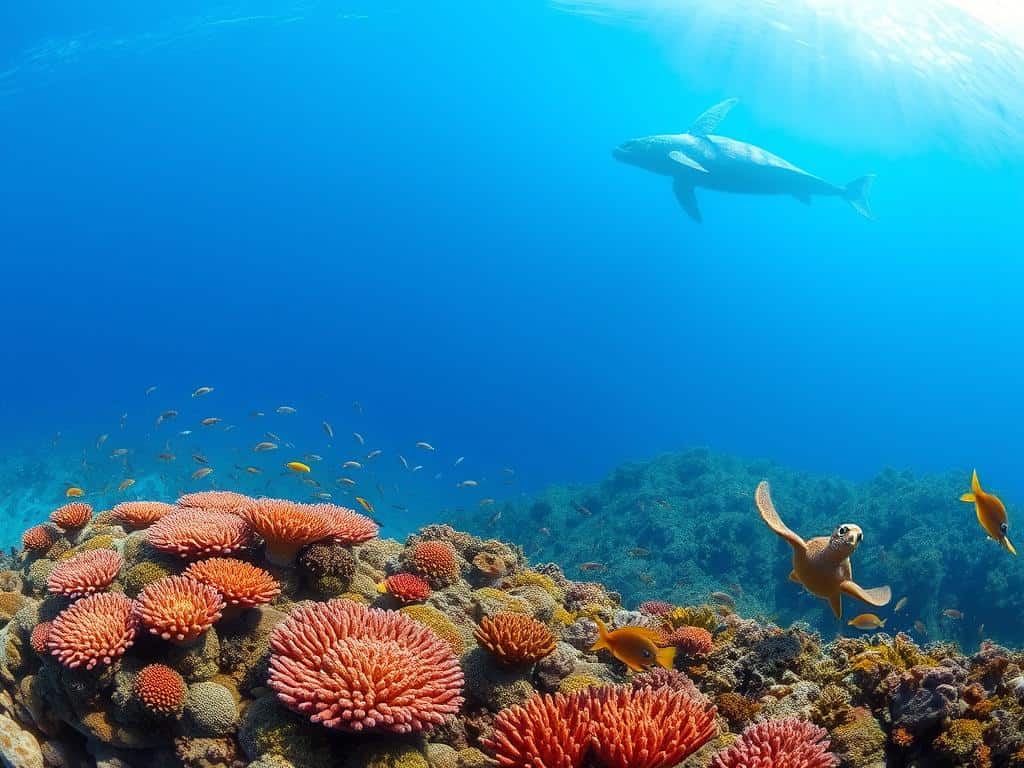
Did you know the ocean covers over 70% of our planet? This fact shows how big and complex marine biology is. It studies the ocean’s ecosystems, like coral reefs and fish, and their homes.
The ocean’s temperature varies greatly, from freezing to over 30°C. This makes life in the ocean very special. It has evolved unique ways to survive in such different conditions.
Marine biodiversity is key to our planet’s health. But it faces threats from climate change, pollution, and overfishing. Coral reefs alone have thousands of species. It’s vital we protect these ecosystems.
In this article, we’ll explore marine biology. We’ll discover the wonders of deep-sea life and their importance to us.
Key Takeaways
- The ocean constitutes over 70% of the Earth’s surface.
- Marine ecosystems, like coral reefs, host thousands of species.
- Climate change threatens marine biodiversity and ecosystems.
- Overfishing has severely impacted many fish populations.
- Marine biology offers career paths that contribute to conservation efforts.
- Pollution significantly impacts the health of marine environments.
Exploring the Depths of Marine Biology
Marine environments are full of complex connections. Biodiversity in ocean ecosystems is key. Every species, from tiny microorganisms to huge mammals, helps keep marine life healthy. Research shows places like the porcupine abyssal plain have many unique habitats.
Each habitat supports different life forms. These life forms are adapted to their specific environments.
Understanding Biodiversity in Ocean Ecosystems
Common bottlenose dolphins often have skin lesions. This is true in both salty and less salty waters. It makes us wonder about the stressors affecting these top predators.
These dolphins are important for showing us how marine ecosystems are doing. We need to study them well to understand biodiversity.
Adaptations of Deep-Sea Creatures
Deep-sea creatures have amazing adaptations. These help them survive in harsh conditions. They can handle high pressures, find their way in darkness, and live with little food.
Learning about these adaptations helps us keep ocean ecosystems healthy. It’s key for the survival of many marine species.
The Role of Coral Reefs in Marine Life
Coral reefs are vital for marine life. They are full of biodiversity and protect coastlines from erosion. But, human activities threaten their health.
We must work hard to save these important habitats. They are essential for future generations.
The Fascinating World of Sea Life
Exploring the ocean’s depths reveals a world filled with amazing sea life. In the abyssal zone, unique species have evolved to live in harsh conditions. This deep area, far below the surface, is home to creatures that have adapted to extreme pressure and darkness.
Unique Species Found in the Abyssal Zone
The abyssal zone is home to sea cucumbers and brittle stars, among others. These creatures show how life can thrive in the ocean’s toughest spots. Without light, they find food by eating detritus from above.
I find it amazing how each creature is vital to the deep-sea ecosystem’s balance.
The Importance of Sea Life in Tourism and Research
Sea life draws many to marine tourism, eager to see vibrant ecosystems. The chance to see exotic species creates jobs through diving and underwater tours. Research also shows the value of studying these organisms for conservation and innovation.
My curiosity is piqued by the ocean’s secrets. Discoveries from the deep could lead to new medicines. Protecting the abyssal zone’s habitats is key to preserving these wonders and our fascination with sea life.
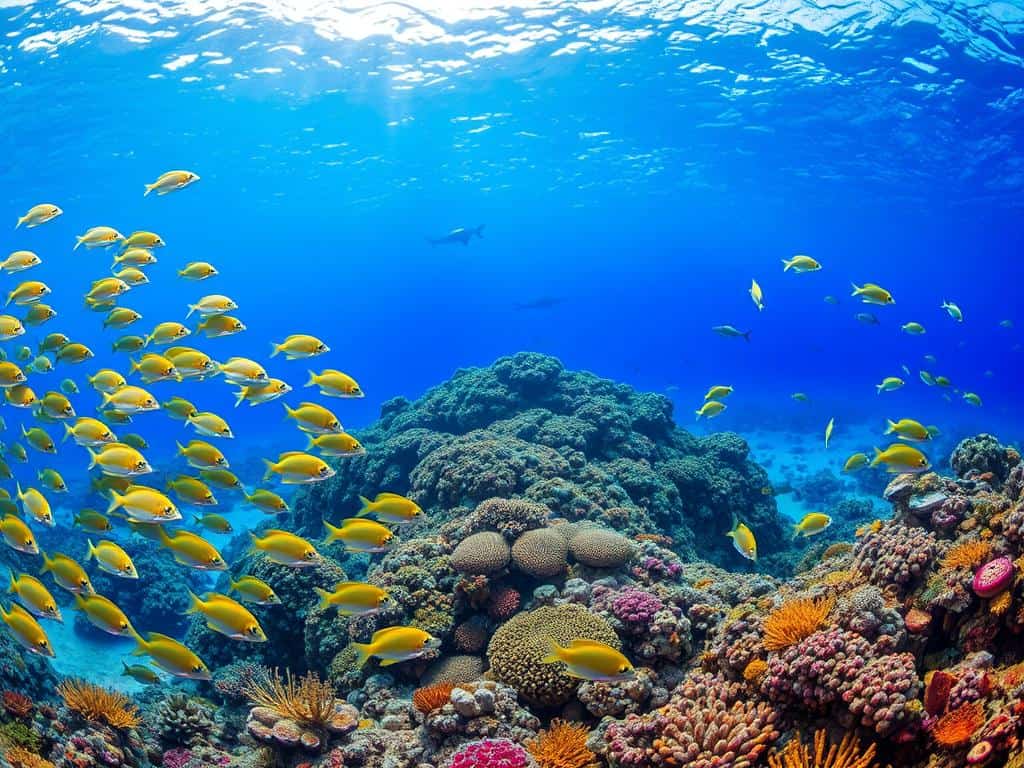
Marine Biology: Discoveries and Research Innovations
Deep-sea exploration has changed how we see the ocean. New tech like underwater robots and high-tech cameras let us explore deeper than ever before. These tools help scientists uncover secrets of the deep that were once unknown.
Recent Advances in Deep-Sea Exploration Technologies
Many groups have made big strides in deep-sea tech. This has let researchers around the world explore fascinating marine areas. The tech keeps getting better, helping us learn more about the ocean’s depths.
Unveiling Oceanic Mysteries Through Scientific Research
Science is key to understanding the ocean. By studying marine life, scientists find amazing things. Each discovery helps us grasp the ocean’s complexity, showing why we need to keep studying it.
Case Study: The Lost City Beneath the Coral Reef
One exciting example is a lost city found under a coral reef. It has artifacts that tell us about a forgotten civilization. This shows how important the ocean is to our history and culture. Teams like the Marine Biological Laboratory are finding more, helping us appreciate the ocean’s past and present.
Conclusion
The ocean is full of secrets, with about 80% of marine species yet to be found. This vast, unexplored world is key to our planet’s health. The ocean’s ecosystems provide services worth around $2.5 trillion each year, showing their importance.
Climate change and habitat loss are big challenges for marine life. Up to 70% of marine species could face danger from climate change. We must protect these ecosystems, which are vital for our planet.
Overfishing is another major threat, harming marine life and local economies. We need to adopt sustainable fishing and improve marine research technology. This will help us create a better future for our oceans.
The ocean is full of mysteries, and we need to keep studying it. By learning about deep-sea creatures and coral reefs, we gain a deeper respect for marine life. We must work to protect our oceans for future generations.
