
In 1970, 67% of Americans aged 25 to 49 lived with their spouse and kids. By 2021, this number dropped to 37%. This shows a big change in family life over the years. Now, families come in many forms, like unmarried adults with kids and same-sex couples.
Also, more people are choosing not to get married or are staying single. This change shows how society’s views on family and relationships are changing.
In this article, we’ll explore how these changes in family life are shaping America. We’ll look at how these shifts affect marriage, having kids, and more. It’s important to understand these changes because they influence how we see family and our roles in it.
Key Takeaways
- Family structures have evolved from traditional setups to include diverse arrangements.
- A significant decrease in married couples with children reflects changing societal norms.
- Increased acceptance and legal recognition of same-sex marriages have broadened family definitions.
- Women are increasingly becoming the primary earners in their families, evolving dynamics in parenting.
- A growing percentage of U.S. adults are unmarried, leading to new family trends.
Evolution of Family Structures
The idea of family in the United States has changed a lot over the years. Traditionally, families were seen as small units with a father, mother, and their kids. This was the usual picture, but now we see many different kinds of families.
Shift from Traditional to Diverse Family Types
Older times saw traditional families as the norm, with clear roles for everyone. But, as society changed, so did what we call a family. Now, we have single parents, blended families, and same-sex parents.
About 27% of kids in the U.S. live with just one parent. This shows that many families are different today. Also, more people are choosing to live together without getting married, showing a move away from old ways.
Impact of Education and Socioeconomic Factors
Education and money status really shape family life. People with more education often get married more. This can make families more stable, even if they’re not traditional.
Money also plays a big role. Families with less money might live with more relatives. This can be hard, but it shows how families come together in tough times. So, education and money status help shape what we think of as family in America.
Changing Roles in Parenting and Relationships
Parenting roles and relationships have changed a lot in recent years. This change comes from more women working outside the home. Families now share responsibilities more equally, moving away from old ways.
Rising Participation of Women in the Workforce
More women working has changed family life. In Australia, about 5% of two-parent homes have stay-at-home dads. This shows a big change in how families work together.
This number hasn’t changed much in twenty years. It shows we’ve made some progress, but we have a long way to go. Many people think it’s special when dads help out at home, not normal.
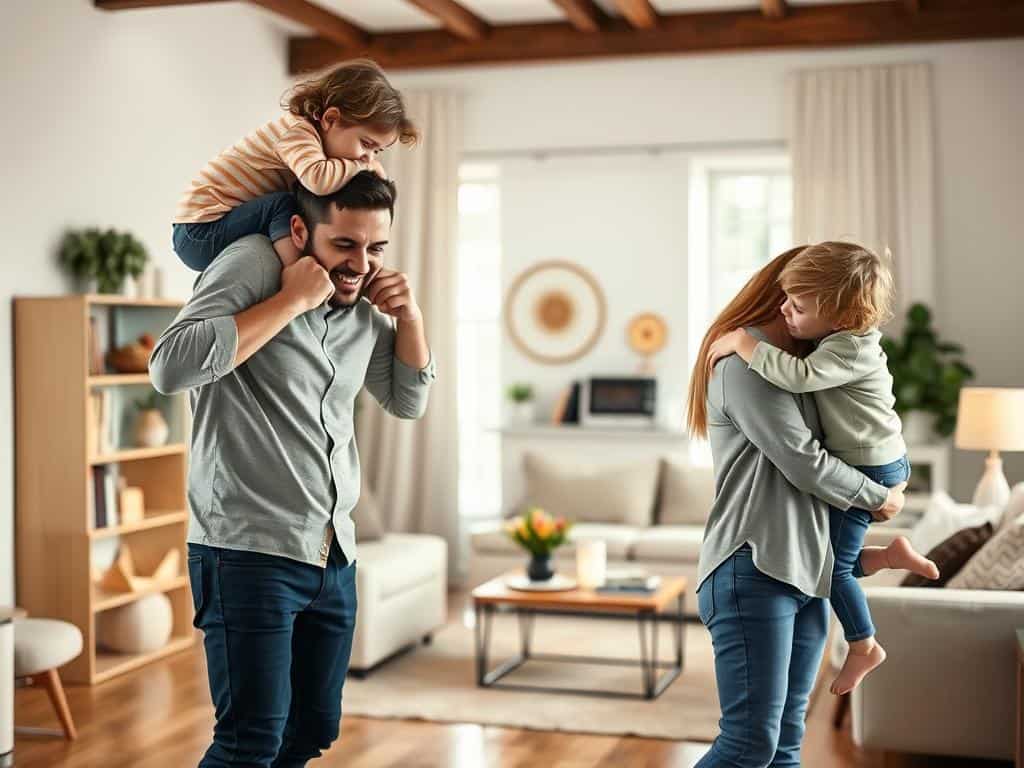
We’re not yet equal in parenting, showing a big gap in what we expect. Changing how we see dads and their roles at home is key. Studies show kids do better when parents share their time and effort.
This shift in family life has made me see parenting differently. Dual-income families show us a new way of doing things. It’s a journey, full of challenges and chances to grow, as we learn to parent together in today’s world.
Family Dynamics and Societal Norms
Family structures have changed a lot, showing how society is evolving. Now, we see more interracial families and same-sex marriages. These changes are not just about politics; they show a big shift in American culture.
Influence of Interracial and Same-Sex Marriages
With same-sex marriages legal, American families have become more diverse. Over 700,000 same-sex couples have tied the knot, showing a move towards inclusivity. Interracial families are also more visible, with more people accepting them.
The U.S. Census Bureau says about 15% of American homes have kids aged 12–17. Many of these kids come from these new family types.
Family structures have changed a lot. In 1960, 88% of kids lived with two parents. By 2016, that number dropped to 69%. This shows a big change in what families look like today.
Surveys show more people accepting interracial and same-sex marriages. This helps us understand what a family can be today. It shows we’re becoming a more caring and understanding society.
Conclusion
The way families are changing today shows deep changes in our society. These changes affect how we build relationships and raise our children. They are key to shaping our future families.
Changes in the economy, law, and education have changed what a family is. Now, families come in many forms, not just the old traditional ones.
It’s important to understand these changes, like how they affect kids’ mental health. Studies show kids moving between homes can feel anxious and upset. But, with love and stability, families can help their kids feel better.
Accepting different family types helps us get ready for the future. I believe that as families keep changing, we’ll see stronger bonds and better support for each other. We need to work together to create a welcoming place for all families. This will make our society richer and more united.
