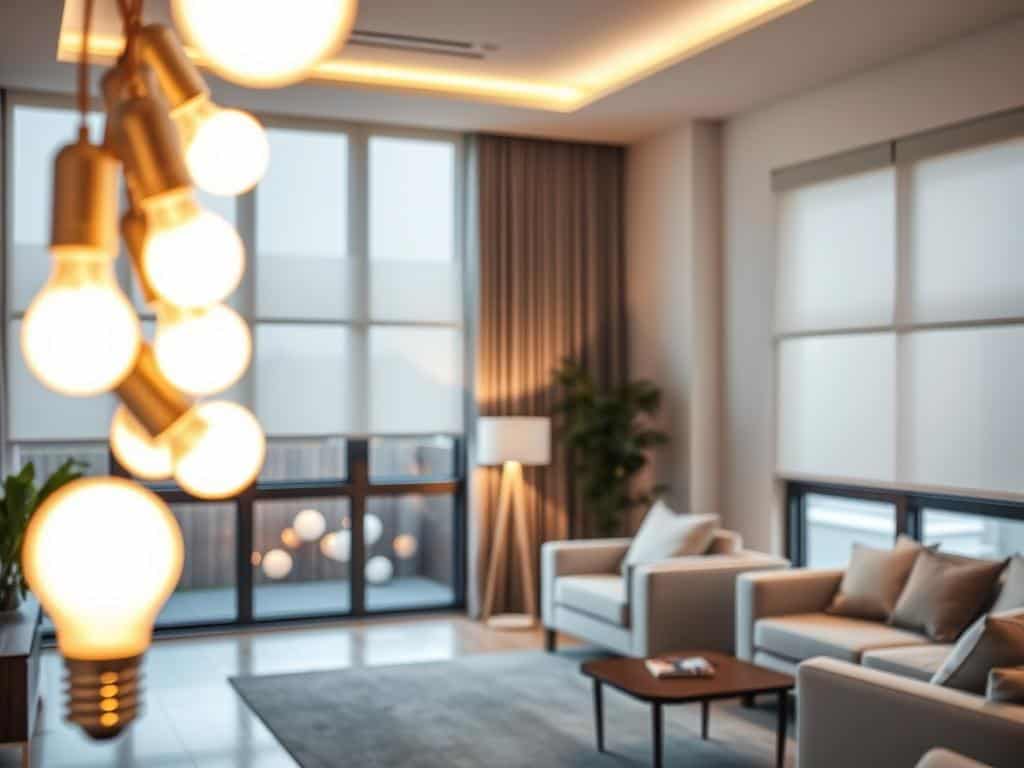
Did you know smart bulbs can last up to 25,000 hours? That’s a lot longer than traditional bulbs, which only last about 1,000 hours. Switching to smart lighting makes your home more comfortable and saves energy. You can control your lights with your phone or smart speakers, making your home feel just right for any moment.
Today, you have many smart lighting options. Brands like Philips Hue offer over 16 million colors for a bright experience. Govee and Nanoleaf are more affordable but just as exciting. These systems save energy and let you customize your home’s look. Let’s look at the best smart lighting systems out there.
Key Takeaways
- Smart bulbs offer up to 25,000 hours of use, far exceeding traditional options.
- Philips Hue is a leading brand known for its variety and quality.
- The integration of smart lighting with IoT enhances convenience and control.
- Energy-efficient systems contribute to overall cost savings in the long run.
- There are many innovative and affordable smart lighting options on the market.
Understanding Smart Lighting Systems
Exploring modern lighting, Smart Lighting Systems stand out for their cool features and ease of use. These systems include smart bulbs and switches that you can control from anywhere using the internet. They use Wi-Fi, ZigBee, and Bluetooth to work well with many smart home systems.
What Are Smart Lighting Systems?
Smart lighting systems are a new way to light up spaces. You can control them with your phone or voice commands. This makes them different from old lighting setups. Brands like Philips Hue and Sengled are popular for being affordable and easy to use.
Smart bulbs come in different types. You can find white, full-color, and tunable white bulbs. They meet various lighting needs.
Benefits of Smart Lighting
Smart lighting offers more than just convenience. It’s also good for saving energy, thanks to ENERGY STAR certification. This means using less power, even when not in use.
Smart bulbs let you change brightness, color, and temperature. This can make your space better and even help your health by adjusting to your body’s natural rhythms.
How Smart Lighting Works with IoT
Smart lighting is a key part of the Internet of Things (IoT). It can work with other devices in your home. This means lights can turn on and off automatically or when you move around.
This level of control can make your home safer and help you save energy. It’s a great choice for people who love technology.
Top Smart Lighting Systems for Energy Efficiency and Home Comfort
Looking into smart lighting shows many systems that save energy and make homes more comfortable. Smart light systems can change how we live by making our homes smarter. Philips Hue, Govee, and Nanoleaf are top picks, each with special features for different needs.
Philips Hue: The Industry Leader
Philips Hue is a top name in smart lighting. These bulbs can change color in up to 16 million ways and adjust white tones. They work with Alexa and Google Assistant, making it easy to control lights with voice or apps.
The Philips Hue Starter Kit comes with bulbs and a bridge. It’s a great way to start automating your lighting for a custom feel.
Govee Wi-Fi LED Bulb: Affordable and Functional
The Govee Wi-Fi LED Bulb is a budget-friendly option. It lasts about 50,000 hours, making it a good choice for the long run. It’s easy to add to your smart home, letting you set up your own lighting plans.
The Govee Permanent Outdoor Lights Pro is durable and energy-saving. It makes outdoor areas fun all year.
Nanoleaf: Innovative Designs and Colors
Nanoleaf focuses on creativity and design. Their panels are energy-efficient and let you create your own lighting designs. The average price of Nanoleaf Shapes is $199, showing their unique value.
They add bright colors to any room, turning it into a piece of art. This system is perfect for those who want to make their home look amazing and save energy.
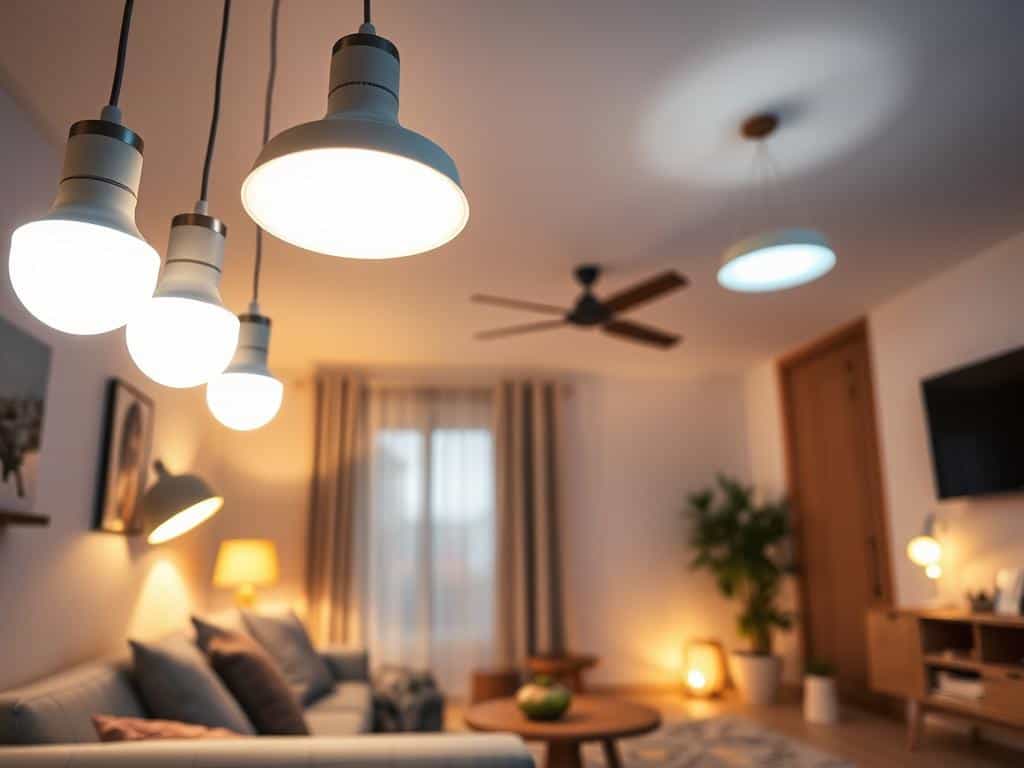
Choosing the Right Smart Lighting Systems for Your Needs
Choosing the right smart lighting system is a big decision. It starts with checking if it works with your current devices. Systems like Apple HomeKit, Amazon Alexa, and Google Home have different levels of integration. It’s important to check compatibility before buying new devices.
For example, Philips Hue needs a specific hub, while Govee works over Wi-Fi alone. This makes sure your new lights work well with what you already have.
Assessing Compatibility with Existing Devices
The first thing to do is see if the smart lighting works with your tech. Look for brands that clearly say if their lights work with your smart home system and voice assistants. This makes sure your new lights work smoothly with your current setup.
It’s also good to check if the features match what you want. This way, you can avoid any problems and enjoy using your new lights.
Factors to Consider: Brightness Levels and Color Temperature
Think about how bright and what color the lights are. Smart lights can be very bright or very dim, and they can change color too. Knowing the difference between warm, neutral, and cool white helps you set the mood in your home.
Look for lights that can be adjusted finely. This lets you change the mood in different rooms easily.
Cost vs. Value: Are They Worth the Investment?
When looking at smart lighting, think about the cost and what you get for it. Smart bulbs cost between $20 and $50, and hubs start at $60. But, LED bulbs can last up to 40 years, which makes them worth it.
They also save you money on your electricity bill. This makes them good for your wallet and the planet. Look for systems that are both good quality and affordable.
Conclusion
Reflecting on smart lighting systems, it’s clear they offer more than just convenience. They save energy with features like motion sensors and automatic dimming. This cuts down on energy waste and lowers utility bills over time.
This not only pays off the initial cost but also meets our growing need for eco-friendly homes. Smart lighting systems also improve home comfort by working with other IoT devices. They let me adjust my environment to fit my mood or activity.
These systems use advanced algorithms to learn my habits. This means my lighting can change to suit my needs, whether I’m working, relaxing, or having guests. By using LED bulbs and biometric sensors, they boost well-being and save energy.
In short, smart lighting is more than a trend; it’s a way to make our homes better and greener. It fits seamlessly into smart home systems and lets us change lighting instantly. As tech advances, I’m looking forward to how it will make our lives better and help our planet.
