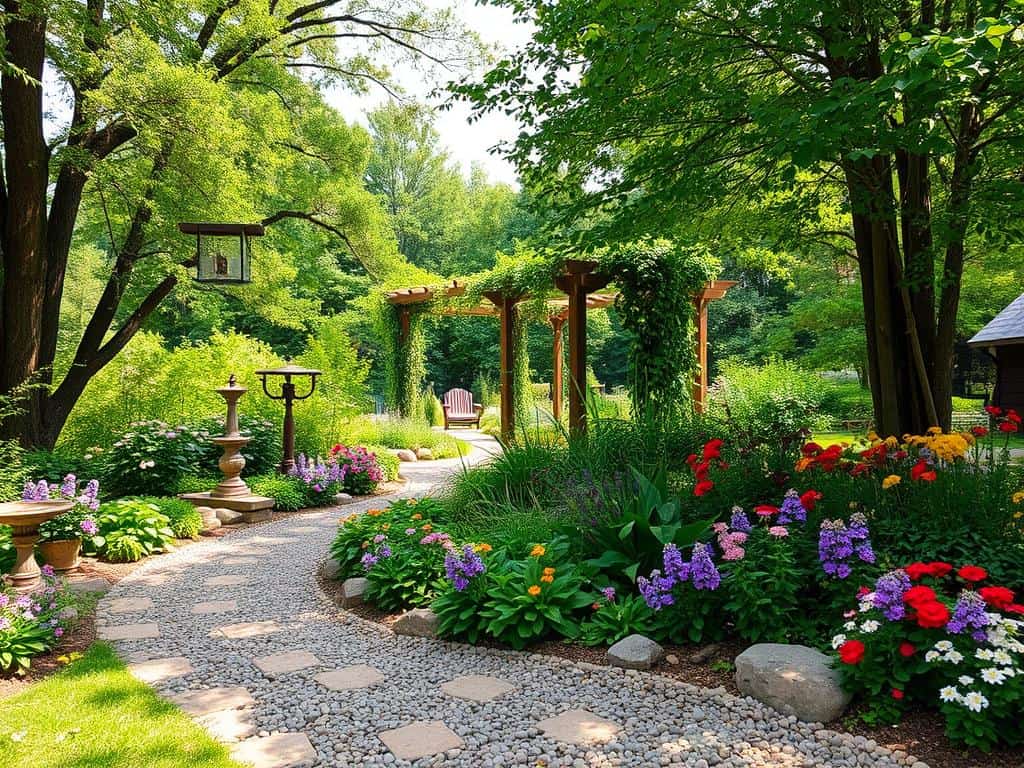
Did you know that sustainable landscapes can save homeowners up to 50% on water? This is compared to traditional lawns. This shows the growing trend of eco-friendly gardens. These gardens focus on beauty and making choices that help the environment.
As we move towards green living, gardeners are making beautiful spaces. They do this while saving resources and reducing harm to the planet.
The key to sustainable landscaping is using less and getting more. It means using less water, fewer chemicals, and more native plants. In this article, I’ll share tips for beautiful gardens that also help the planet. This marks a new era in gardening.
Key Takeaways
- Sustainable landscaping reduces water usage significantly, with possible savings of up to 50%.
- Native plants need less fertilizers and pesticides.
- Rain gardens manage stormwater runoff well.
- Xeriscaping can cut outdoor water use by up to 75% in dry areas.
- Permeable hardscapes help recharge groundwater.
Understanding Sustainable Landscaping
Sustainable landscaping makes outdoor spaces beautiful and saves resources. It uses many techniques to reduce waste and help the environment. Using water and energy wisely is key in gardening.
Definition and Importance
Sustainable landscaping means making gardens that are good for the planet. It saves water, which is important in places like Colorado. It also helps the environment by improving soil and adding more life to gardens.
Benefits of Sustainable Landscaping
Sustainable landscaping has many benefits. It saves water by using plants that don’t need much water. In Colorado, where it’s dry, this is very helpful.
It also saves energy by using trees for shade. This lowers cooling costs in the summer. Plus, it saves time and money by reducing lawn care needs.
Using different plants makes gardens look good and keeps pests away. This keeps plants healthy and strong.
Sustainable Landscaping Practices for Your Garden
Using sustainable landscaping practices helps the environment and makes my garden look better. It focuses on native plants, saving water, and avoiding chemicals. This way, my garden grows well with less work and is good for the planet.
Using Native Plants
Native plants are key for a healthy garden. They fit well with our local climate and soil. This means they need less water, saving me money and resources.
Choosing native plants also means I don’t need to use harmful chemicals. This makes my garden strong and able to take care of itself.
Implementing Water Conservation Techniques
Water conservation is vital for a green garden. Many people waste water because of bad irrigation. But, using rain barrels and drip systems can change that.
These tools help me use rainwater wisely. Mulch also keeps the soil moist, reducing water loss.
Minimizing Chemical Use
Going chemical-free is important for a healthy garden. Organic compost and natural pest control keep my garden safe. This way, I avoid harming the soil and water.
Methods like companion planting improve soil and attract pollinators. This approach makes my garden sustainable and fruitful.
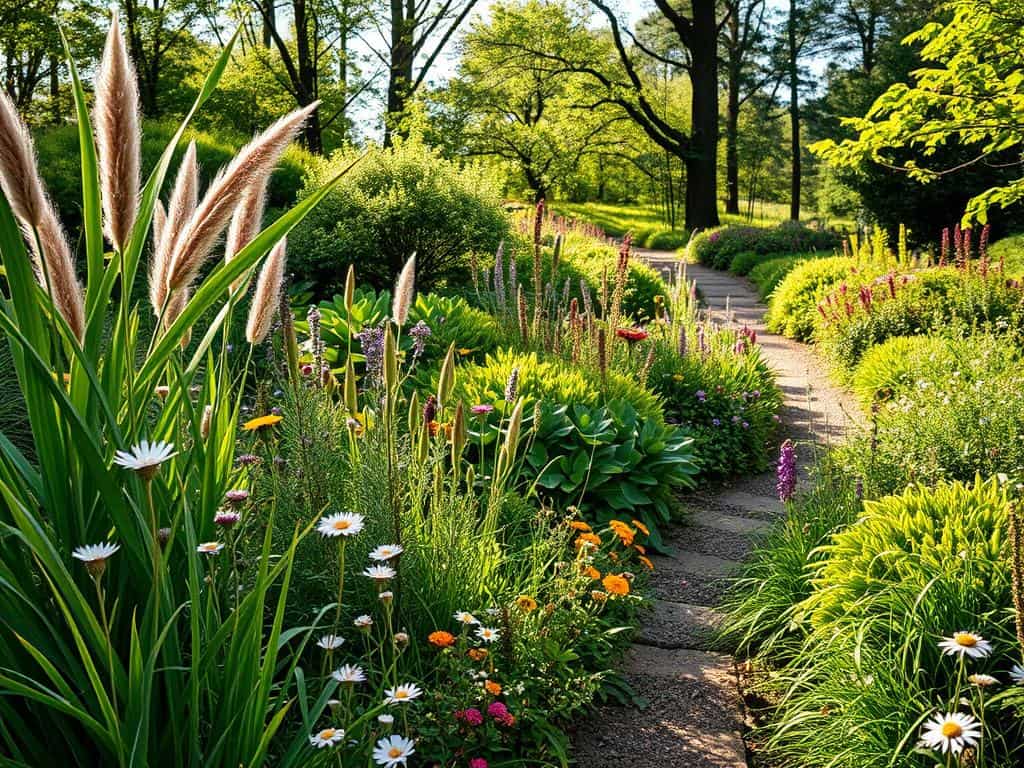
Sustainable Landscaping: Enhancing Your Outdoor Space
Adding sustainable practices to landscaping makes outdoor spaces more beautiful and eco-friendly. Using methods like permeable hardscaping and wildlife habitats boosts biodiversity. These actions help create a thriving ecosystem and offer practical benefits for homeowners.
Incorporating Permeable Hardscaping
Permeable hardscaping, like porous pavers and gravel paths, lets water soak into the ground. This cuts down on runoff and helps recharge groundwater. Choosing these materials makes my soil healthier and reduces environmental harm. My outdoor areas become more sustainable and ready for climate changes.
Creating Wildlife Habitats
Designing my landscape for wildlife habitats boosts biodiversity in my garden. Native plants offer food and shelter for birds, bees, and insects. Adding birdhouses, bat boxes, and pollinator gardens makes my space vibrant. It supports ecological balance and makes enjoying nature more fun.
Conclusion
Adopting sustainable landscaping practices makes my garden more beautiful and functional. Using native plants can cut water use by up to 75%. Techniques like rainwater harvesting and drip irrigation can reduce water use by 50%.
These eco-friendly practices bring both beauty and environmental benefits. They make my outdoor space more appealing and help the planet.
Going green also saves money. Properties with sustainable landscapes can sell for 15% more. Maintenance costs can drop by 20-30% because of less chemical use.
This shows that green living can be good for your wallet. It makes me want to invest in my landscape for the long haul.
Choosing sustainable landscaping is good for the planet and for me. It lets me enjoy a space that supports wildlife and improves my well-being.
This journey towards sustainability is rewarding. It makes my garden and community more vibrant and resilient for the future.
