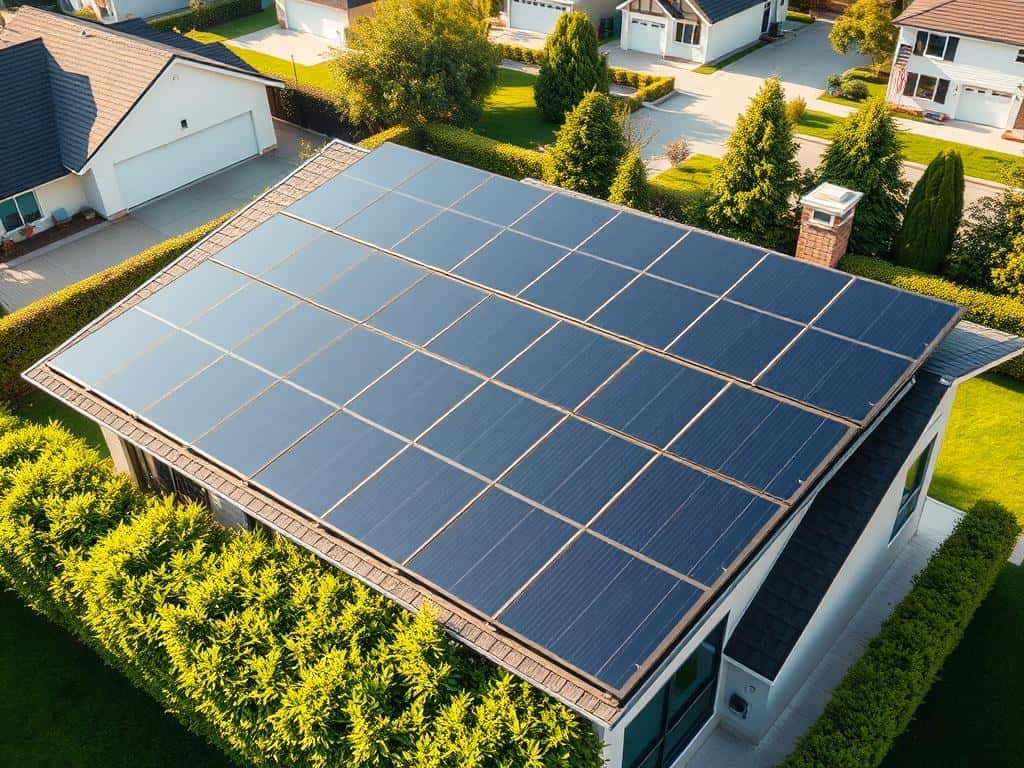
Did you know 78% of U.S. adults worry about rising home energy costs? Harnessing solar power is becoming more appealing for homeowners. A DIY solar project can lower your energy bills and introduce you to renewable energy.
By making your own solar panels, you can control your energy use and save on installation costs. This process can be fun and rewarding. Many workshops, even for fifth graders, teach people to solder solar cells together. This shows that anyone with basic skills can make their own solar panels.
This guide will show you the materials, steps, and benefits of setting up a solar panel system. It will be tailored to your energy needs.
Key Takeaways
- Building solar panels can cut installation costs nearly in half compared to hiring professionals.
- A DIY solar panel kit prices range from $35 to several thousand dollars.
- Lack of warranties is a significant consideration when opting for DIY solar projects.
- Basic technical skills are sufficient to successfully construct solar panels.
- Regular maintenance is key to ensure your DIY solar installation lasts long.
- Installing solar panels promotes sustainable energy practices.
Understanding the Basics of Solar Power
Learning about solar power is key to seeing its value and how it works. At the core are photovoltaic solar panels, which turn sunlight into electricity. This part will cover what photovoltaic solar panels are, how they work, and the big pluses of solar power for homes.
What Are Photovoltaic Solar Panels?
Photovoltaic solar panels catch sunlight and turn it into electrical energy. They’re different from solar thermal panels, which mainly make heat. These panels use special materials to change light into electricity. This lets homeowners make clean energy and help the planet.
How Photovoltaic Cells Work for Harnessing Energy
Photovoltaic cells use the photovoltaic effect to turn sunlight into electricity. They absorb photons and release electrons, creating a flow of electricity. This flow is then changed into alternating current by inverters. These panels are pretty efficient, capturing 15% to 25% of sunlight for home use.
Benefits of Using Solar Power for Your Home
Using solar power has many perks for homeowners. It can cut down electricity bills a lot. Homes with solar panels often sell for more, up to $14,329 more. Panels are guaranteed to work well for 25 years, showing solar energy’s lasting value.
This green energy makes homes less dependent on the grid and is better for the environment. It’s good for both homeowners and the planet, making it a smart choice for a sustainable future.
Step-by-Step Guide for Solar Power DIY
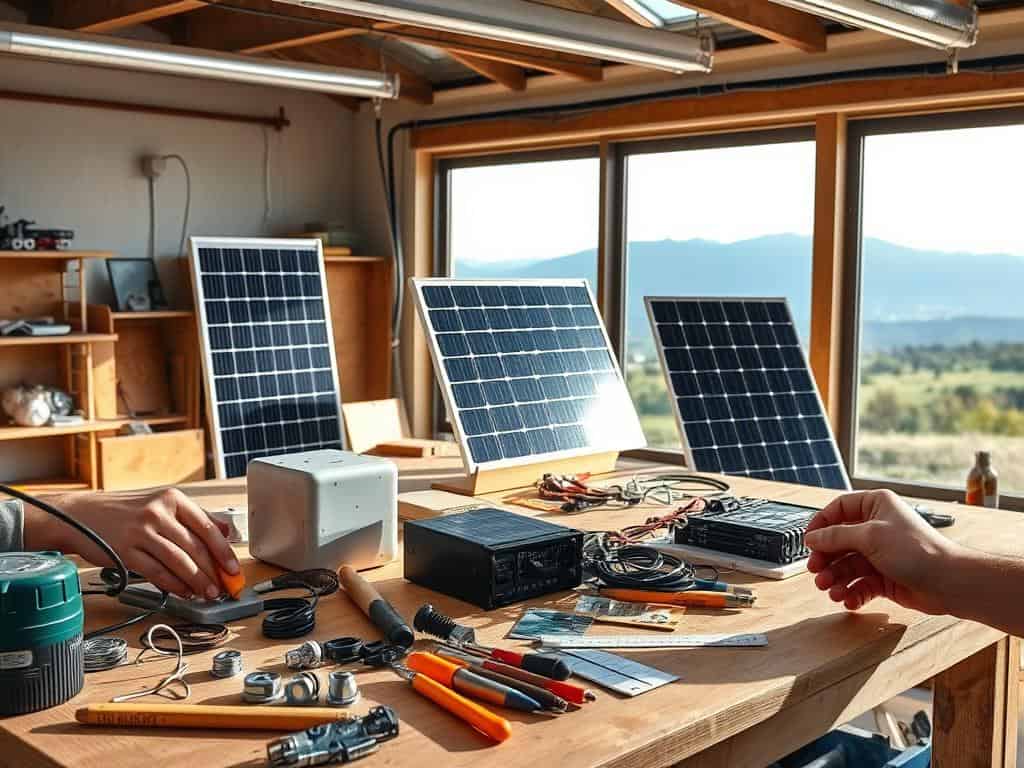
Building your own solar panel system is exciting and rewarding. The first step is to gather the right materials. You’ll need solar cells, electrical wiring, a soldering iron, plywood, pegboard, and paint.
Having everything ready before you start makes the process smoother. It also helps you save money on your DIY solar installation.
Gathering Materials Needed for Your Solar Panels
To start, make a list of the essential components for your solar panels. Solar cells are the core, while wiring and a soldering iron help with assembly. Choose high-quality materials for better efficiency.
A good DIY solar kit usually includes panels, inverters, and monitoring systems. But, you might need to buy electrical wiring separately.
Creating a Template and Backing Board
Next, design a sturdy template and backing board. I chose plywood for a solid base to hold the solar cells securely. A well-made backing board prevents damage and ensures the cells work well in sunlight.
This foundation is key for the panels’ long-term performance and efficiency.
Assembling Your Solar Cells
Assembling solar cells requires connecting them in series with busbars and tabbing wires. This setup helps generate enough power. Paying close attention to connections is important for efficient energy production.
Spending time on this step is worth it for better performance in the future.
Connecting the Electrical Components
After assembling the solar cells, connect them to a charge controller and junction box. Double-check each connection to ensure proper power flow. Following recommended specifications for inverters and using safety equipment is also important.
Finalizing the Installation and Safety Checks
Before finishing the installation, do thorough safety checks. These checks ensure the system works well and meets local rules. Documenting the installation process is helpful for future maintenance.
Investing 32 hours in a 16-panel system was worth it. It saved me a lot of money compared to traditional methods.
Conclusion
Building my own solar panels has shown me the value of DIY solar projects. They save a lot of energy and help us live more sustainably. As more people want solar energy, it’s a great time for homeowners to switch.
Creating a solar power system cuts down on electricity bills and reduces carbon emissions. This is a big win for our planet. It’s a smart move for anyone looking to save money and help the environment.
Solar power systems are durable and need little upkeep. They last 25 to 30 years, saving money over time. Products like the Jackery Solar Generator offer great power and long-lasting batteries.
Learning about solar energy is important. It’s key to know local rules and sometimes get help for complex tasks. DIY solar projects can be easy, but following the rules is important for growth and safety.
The solar market is growing fast. Now is a great time to get into solar energy. It’s not just good for us, but for our kids and grandkids too.
