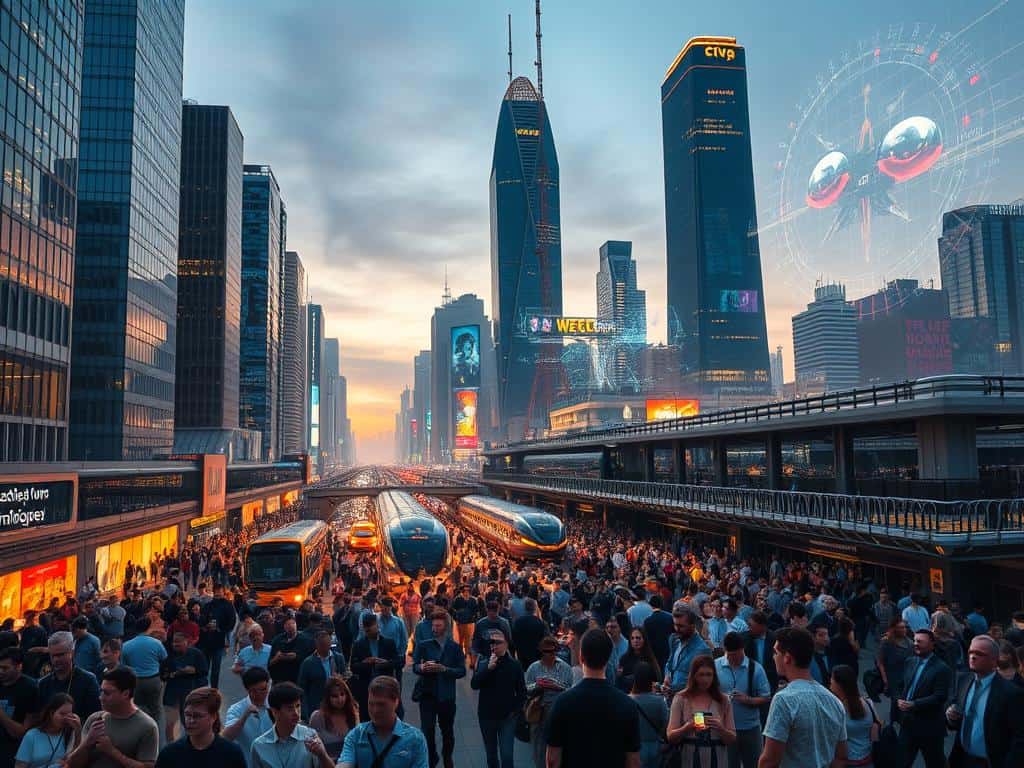
Did you know over 80% of the world now has a smartphone? This shows how much technology has changed our lives. It has made talking and meeting people online much easier.
Video chats, for example, have grown by 200% during the pandemic. This change shows how we connect with others has shifted. Now, we can talk to people far away instantly, unlike before.
Technology affects how we talk to loved ones and learn new things. It’s changing how we work too. As I think about these changes, I wonder what the future holds for us.
Key Takeaways
- The majority of people worldwide own smartphones, changing traditional communication.
- Video chat usage skyrocketed during the pandemic, altering how we connect.
- Technology influences not just communication but also education and workplaces.
- Digital tools are fundamental in bridging distance in personal relationships.
- The rapid growth of technology is set to shape the future of society.
Transformations in Communication and Social Interaction
Technology has changed how we communicate and interact socially. I now use digital channels more for staying in touch with friends and family. These tools, like instant messaging and video calls, make it easy to connect but also change how we interact.
The Rise of Digital Communication
Looking back, I see a big change. Now, 71% of youth aged 15–24 are online, up from before. Kids and teens under 18 make up about one-third of all Internet users worldwide. Instant messaging has made talking almost instant, unlike waiting weeks for letters.
During the COVID-19 pandemic, Zoom and Skype became key for staying in touch. They helped us keep connections alive when we couldn’t meet in person.

Impact on Personal Relationships
Technology has brought both ease and changes to personal relationships. While digital communication is convenient, it also alters how we connect. It’s led to new social norms, like “ghosting,” showing the complexity of tech-mediated interactions.
Dating apps became popular during social distancing, turning virtual connections into real ones. Research shows it’s key to mix digital and in-person interactions for deep relationships.
Society & Technology: Shaping Education and Work Environments
Technology is changing education and work. Online learning has made education more accessible, helping millions of students worldwide. New platforms and digital tools offer flexible learning options for everyone.
Online Learning Revolution
Online learning has brought big changes. Over 50 million students have joined MOOCs, showing how *technology in education* is changing things. Now, learners can find courses that fit their needs.
Tools like Google Docs and wikis are used more, up 60% in five years. Ninety percent of educators think technology improves student engagement and teamwork.
Remote Work and Automation
Technology has also changed work, making remote work common. About 40% of U.S. schools use blended learning now. This mix of classroom and online learning is seen in many industries.
Automation is changing jobs and work places. Seventy-five percent of colleges use online learning platforms. This shows how *technology in business* makes things more efficient and accessible.
Conclusion
Looking back, technology has changed our lives and society a lot. Now, most adults in the U.S. use the internet. This makes our communication very connected but also feels isolating at times.
Technology gives us easy access to lots of information and learning. But, it also brings emotional and social challenges. The fear of losing jobs to automation is a big concern, with 85 million jobs at risk by 2025.
On the bright side, technology can make work more efficient, boosting productivity by up to 40%. But, there’s a downside too. Cyberbullying affects 70% of teenagers, showing we need a safe online space. Also, 79% of Americans worry about their personal data privacy.
This makes me think we need to use technology wisely. I want to find a balance between enjoying its benefits and keeping my well-being safe. Success in this digital age means using technology in a way that respects our values and relationships.
