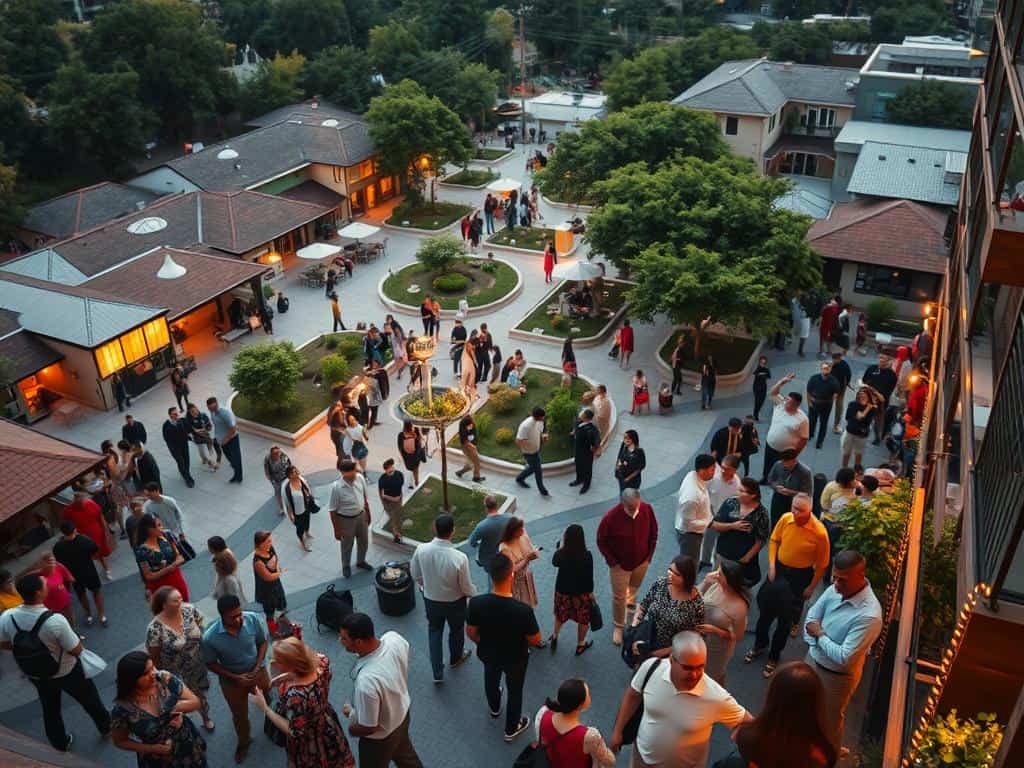
Did you know 52% of Americans feel lonely? This shows a big problem in our society today. We need to focus more on being connected to others. In our busy lives, keeping in touch with friends and family is key to our happiness and the health of our communities.
The way we connect is changing with new technology. This change helps us build stronger, more resilient communities. During hard times, like the COVID-19 pandemic, these connections are more important than ever.
Building strong community ties is vital for our health and safety. It also helps our communities grow and thrive. By focusing on these connections, we can make our communities better places to live. We can help each other face the challenges of today’s world.
Key Takeaways
- 52% of Americans report feelings of loneliness.
- Building relationships can greatly enhance community resilience.
- Strong social ties contribute to community safety.
- Social connectivity can boost economic productivity significantly.
- The quality of relationships plays a critical role in determining life satisfaction.
- Connected communities are better equipped to tackle societal challenges.
- Investment in social infrastructure can yield high social returns.
The Importance of Social Connectivity in Community Resilience
Strong social connections are key to a community’s resilience. They help neighborhoods face challenges head-on. In times of crisis, these ties are vital for support.
The 1995 Chicago heat wave showed the dangers of isolation. It led to a sharp increase in deaths because of a lack of community help.
The Link Between Social Ties and Resilience
Communities with strong bonds can help each other through hard times. Good relationships boost emotional wellbeing and health. This makes the community stronger.
When neighborhoods focus on social connections, they fight isolation. They also improve life quality by encouraging people to get involved.
Research on Loneliness and Health
Studies show loneliness is as harmful as smoking. People without close friends face health risks, like chronic diseases. Many in cities find it hard to make new friends, making them more vulnerable to health problems.
Despite this, people want to be part of their communities. This shows the need for efforts to strengthen social bonds.
Building Stronger Networks Through Community Engagement
Community engagement does more than just connect people. It builds a spirit of working together that strengthens local bonds. Successful projects bring people closer and give groups the power to solve problems together. This makes community life richer and more connected.
Local Initiatives and Their Impact
Local events and projects are key to building connections. For example, acts of kindness programs help people feel less alone and more part of a community. These efforts let people share, interact, and use their strengths to face challenges together.
The government sees the value in these efforts, providing funds to support them. This shows how important they are in fighting social isolation.
The Role of Digital Platforms
Digital platforms have changed how we connect, even when we can’t be together. They open doors to relationships that might not be possible in person. Companies like Starbucks and Sephora use digital tools to boost community involvement.
They ask for feedback and create spaces for talks. This leads to a stronger sense of community. Also, digital platforms can show how well they’re working through numbers like likes and comments.
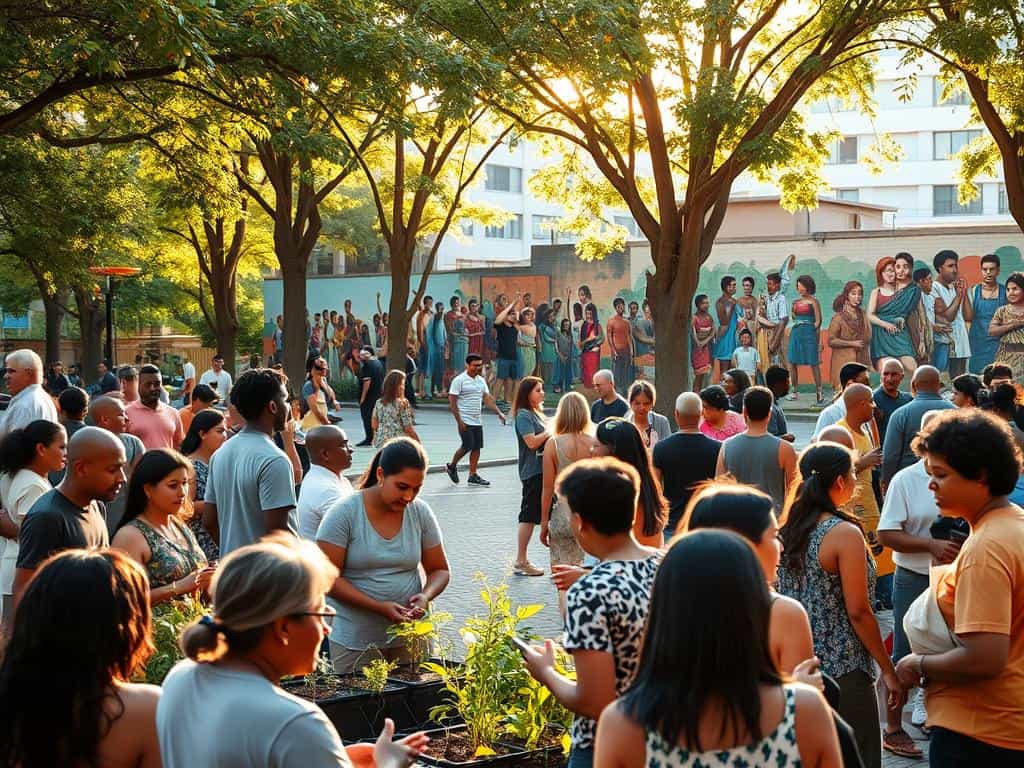
Conclusion
Looking into the role of social connections in future communities, we see they are key. They help make communities stronger. Studies show people with strong social ties are less likely to die early. This shows how important being connected is for our lives and society.
Social isolation can harm our health. So, we need to build strong relationships in our communities. This is vital for our well-being.
When facing big challenges like natural disasters, the power of connections is clear. A study found that social ties can increase survival chances by 50%. This highlights the need to tackle loneliness in America.
By focusing on both in-person and online interactions, we can build a better community. This approach helps us stay connected and strong together.
In summary, investing in community projects is essential for our health and safety. As we focus on community resilience, we must work to reduce isolation. By doing so, we can create vibrant, supportive communities that face challenges together and grow stronger.
