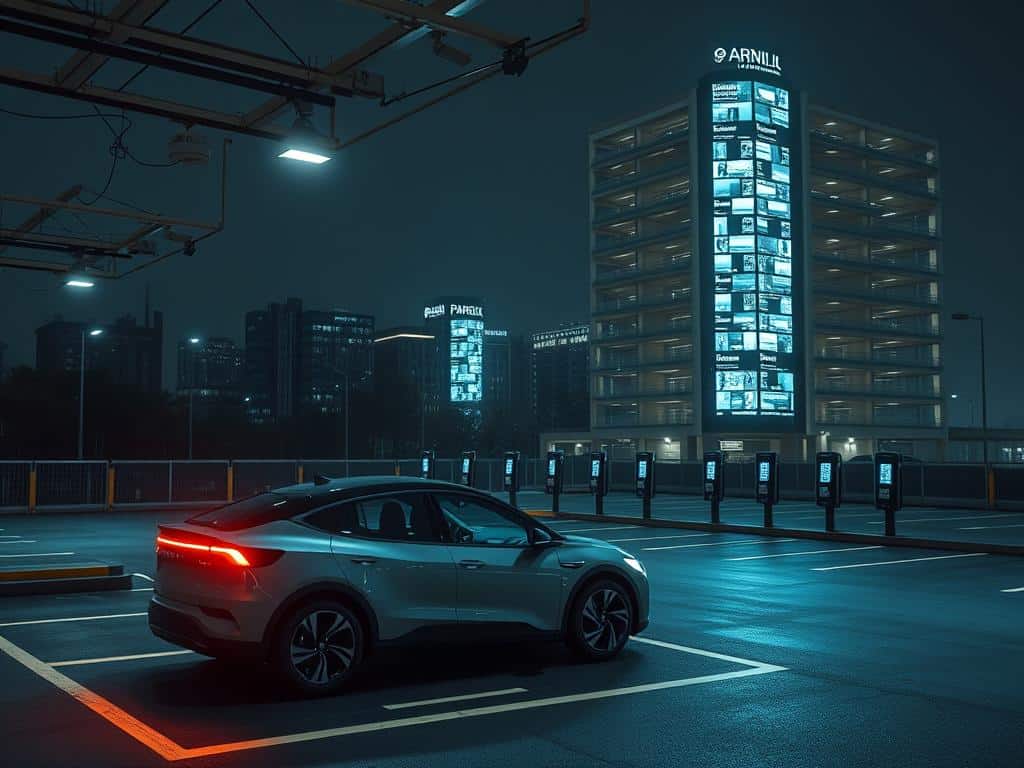
Did you know the average driver in the U.S. spends 17 hours a year looking for parking? This wastes a lot of time and causes about 950,000 tons of CO2 emissions every year. Smart parking technology is changing this by using IoT and new software.
It makes finding a parking spot easier by showing where spaces are available. It also has automated payment systems and apps like ParkMobile. This is making parking in busy cities less stressful.
In this article, we’ll look at how smart parking is helping cities become smarter and transportation more efficient.
Key Takeaways
- Smart parking reduces the average search time for a space from 51.26 seconds to just 10.10 seconds.
- Implementing smart parking can decrease traffic congestion by up to 30%.
- Parking facilities equipped with smart technology can increase revenue by 10% to 20%.
- Real-time data from smart systems can optimize parking space utilization by up to 50%.
- Smart parking technology significantly lowers CO2 emissions and improves user satisfaction.
- Advanced sensors and cameras are key components of effective smart parking systems.
Understanding Smart Parking Technology
In today’s crowded cities, finding parking is a big challenge. Smart parking tech aims to fix this by using real-time data. It makes parking easier for drivers and helps parking operators too.
What is Smart Parking?
Smart parking uses parking technology like sensors and cameras. It also includes mobile apps. This setup helps track parking spots in real-time. It makes parking less stressful and easier to find.
How Smart Parking Systems Operate
Smart parking systems collect real-time data on parking spots. Cameras and sensors watch over many spaces at once. This way, drivers get quick info on where to park, saving them time.
Key Components of Smart Parking
Smart parking has mobile parking applications for reservations and spot info. IoT tech helps set prices for parking, boosting revenue. It also helps cities manage parking better, improving city flow.
Benefits of Smart Parking
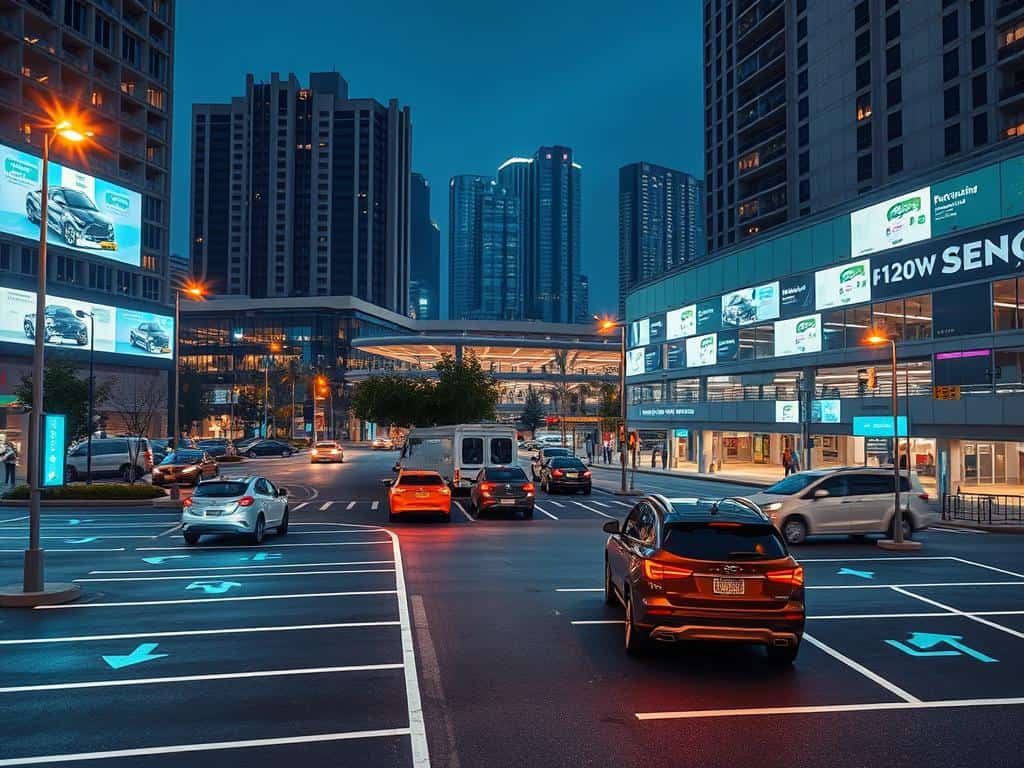
Smart parking systems bring many advantages to both drivers and parking operators. They make parking more efficient and enjoyable. This leads to better experiences for everyone involved.
Time and Fuel Savings
Smart parking helps drivers find parking spots quickly. This means less time circling around looking for a place. It also saves fuel, which is good for the environment.
Studies show that smart parking can cut search times to seconds. This means less time idling and lower emissions. It’s a win for both drivers and the planet.
Increased Revenue for Parking Operators
Smart parking also helps parking operators make more money. They can use real-time data to manage parking better. This leads to more efficient use of space and the chance to set prices based on demand.
This approach can increase revenue and make customers happier. It’s a smart move for operators looking to grow their business. The benefits of smart parking far outweigh the costs.
Conclusion
Smart parking technology is changing how we move around cities. It makes finding parking easier and helps cities run better. By cutting down the time drivers spend looking for spots, it tackles big city problems like traffic and pollution.
Smart parking systems bring big wins for cities. They use spaces better, sometimes by 20%. They also help cities make more money, up to 15%, by changing prices based on demand. This makes cities greener and traffic smoother.
As tech gets better, linking smart parking with city systems is key. It helps manage traffic and makes cities smarter and more connected. Investing in these techs makes cities healthier and more lively for all.
