
Did you know smart toilets can cut toilet paper use by up to 75%? This shows a big change towards being more eco-friendly. Smart bathrooms are changing how we keep ourselves clean and comfortable every day.
The way we clean ourselves has changed a lot. Now, we have smart bathrooms with IoT tech. They have cool features like automatic flushing and self-cleaning. These new bathrooms are making our bathroom time better.
The smart toilet market is growing fast. It was worth about $4.5 billion in 2020. By 2027, it’s expected to hit around $9.5 billion. It’s clear that smart bathrooms are becoming a must-have for health-focused people worldwide.
Key Takeaways
- Smart toilets significantly reduce toilet paper usage.
- Automatic cleaning features cut manual cleaning frequency.
- Consumer willingness to invest in enhanced hygiene features is rising.
- The smart toilet market is poised for rapid growth over the coming years.
- Smart bathrooms are integral for promoting sustainable sanitation practices.
- Data security concerns remain a barrier to widespread smart toilet adoption.
The Evolution of Bathrooms: From Basic to Smart
The change in bathrooms from simple to smart spaces is huge. It shows a big bathroom evolution. To understand this, we need to look at the historical context of bathroom design over time.
Historical Context
Bathrooms started with basic latrines in ancient times. These early systems were not clean or efficient. The Roman Empire changed things with advanced sewers and public baths.
In the 19th century, indoor plumbing became common. This led to modern toilets that were cleaner and easier to use. Now, bathrooms can be as big as bedrooms, with lots of space.
The Birth of Smart Technology in Bathrooms
The introduction of smart technology in bathrooms has brought big changes. As people became more aware of hygiene, products like the BB-1200 bidet toilet seat were made. It has features like a night light and a wireless remote.
Now, we have smart showers and faucets with motion sensors. They can save up to 70% of water. Companies are focusing on wellness and saving the environment.
Technologies like Vivoo’s sensor systems can check the toilet bowl and send health info to phones. This shows how bathrooms are becoming health centers. Brands like Watermark and Atlas offer high-quality fixtures for luxury bathrooms.
The market for smart bathroom tech is expected to grow by 23.5% by 2030. This means lots of new ideas will come. As people want more, smart showers with safety features are becoming popular. This shows the ongoing bathroom evolution.
Understanding Smart Bathrooms
Smart bathrooms are filled with new features that make our lives better. They use the latest in healthcare technology. This makes them key in our digital world today.
Key Features of Smart Bathrooms
Smart bathrooms have cool stuff like smart showers. You can change the temperature and water flow easily. Smart toilets are also popular for their automated flushing and heated seats.
They even have self-cleaning and water-saving features. Plus, they come with ambient lighting. Smart faucets help save water, using up to 50% less than old faucets.
Smart mirrors show news and weather on their LED screens. They look great in any bathroom. You can control these devices with your phone or voice, making life easier.
The Benefits of Smart Bathroom Technology
Smart bathrooms are more than just comfy. They also keep us cleaner. Many devices don’t need you to touch them, which helps stop germs.
For example, smart toilets use less water, saving up to 30%. This is good for the planet. Smart bathrooms also make our homes safer by controlling water temperature and using energy wisely.
They save energy by turning lights on only when needed. This can cut down electricity use by up to 60%. Smart bathrooms are changing our bathrooms into healthier spaces.
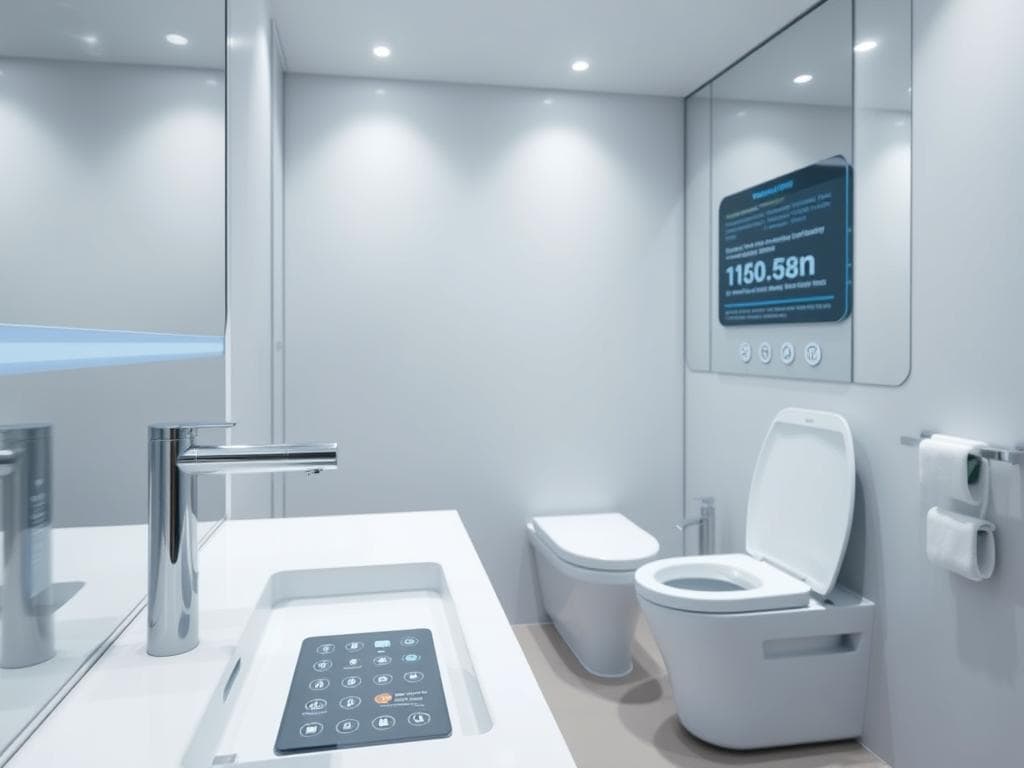
Smart Bathrooms: The Future of Hygiene
Bathrooms are changing with new technologies, making hygiene better. Soon, our bathrooms will help us stay healthy every day. With smart home tech, they’ll do more than just clean us.
Innovations on the Horizon
Smart toilets are changing how we stay clean. They come with AI to check our health. This could make our bathrooms key to keeping us healthy.
Smart faucets save water by up to 70%. Touchless fixtures are getting more popular, up 40% after 2020. Smart showers also save water, cutting it by 50%.
Impact on Public Health
Smart bathroom tech is good for public health. Touchless soap dispensers can stop germs by over 90%. Using these techs helps keep everyone healthier.
Smart ventilation cuts mold by 80%. Automated cleaning in bathrooms keeps them clean all the time. These techs are making our society healthier.
Conclusion
Exploring smart bathrooms shows they’re leading a personal hygiene revolution. They’ve moved from simple to advanced, changing how we see cleanliness and ease. Features like touchless faucets and self-cleaning toilets cut water use by up to 30%.
This shift fits perfectly with the need for health-focused homes. Here, efficiency and wellness are key. It’s amazing how these changes are happening.
The smart bathroom market is set to grow fast, with a 15% CAGR from 2023 to 2030. New features like energy-saving lights and smart mirrors are appealing. They offer health tips and make life easier.
Homeowners value these upgrades, with 60% choosing them for convenience. This shows how much we want to make our lives better.
Smart bathrooms blend comfort with sustainability. They improve our hygiene and health. It’s not just about luxury; it’s about better health and lifestyle.
