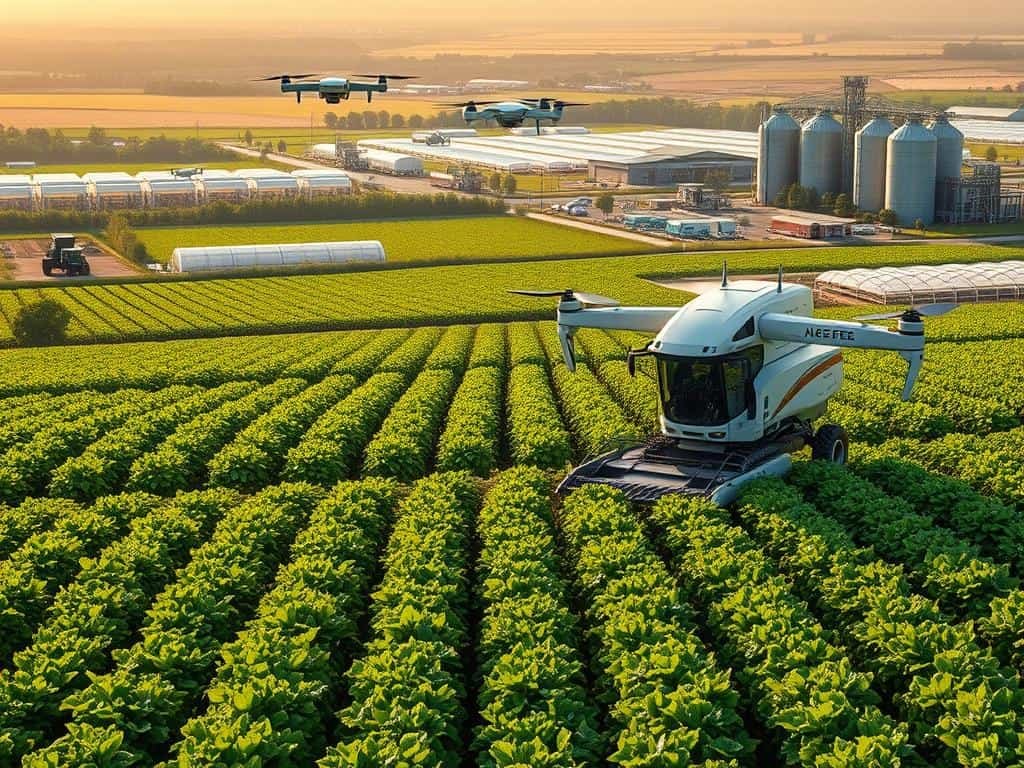
Did you know the global Smart Agriculture market is set to hit USD 43.37 billion by 2030? It’s growing at a 10.2% Compound Annual Growth Rate. This shows how big of a change automation in farming is making. It’s helping us tackle big issues like climate change, labor shortages, and the need for more food.
Technologies like the Internet of Things (IoT) and precision agriculture are changing farming. They help farmers work smarter and more sustainably. This means they can grow more food while taking care of the planet.
Automation is at a turning point in agriculture. Farmers need to use new tech to stay ahead. This tech lets them analyze data in real-time, making better choices that save money and resources. Robotics and Big Data are key to making farming better, not just more productive.
Key Takeaways
- The global Smart Agriculture market is expected to reach USD 43.37 billion by 2030.
- Automation technologies are key for better farming.
- Real-time data helps farmers make smart, cost-saving choices.
- Robotics and Big Data are changing how farmers manage their work.
- Farmers using automation can cut down on costs.
The Evolution of Smart Agriculture
Agriculture has changed a lot with the rise of smart farming. This change is thanks to new automation technologies. These tools help farmers deal with big challenges like weather changes and high labor costs.
By using data, farmers can manage resources better. This makes farming more efficient and sustainable.
Introduction to Automation in Agriculture
The start of modern farming was in the 1980s with precision agriculture. Automation has grown a lot, becoming key for today’s farming. A big step was the creation of self-driving tractors in the early 2000s.
This was thanks to a partnership between John Deere and NASA. It shows how farming now relies on advanced systems. These systems make farming more productive and use resources better.
Types of Automation Technologies
Many automation technologies have come up, helping smart farming grow. For example, GPS in tractors has improved a lot. In 2016, only 3% of Valtra tractors had GPS.
By 2017, that number jumped to about 45% of new tractors with Smart Farming tech. These tools help control farming better. They save time and reduce harm to the environment.
Case Studies of Successful Automation Implementations
There are many examples of how automation works well in farming. A California winery saw a 26% increase in yields. It also used 16% less water.
In Kazakhstan, a smart greenhouse uses IoT and AI to grow crops better. In the UK, dairy farms track cattle to improve milk and manage animals better. These stories show how automation boosts farming and helps it be more sustainable.
Benefits of Automation in Smart Agriculture
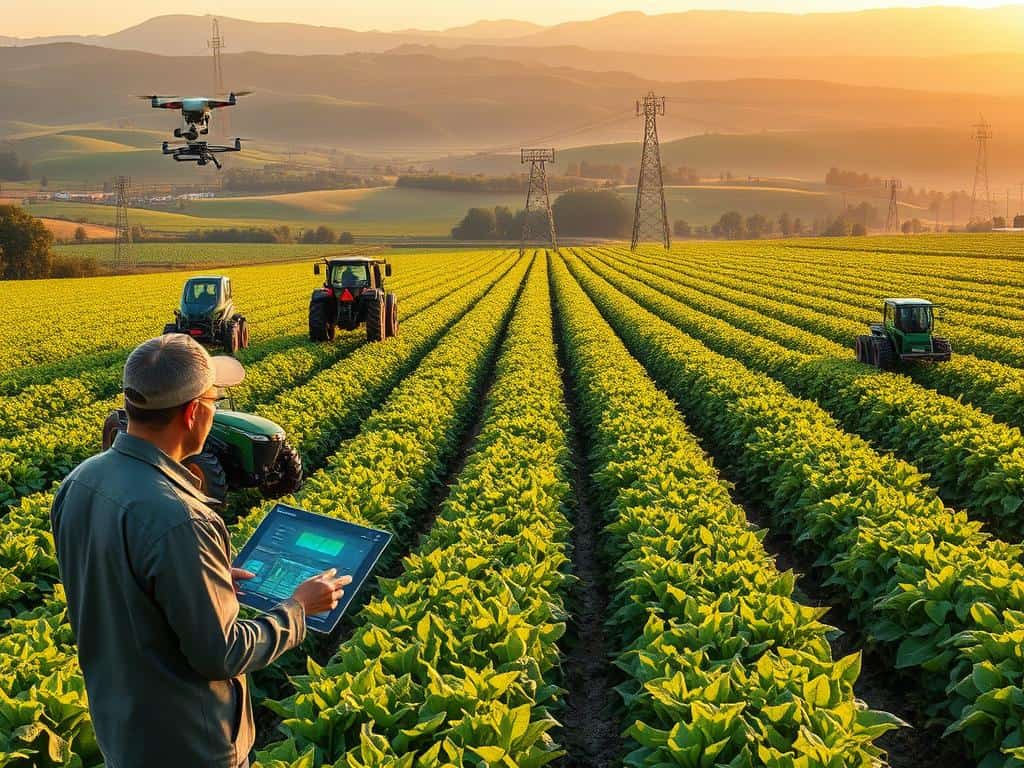
Automation in agriculture brings many benefits. It helps meet the world’s growing food needs. With the world’s population set to hit 9.7 billion by 2050, we need more food. Automation makes farming more efficient, using new tech to grow more with less.
Enhancing Productivity and Efficiency
Automation boosts farm productivity. It lets farmers grow more with less manual work. AI helps manage crops and animals better.
Automated farming saves costs. It can make farms up to 30% more efficient. This helps farms stay profitable despite rising costs.
Reducing Environmental Impact
Automation helps farms be greener. Old farming ways cause 22% of global greenhouse gas emissions. New tech can cut these emissions by 15-20%.
Smart irrigation saves water. It checks soil moisture to keep crops healthy. This reduces waste and helps the environment.
Improving Labor Management
Automation makes managing farm workers easier. The number of farm workers is falling. Automated systems help manage tasks better.
These systems let farmers control many machines at once. This cuts labor needs by 25%. It helps farmers work smarter, not harder.
Conclusion
The future of smart agriculture is closely linked to automation. This technology boosts both productivity and sustainability. With a global population expected to hit 9.7 billion by 2050, using these innovations is key.
Automation in agriculture brings many benefits. It makes farming more efficient, cuts costs, and helps the environment. This ensures we have enough food for future generations.
But, there are challenges to automation. High upfront costs, job losses, and the need for community support are big hurdles. We must work together to overcome these obstacles.
By teaming up, we can create programs to help farmers adopt new tech. This includes education and financial support. Together, we can make the transition smoother.
As we face changing climates and growing food needs, combining disaster risk reduction with climate-smart farming is critical. We need to talk about this to use our resources wisely. This way, we can build strong, resilient farms that can handle uncertainty.
Embracing automation will change farming forever. It will also transform how we produce food sustainably. This is a big step towards a better future for all.
