
Did you know water makes up 90-96% of any beer? This fact shows how amazing home brewing is. I can make craft beer in my kitchen with simple ingredients. It’s not just a hobby; it’s a fun way to explore flavors and techniques.
Whether I start with a 1-gallon setup or move to all-grain methods, this guide helps. It teaches me everything from ingredients to brewing. I can turn my passion into something I can be proud of.
Let’s dive into the basics of home brewing. This journey is for both newbies and experienced brewers. Together, we can make our own delicious DIY beer.
Key Takeaways
- Home brewing is easy with the right tools and ingredients.
- Water is key in brewing, making up most of the recipe.
- Starting with a 1-gallon setup saves time and reduces waste.
- Many start with extract brewing before trying all-grain methods.
- Knowing about fermentation and conditioning is vital for great beer.
- The home brewing community is huge and growing fast.
The Basics of Home Brewing
Starting to brew beer at home is exciting and rewarding. It lets you make unique beers that you love. With some effort, you can make great craft beer right at home. Enjoying your own beer is worth the wait of a few weeks.
What Home Brewing is All About
Home brewing means you control every step of making beer. You can try new flavors and recipes. With basic tools and knowledge, brewing can become a fun and rewarding hobby.
Understanding the Key Ingredients
The heart of brewing is knowing your ingredients. You need water, malt, hops, and yeast. These mix together to create the beer’s taste, body, and smell.
Water, Malt, Hops, and Yeast
Water is key in brewing, making up most of the beer. If your tap water tastes good, it’s a great choice. Malted barley gives the beer its sugar. Hops add bitterness and aroma. Yeast turns sugar into alcohol and carbon dioxide.
Essential Equipment for Home Brewing
Starting my home brewing journey, I learned how key the right equipment is. It makes brewing easier and improves the beer’s quality. You’ll need starter kits, brewing tools, and sanitizers for a smooth process.
Recommended Starter Kits
Starter kits are perfect for beginners. They come with important items like a fermenting bucket and airlock. These kits are great because they don’t include bottles, saving money for new brewers.
Important Brewing Tools
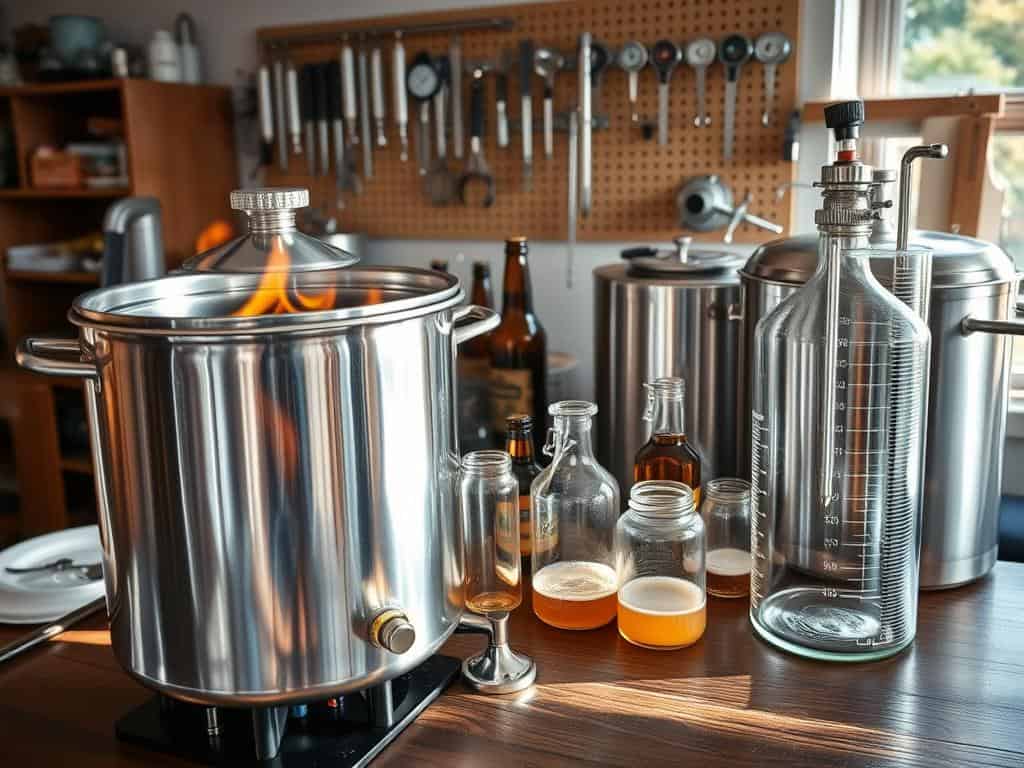
Having the right tools makes brewing better. A big pot, 4 to 5 gallons, is needed for heating. A hydrometer checks the wort’s progress. A propane burner helps with temperature control, perfect for big batches.
Sanitization Equipment
Cleanliness is key in brewing. Using a sanitizer like One Step cleaner keeps tools safe from germs. Sanitizing well stops contamination and bad tastes. Always follow the sanitizer’s guide to keep your space clean and your beer safe.
Step-by-Step Guide to Home Brewing
Starting your home brewing journey is exciting and rewarding. This guide will help you through each step. We’ll cover preparing ingredients, brewing, fermentation, and conditioning your beer.
Preparing the Ingredients
First, I make sure all my equipment is clean to prevent contamination. I steep grains in hot water, between 80-110°F, for 20 minutes. This step dissolves the sugars from the grains, creating the wort, the brew’s heart.
The Brewing Process Explained
Then, I boil the wort, adding bittering hops first for bitterness. Later, I add flavoring hops for aroma and taste. After boiling, I cool the wort to 68°F in 20 minutes to stop wild bacteria. Once cooled, I add yeast, starting the fermentation.
Fermentation and Conditioning
After adding yeast, I seal the fermenter with an airlock and store it in a cool, dark place for two weeks. The yeast turns sugars into alcohol. After fermentation, I add priming sugar to the beer for carbonation. This step takes one to two weeks at room temperature. The wait is worth it for the delicious homemade beer.
Conclusion
Starting a home brewing journey is rewarding and exciting. It lets you make unique craft beers. You learn about key ingredients like water, malt, hops, and yeast. You also get to know the equipment needed.
Getting started costs about $160 for a 5-gallon batch. But, you can save $28 per batch. This shows that home brewing is accessible for beginners.
Home brewing lets you be creative and try new things. You can start with simple extract methods or go for all-grain brewing. It’s a chance to experiment and make recipes that you love.
As you get better, your hobby can become a passion. You’ll enjoy sharing your beer with friends and family. It brings happiness to everyone involved.
The fun of brewing and sharing your beer is more important than the cost. Home brewing is about innovation and building a community. Thanks to advancements like the Pinter system, it’s easier for everyone to join in.
So, why not start your craft beer journey today? Discover the joy of every sip of your homemade brew.
