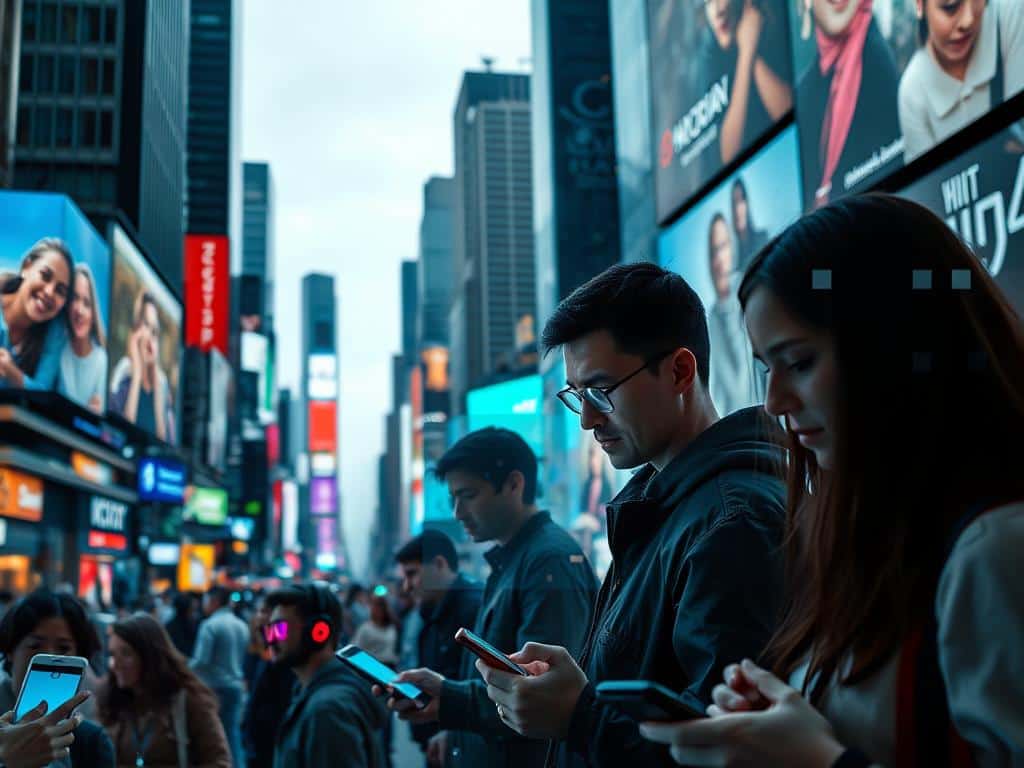
Did you know that by 2020, 2.9 billion people were expected to use social media? This shows how big the digital society is. It has changed how we talk to each other today. I’ve noticed how online chats have changed my friendships, making new connections possible.
Most Americans think digital tech helps their relationships. They use sites like Facebook, Instagram, and Snapchat to stay connected. But, this change also brings challenges.
Online chats can help us make new friends, but they can also make us feel alone. For example, 50% of LGBT youth have online friends, compared to 19% of others. This shows both sides of digital society—support and lack of face-to-face interaction. As we keep using new tech, understanding its effects is key.
Key Takeaways
- The digital society has transformed the nature of human interactions.
- By 2020, 2.9 billion people were projected to be using social media.
- Nearly 70% of Americans view digital technology positively regarding their relationships.
- 50% of LGBT youth reported having at least one close online friend.
- The average American spends about 23 hours a week online or on social media.
- More couples are expected to meet online, rising to 70% by 2040.
- Physical interactions remain essential for mental health and well-being.
The Rise of the Digital Society and Its Impact on Communication
The digital society has changed how we talk to each other. Technology has made our connections different. Now, over 4.5 billion people use the internet, which is about 57% of the world’s population.
This shows how big digital platforms are in our lives.
Understanding the Growth of Digital Communication
Digital talk is now a big part of our lives. We prefer texting over calling, with 70% of people choosing text messages. Messaging apps are now our main way to talk to each other.
This shift might make us less good at reading people’s emotions face-to-face.
Statistics on Internet Usage and Social Media
Social media is huge in the US, with 90% of adults online. About 72% use it to stay in touch with loved ones. This shows how important it is for keeping relationships alive.
Worldwide, over 4.9 billion people use social media. This huge number shows how connected we are online.
The Role of Messaging Apps in Modern Communication
Messaging apps like WhatsApp and Snapchat are growing fast, with a 15% yearly increase in users. Over 2 billion people use these apps, making them key for talking to each other.
They make talking easy and fast. But, they might also make us miss out on deeper conversations.
Digital Society: Mobilizing Communities and Fostering Connections
The digital world has changed how we connect. It lets us build strong virtual support networks across the globe. These networks help groups, like those who are often overlooked, come together. They boost solidarity, empowerment, and get people involved.
Creating Virtual Support Networks
Online platforms are key for building virtual support networks. They help people talk and find emotional support when they feel alone. For example, being part of online groups can cut down feelings of loneliness by 40% for those who are often left out.
Sharing experiences online helps people feel like they belong. It gives them emotional support and encouragement from others who get what they’re going through.
Impact on Marginalized Groups
Social media is a powerful tool for groups that are often ignored. The hashtag #BlackLivesMatter got over 24.5 million tweets in just a few months. This shows how online activism can make a big difference.
Online forums let people fight for their rights and the issues that affect their communities. They help spread awareness and get people involved in politics. Stories on platforms like Humans of New York have touched millions, showing the strength of diverse communities.
The Role of Social Media in Political Movements
Social media is key in starting and growing social movements. People use these platforms to plan events, share news, and get support. The fast growth of r/WallStreetBets shows how online groups can change things, even in finance.
This shows how online connections can lead to real changes. Social media helps communities come together and drive change. It shows the power of online connections in making a difference.
Challenges of Digital Communication in Human Interactions
The shift to a digital society has changed how we talk to each other. While online chats are convenient, they also bring big challenges. Without non-verbal signs like tone or facial expressions, we often get things wrong.
This shows how easy it is for messages to be misunderstood. It’s a big risk when we use digital tools to talk.
Risks of Miscommunication in Digital Conversations
Misunderstandings are common in online chats. Texts, emails, and social media posts can be tricky to understand. Without the context of face-to-face talks, messages can be misread.
This makes our online talks less effective. The more we rely on digital communication, the more we risk getting things wrong.
Cyberbullying and Online Deception Issues
Cyberbullying is a big problem online. Anonymity lets some people bully others, hurting their feelings. This is a big issue for those who are already vulnerable.
Online scams and fake profiles also make things worse. They can make people doubt who to trust. This makes it hard to build real connections.
The Isolation Paradox: Connecting Yet Feeling Alone
Our digital world is full of irony. Despite being online a lot, many feel lonely. Social media may show lots of friends, but real connections are rare.
Unlike in-person talks, digital chats often don’t help us feel less alone. They can even make us feel more isolated.
Conclusion
The digital society is changing how we connect with each other. It brings new ways to connect but also faces challenges to our relationships. As I explore this digital world, I see the importance of balancing tech use with real human connections.
Looking back, I realize digital platforms have a big impact on us. They make knowledge easy to find and can connect billions instantly. Yet, we question their role in our lives. I aim to find ways to make digital society benefit our need for real connections.
Looking to the future, I want to mix digital benefits with the value of face-to-face interactions. The digital society’s growth shows we must value human connections as we embrace new tech. My goal is to help create a future that values both digital and real-world interactions equally.
