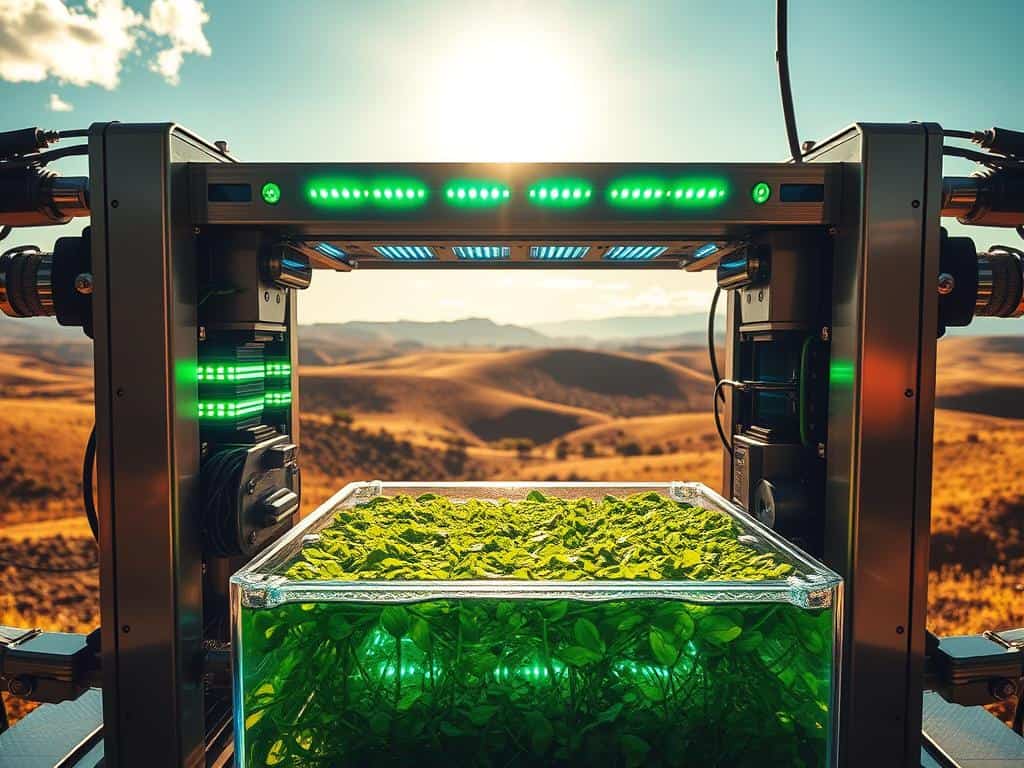
Did you know artificial photosynthesis systems can be up to ten times more productive than before? This breakthrough could help solve our energy crisis. As we need more sustainable energy, using fossil fuels is no longer an option.
Natural photosynthesis turns sunlight into energy at a 3–6% rate. But, new artificial photosynthesis is making big strides. Places like the University of Chicago and MIT are working on it. They’re using new materials to make systems that could produce fuels like hydrogen and methane.
This could change how we get renewable energy. Artificial photosynthesis could also help us use less carbon. It’s a big step towards a sustainable future in the face of climate change.
Key Takeaways
- Artificial photosynthesis is significantly more productive compared to previous energy systems.
- Natural photosynthesis is not sufficient to meet vehicle fuel demands, necessitating innovation.
- Scaling efficiency in artificial systems is critical for meaningful fuel production.
- The environmental benefits of artificial photosynthesis include only producing oxygen and water.
- Public acceptance is vital for the widespread implementation of this green technology.
- Continued research and investment are required to overcome current challenges and costs.
The Promise of Artificial Photosynthesis in Energy Production
The search for clean energy has led to artificial photosynthesis. It aims to mimic how plants make energy from sunlight, water, and carbon dioxide. This method could help meet our growing energy needs.
Understanding the Basics of Photosynthesis
Natural photosynthesis is very good at turning sunlight into energy, storing about 60% of it. It has been perfected over 3 billion years. Even though plants only use 10% of sunlight, they inspire new ways to use more of the sun’s energy.
Challenges with Fossil Fuels and Energy Demand
Using fossil fuels is causing big problems, like climate change and running out of resources. About 40% of our transportation can’t be powered by electricity. This makes finding clean energy sources even more urgent.
What Is Artificial Photosynthesis?
Artificial photosynthesis is a new way to make fuel from sunlight. It uses special materials and methods to try and beat natural systems. It could make a lot more energy, up to 80% efficient.
Scientists have been working on it for decades. They think we might see it in use soon, maybe in the next 10 years.
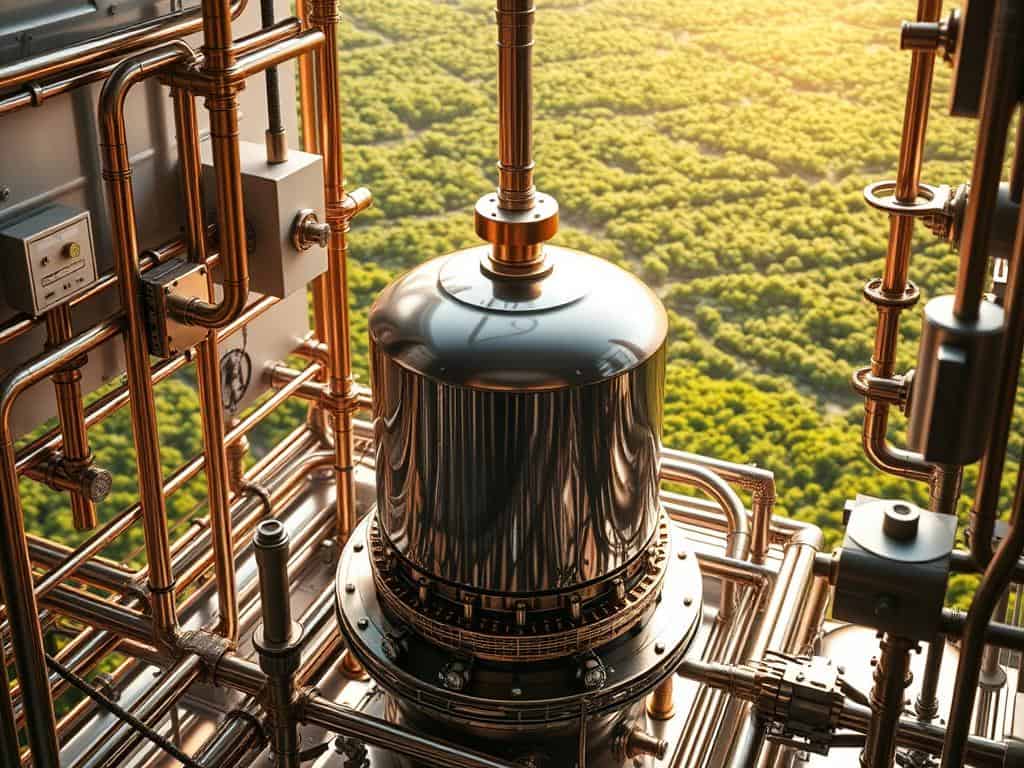
Artificial Photosynthesis: A Viable Solution for Sustainability
Artificial photosynthesis is a game-changer for making energy. It works like plants do, turning sunlight into energy we can use. This tech has made energy production much better, with some methods creating fuels that are way better than before.
Production of Renewable Fuels
Artificial photosynthesis can make renewable fuels like hydrogen and ethanol really well. It’s up to 18 times better than old ways. This helps us use energy in a cleaner way and supports green projects. Also, growing algae with this method is four times more efficient than usual, which is a big win for green energy.
Benefits for the Environment
Artificial photosynthesis is great for the planet. It doesn’t pollute like fossil fuels do. Instead, it makes oxygen and water, which are good for our world. This helps fight climate change and makes our future cleaner.
Versatility and Efficiency
This tech works well in many places, even where it’s not very sunny. New tech has made it easier to use on a big scale. It’s not just for fuel; it can also make important chemicals for things like fertilizers and plastics. This makes it a key part of our quest for a sustainable future.
Conclusion
Artificial photosynthesis is a promising solution to the global energy crisis. It uses sunlight, a clean energy source. Even though it’s not yet ready, the progress is encouraging.
The best lab results show an efficiency of 22.4%. This makes us hopeful about the future. But, there are big challenges like cost and making it work on a large scale.
Research centers worldwide are working on artificial photosynthesis. They’re in the United States, Sweden, and Japan. Their work could lead to new ways to make energy.
They’re combining chemistry with renewable energy. This could change how we make energy. It could also help make fuels like ethylene and hydrogen.
While there are hurdles, keeping up the research is key. It could change our energy use for the better. This could help us make our planet greener and cleaner.
