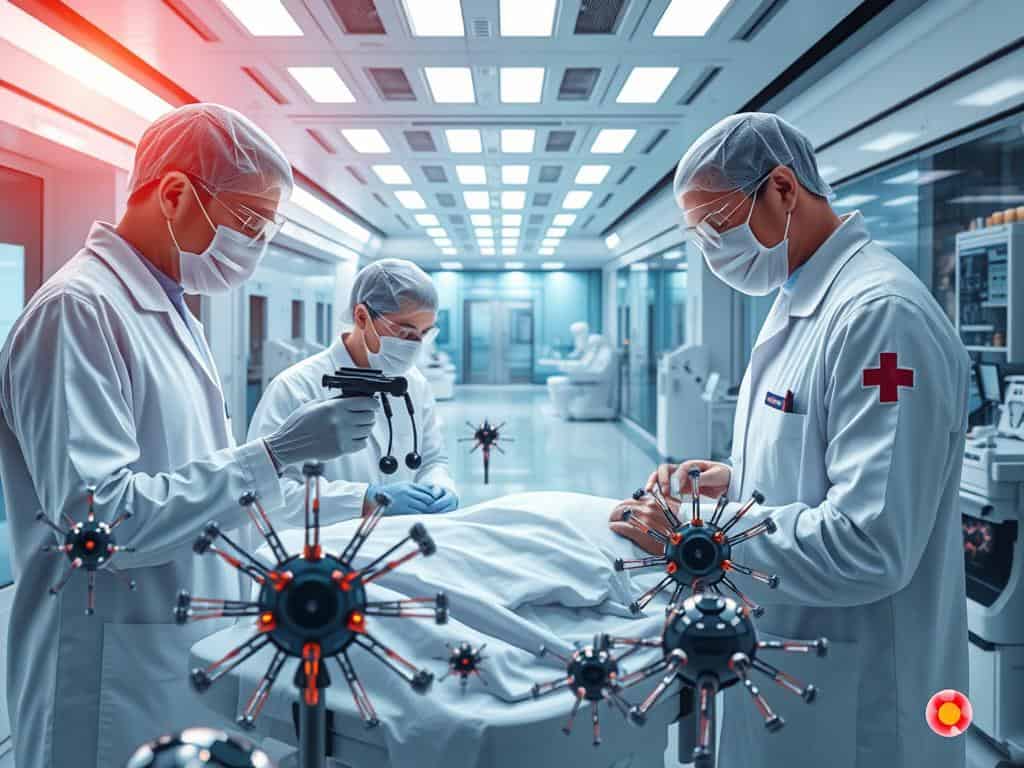
Did you know the nanotechnology industry was set to hit $1 trillion by 2015? This is a huge jump from just seven years before. It shows how fast nanotechnology is changing many fields, including healthcare.
Nanomedicine mixes nanotechnology with biology to better diagnose, treat, and prevent diseases. Today, over 800 nanotechnology-based products are available. This shows how nanomedicine is already changing patient care.
By using nanomedicine, treatments can be more effective, safe, and affordable. They can also be made just for each patient. Chemists, biologists, and engineers working together are creating new ways to fight diseases. This includes better drug delivery and diagnostic tools.
Key Takeaways
- Nanomedicine combines nanotechnology and biology to enhance healthcare.
- Over 800 products utilizing nanotechnology are currently on the market.
- Projected growth of the nanotechnology industry illustrates its significance in healthcare.
- Innovations in nanomedicine improve treatment efficacy and patient safety.
- Collaboration among professionals drives advancements in nano-based healthcare solutions.
- Future pharmaceuticals are increasingly predicted to incorporate nanotechnology.
Introduction to Nanomedicine
Nanomedicine is a new field that combines nanotechnology and medicine. It uses tiny materials, called nanoparticles, to help with health issues. These tiny particles can make treatments better and more effective.
Definition and Background
Nanomedicine is all about using nanotechnology in healthcare. It uses the special properties of tiny materials to improve health treatments. Scientists from many fields, like biology and chemistry, work together to make it happen.
Historical Overview
The idea of nanomedicine started with scientists like Richard Feynman. They dreamed of working with materials at a tiny level. In the 2000s, research on nanoparticles in medicine really took off.
By 2015, over 1,000 papers about nanomedicine were published. This shows how fast and important this field has become. It has led to new treatments that are more effective and safer.
For example, medicines like Doxil and Abraxane were developed. They target cancer cells better and are less harmful. This shows how nanomedicine is changing healthcare for the better.
The Role of Nanotechnology in Healthcare
Nanotechnology is changing healthcare fast, in diagnostics, drug delivery, and regenerative medicine. It brings big improvements in finding diseases early, making treatments better, and boosting health results.
Potential Applications in Diagnostics
In diagnostics, nanotechnology is key. It makes diagnostic tools better. Nano-sized materials can make images clearer by up to 70%.
This helps doctors spot diseases sooner. For example, nanobiosensors can find biomarkers at very low levels. This leads to a 30% better early disease detection than old methods.
Innovations in Drug Delivery Systems
Nanotechnology is changing drug delivery systems a lot. Targeted therapies with nanoparticles can make treatments 50% better. This also cuts down side effects by about 30% in cancer treatments.
Using nanocarriers like liposomes and polymeric nanoparticles makes drug delivery more efficient. It can increase the delivery of genetic material to cells by up to 80%. This is a big step towards personalized medicine, tailoring treatments to each patient.
Nanotechnology in Regenerative Medicine
Nanotechnology is also key in regenerative medicine. It helps make scaffolds from nanoscale materials. This boosts cell growth and tissue regeneration by 60% compared to old methods.
These advances in tissue engineering help cells grow and change. They make healing faster. Researchers are also looking at using nanomaterials in hybrid composites for wound healing and organ regeneration. This shows how nanotechnology can change regenerative medicine.
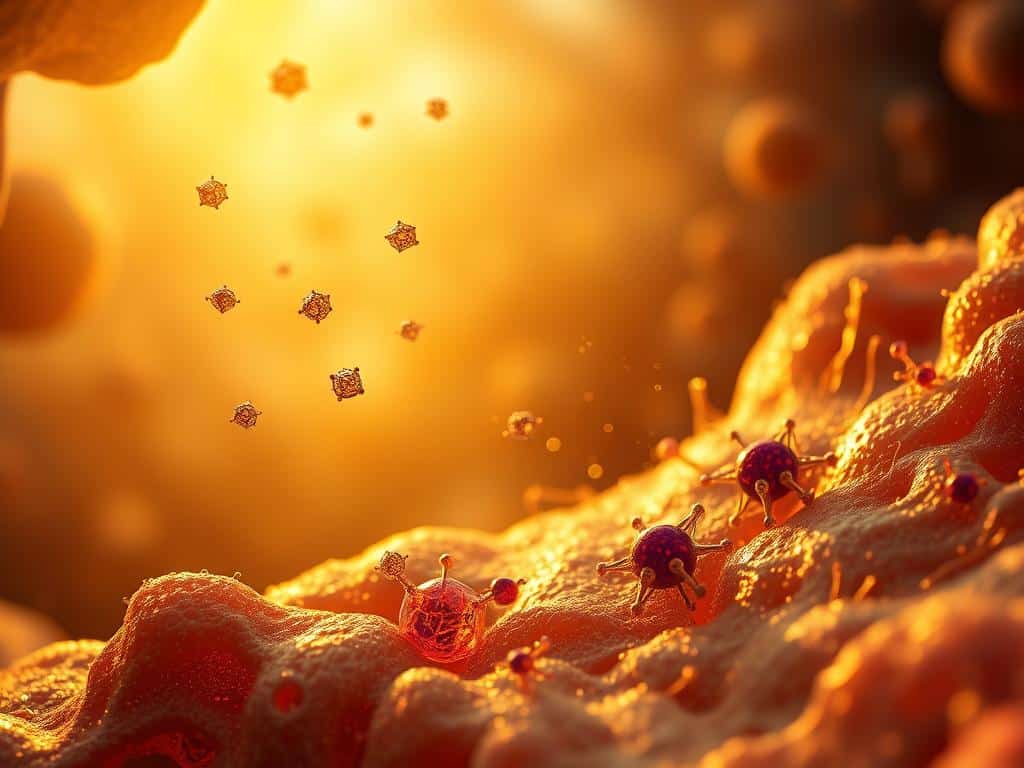
Nanomedicine: Advancements and Challenges
Nanomedicine has changed healthcare a lot, mainly in drug delivery. New discoveries have led to nanoparticles that can do two things at once. They can help find and treat tumors better, making drugs work more efficiently.
Also, nanoscale biosensors have improved how we detect biomarkers. This means doctors can monitor health in real-time more accurately.
But, there are big challenges in using nanomedicine. Getting new products approved is hard because of rules. There are also worries about the safety of some nanomaterials.
It’s important to have standard tests for these products. This ensures they are safe and work as they should. We also need to think about the ethics of using nanomedicine. This includes how it might affect the environment and our health in the long run.
To overcome these hurdles, we need to work together. Researchers, regulators, and doctors must collaborate. This way, we can make sure nanotechnology is used safely and effectively in healthcare.
Conclusion
The future of nanomedicine is changing healthcare in big ways. It brings new tools for diagnosing and treating diseases, like cancer. For example, lipid nanoparticles help drugs work better and cause fewer side effects.
Looking at the progress, it’s clear that combining research with real-world use is key. New materials like carbon nanotubes and PEG nanoparticles show promise. But, we must carefully check their safety and long-term effects.
The story of nanotechnology in healthcare is just starting. Working together, researchers, doctors, and regulators will unlock nanomedicine’s full power. This will lead to better healthcare and new ways to help patients all over the world.
