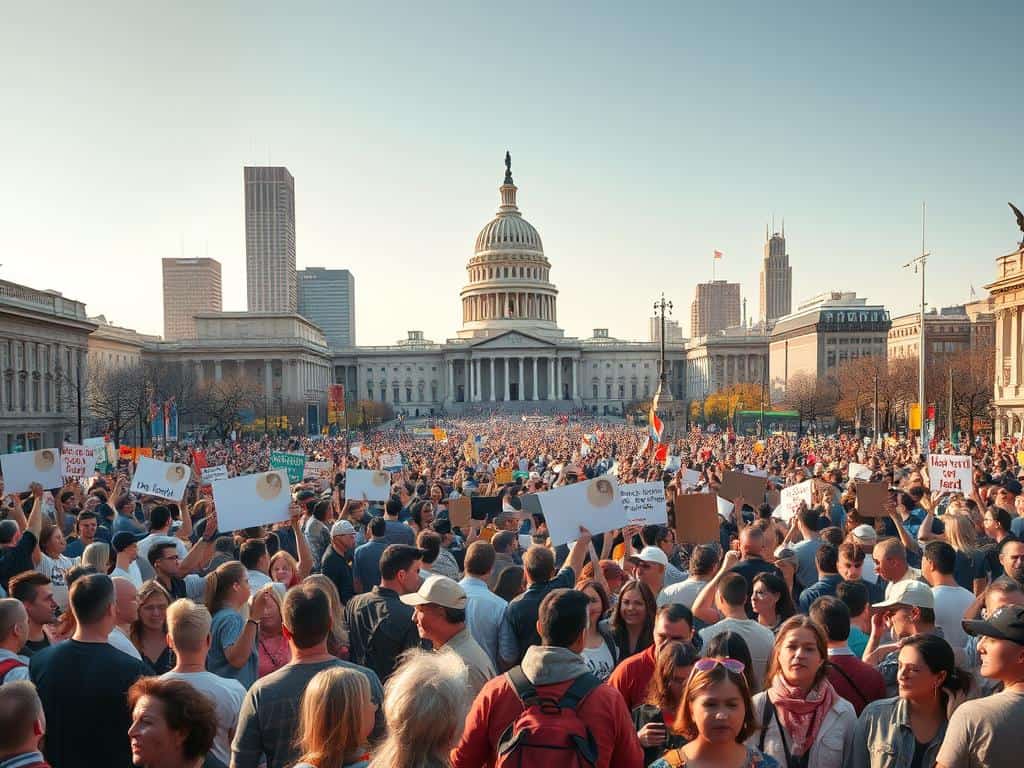
Did you know that strong civic engagement leads to fewer problems and a better life? This shows how important it is for democracy and community betterment. As someone who cares about my community, I see civic engagement as doing many things, like political actions and helping the environment.
The National Civic League has been around for over 100 years. It shows how key it is to include everyone in civic activities. This way, we can make sure everyone’s voice is heard, even those who are often overlooked. By building strong civic structures, we can create places where people work together well.
Great leaders like Theodore Roosevelt and Alexis de Tocqueville believed in the power of people getting involved. They knew that our actions are key to solving big problems and finding new solutions for our communities.
In today’s world, where people are often divided, I think civic engagement is more than helpful—it’s necessary. By joining in community service or talking openly about public issues, we make our society stronger. Together, we can make real changes and build a better, fairer place for everyone.
Key Takeaways
- Civic engagement significantly improves community quality of life.
- Inclusive practices lead to stronger civic responsibility and equity.
- Historically rooted in democracy, civic engagement remains essential today.
- Active participation helps address key challenges, enriching community resilience.
- Social capital grows through positive civic actions.
Civic Engagement and Its Role in Democracy
Civic engagement is key to a strong democracy. It gets people involved in their communities. Activities like voting, advocating, and community service are essential for a healthy democracy.
What is Civic Engagement?
Civic engagement means getting involved in your community and political processes. It can be volunteering, attending town hall meetings, or staying updated on issues. It builds a sense of belonging and makes voters more informed.
Studies show that students who get involved tend to vote more. In the 2020 presidential election, up to 50% of eligible college students voted.
The Importance of Participation in Political Processes
Being part of political processes is vital. It helps hold officials accountable and brings about change. Citizens’ involvement shapes public policy, affecting their lives.
Yet, many students feel they’re not ready to participate. Talking about public issues helps improve critical thinking. It prepares the next generation to defend democracy.
The Benefits of Civic Engagement for Communities
Civic engagement is key to making our communities better. It fights for social justice and helps people, even those who are often overlooked. It brings different groups together to tackle big issues and build stronger ties.
Fostering Social Justice and Equality
When people join together, they start important talks about fairness. They make sure everyone has a say in decisions that affect them. This helps create a fair and welcoming place for all.
Those who get involved feel a sense of purpose. This boosts their happiness and makes them feel more connected to others.
Civic Engagement in Addressing Key Societal Issues
Big problems like homelessness and poor healthcare need everyone’s help. Civic engagement lets people work together to solve these issues. It also makes communities feel more connected and healthy.
When people come together, they not only solve problems but also feel more in control of their lives.
Enhancing Community Connections and Trust
Getting involved in civic activities strengthens bonds between people and groups. It builds trust, which is essential for a strong community. People who participate often feel happier and more fulfilled.
These efforts lead to stronger networks and more civic pride. They help create a vibrant and supportive community.
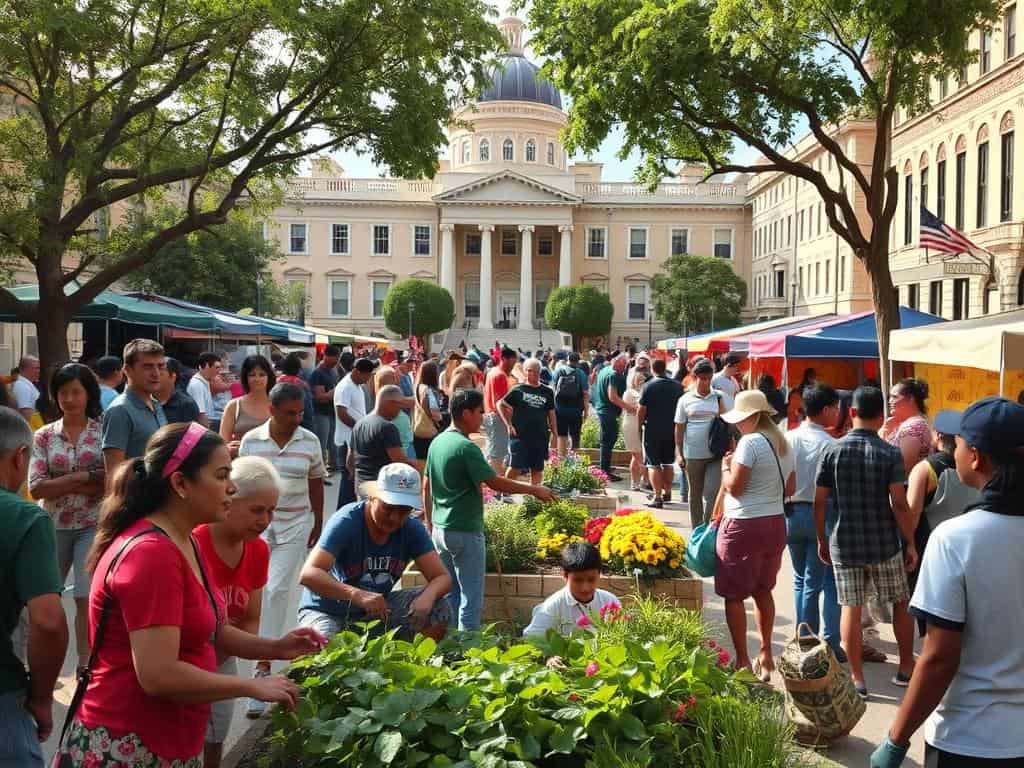
Conclusion
Civic engagement is key to a thriving society and strong democracy. It’s not just a personal choice but a shared duty. It makes our voices louder and strengthens our communities.
When we think about our civic rights, we see how important they are. High voter turnout and community involvement show a politically active citizenry. This is good for everyone.
But civic engagement does more than just help individuals. It brings people together and makes us feel like we belong. Countries like Norway show that volunteering improves mental health. This shows how civic actions help both us and society.
Initiatives to make voting easier or teach civic lessons in school help more people get involved. This is true, even for those who are often left out.
By getting involved in civic activities, we build stronger, healthier societies. We make sure everyone’s voice is heard. It’s not just solving problems; it’s investing in our future.
The power of civic engagement can change our democracy. It makes our society better for everyone. Let’s all get involved and make a difference.
