
Did you know that about 30% of all women globally who have been in a relationship have faced physical and/or sexual violence from their partner? This shocking fact shows how urgent it is to keep fighting for women’s rights and gender equality. Women worldwide face many barriers, from job discrimination to limited access to health and education.
Women’s rights are basic human rights, like the right to work, live without violence, and make choices about their lives. We’ve made big steps, like over 180 countries ratifying the Convention on the Elimination of All Forms of Discrimination against Women (CEDAW). But the fight for feminism is more important than ever in today’s world. Understanding the many challenges women face is key to achieving equality.
In this article, we’ll look at women’s rights history, today’s challenges, and the activism that brings change. Together, we can work towards a fairer future for everyone.
Key Takeaways
- 30% of women in relationships worldwide have experienced violence from partners.
- Women earn roughly 77% of what men earn for the same jobs, highlighting economic disparities.
- Over 180 countries have ratified CEDAW, yet significant enforcement issues remain.
- The #MeToo movement has brought attention to pervasive issues of sexual harassment and violence.
- Systemic discrimination continues to impede women’s access to basic rights and resources.
The Historical Journey of Women’s Rights
The fight for women’s rights has lasted for centuries. It’s filled with struggles and victories. Each milestone has shaped our society today.
The early voices for equality sparked big changes. They helped shift how society views women’s roles in America.
The Beginnings of Women’s Rights Activism
In 1776, Abigail Adams asked the Continental Congress to “remember the ladies,” starting the fight for women’s rights. This call to action paved the way for future activism.
The Seneca Falls Convention in 1848 was a turning point. 300 people, including Elizabeth Cady Stanton, demanded equal rights and the vote. It marked the beginning of organized women’s rights activism in the U.S.
Key Milestones in the Fight for Equality
Many milestones have changed the fight for equality. The 19th Amendment in 1920 gave women the right to vote. But, women of color faced voting barriers.
The Civil Rights Act of 1964 and the Voting Rights Act of 1965 helped. They addressed voting issues for African American women. The Roe v. Wade decision in 1973 also marked a victory for reproductive rights.
The Role of Women’s History Month
Women’s History Month was started in 1987. It celebrates women’s contributions and struggles. It’s a time to reflect on progress and challenges.
This month reminds us of ongoing gender equality issues. It highlights the need for continued advocacy. From reproductive rights to equal pay, it’s a call to action.
Current Struggles and Challenges in Gender Equality
Today, gender equality faces many challenges. Women in the U.S. earn about 77 cents for every dollar men make. This gap is caused by barriers that limit women’s job opportunities.
The Impact of the Gender Wage Gap
The gender wage gap is a big issue in equality fights. In 2019, women made just 51 cents for every dollar men earned. This gap hurts women’s financial freedom and limits their economic growth.
By 2050, women will spend over 2.3 hours more each day on unpaid care work. This shows how societal expectations add to the wage gap.
Systemic Barriers: Housing and Employment Discrimination
Systemic barriers are big challenges for women. Employment discrimination shows up in many ways, like biased hiring and unfair work conditions. The ACLU says discriminatory eviction policies hurt women, mainly those of color.
These injustices make it hard for women to get jobs and homes. Over 340 million women and girls could live in extreme poverty by 2030.
The Threats to Reproductive Rights
Reproductive rights are under attack, with laws that once protected women now being challenged. The fight against the erosion of Roe v. Wade shows women’s ongoing struggle for control over their bodies. Efforts to weaken the Pregnant Workers Fairness Act add to the challenges women face in the workplace.
Activism is key in defending reproductive rights. Many people are fighting to ensure women can make choices about their bodies.
Efforts and Activism for Women’s Rights
The fight for women’s rights has grown a lot. It includes many kinds of activism to push for equality and justice. People and groups work hard to break down barriers. They focus on different experiences of women, adding depth to the movement.
Grassroots Movements and Digital Campaigns
Grassroots movements are strong in the fight for women’s rights. The #MeToo movement is a great example. It uses social media to let survivors share their stories and fight for change.
Digital campaigns help spread awareness fast. They bring people together, both locally and globally. This way, more people can talk about and fight against injustices, creating a sense of community.
Legal Advocacy: Landmark Cases and Legislation
Legal efforts have been key in improving women’s rights. Cases like Roe v. Wade have changed reproductive rights in the U.S. Laws like the Pregnant Workers Fairness Act show progress in workplace safety.
Groups like the ACLU fight against unfair laws. They help make sure women get the rights they deserve. Legal work is vital in making policy changes that help women succeed.
Intersectional Feminism: Addressing Many Faces of Discrimination
Intersectional feminism is important for understanding women’s challenges. It sees how gender, race, class, and sexual orientation mix to create different kinds of discrimination. This way, activists can help specific groups better.
It makes sure all women’s voices are heard. This way, everyone in the fight for justice and equality is included and supported.
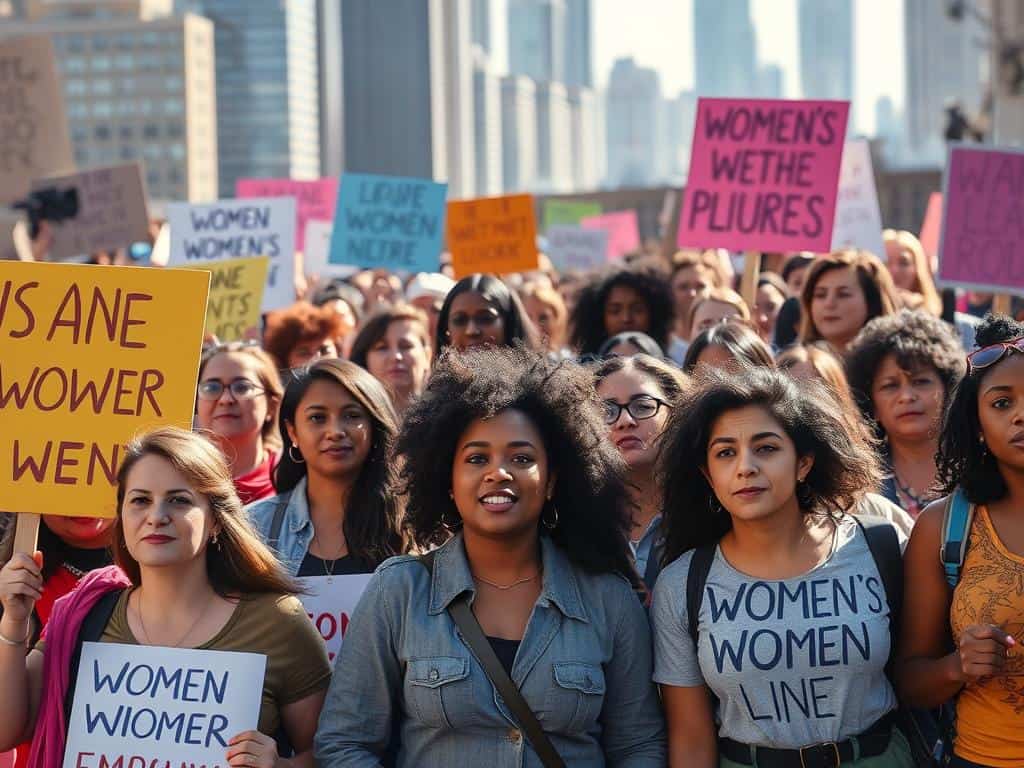
Conclusion
Looking at the ongoing fight for equality, we see progress but many challenges remain. Advocacy for gender equality has grown, thanks to efforts like the Commission on the Status of Women. These efforts focus on big issues like climate change and economic empowerment for women.
We must keep pushing for policies that protect women’s rights in every area. It’s important that no woman is left out. This ensures equality for all.
For the future of women’s rights, governments and groups must value unpaid care work. They also need strong laws to protect women from violence and discrimination. The push for gender-sensitive laws shows we need a complete solution to the problems women face.
Understanding how different issues affect women is key to moving forward. This knowledge helps strengthen the fight for equality and empowerment for all women.
The fight for gender equality is not over yet. We need everyone’s help to keep moving forward. With thousands of groups working together, I’m hopeful for a better future.
The goal of universal ratification of the Convention on the Elimination of All Forms of Discrimination against Women shows our shared goal. We want a world where women succeed in every area of life. Let’s keep working towards a society based on justice and equality.
