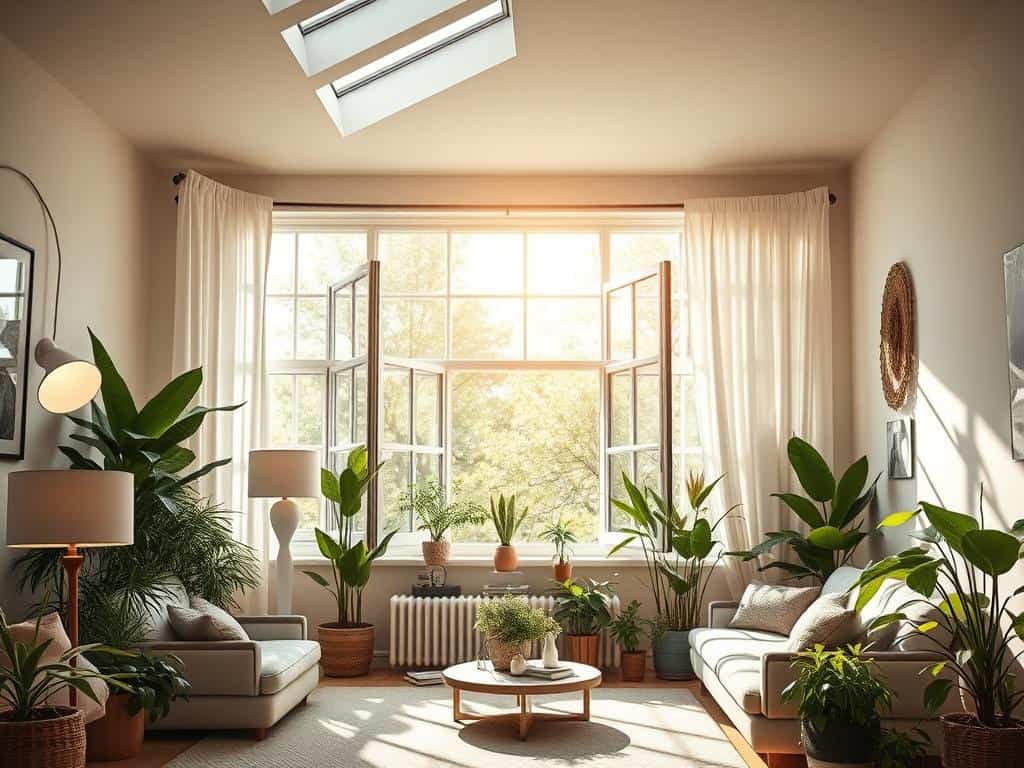
Did you know Americans spend 90% of their time indoors? This fact highlights the need for clean Indoor Air Quality (IAQ). Studies reveal indoor pollutants are two to five times worse than outside. This shows how vital it is to keep our home air clean.
Poor IAQ can cause serious health problems. These include breathing issues, heart diseases, and even cancer. This is true for kids and seniors. With more homes using fuels for heat and cooking, it’s key to act now. In this article, I’ll share ways to improve air quality for a healthier home.
Key Takeaways
- Indoor Air Quality is key for health as we spend most of our time indoors.
- Indoor pollutants can be much more concentrated than outdoor levels.
- Managing allergens like dust and pet dander is important for better air quality.
- Regular air filter checks and maintenance boost IAQ.
- Opening windows daily helps bring in fresh air.
- Portable HEPA air cleaners are great at filtering out harmful particles.
- Knowing about air quality issues can lower health risks over time.
Understanding Indoor Air Quality and Its Importance
Indoor air quality (IAQ) is key to our health and happiness. Bad IAQ can cause short-term discomfort and long-term health problems. Knowing what makes indoor air bad helps me keep my home healthy for my family.
Health Risks Associated with Poor Indoor Air Quality
Poor indoor air quality can harm our health. It can cause headaches, fatigue, and even serious problems like respiratory issues and skin problems. Long-term exposure might lead to serious diseases like cancer and heart disease.
Children and the elderly are more at risk. This shows how important it is to be aware and take action.
Common Indoor Air Pollutants
Many things can make indoor air quality bad. Carbon dioxide (CO2) comes from gas appliances and our breathing. Mold and mildew grow in damp places, making breathing harder and causing allergies.
Particulate matter from cooking and dust can get stuck in our lungs. Radon, a radioactive gas, can sneak into homes without us knowing. Volatile organic compounds (VOCs) from products like paints and cleaners also make air quality worse.
Effective Strategies to Enhance Indoor Air Quality
To make my home healthier, I need to focus on reducing pollution and controlling allergens. By tackling the pollutants in my home, I can greatly improve the air quality. This, in turn, boosts my overall health and wellbeing.
Reduce Pollutants in Your Home
To cut down on indoor air pollutants, I should get rid of sources. This means avoiding secondhand smoke and choosing low-VOC products. For example, picking solid wood furniture can reduce formaldehyde exposure.
It’s also important to watch what I cook and ensure good ventilation. This helps prevent pollutants from entering my home.
Regular Air Quality Testing
Testing my home’s air quality regularly is key. I can use DIY kits or hire experts to check for pollutants. Knowing what pollutants I have lets me take steps to reduce them effectively.
Controlling Allergens in Your Living Space
Keeping allergens like dust mites and pet dander under control is essential. Regular cleaning helps keep these allergens away. Using hypoallergenic materials also improves air quality.
Don’t forget to maintain my home’s air systems. Changing HVAC filters and cleaning air ducts helps keep dust and irritants out.
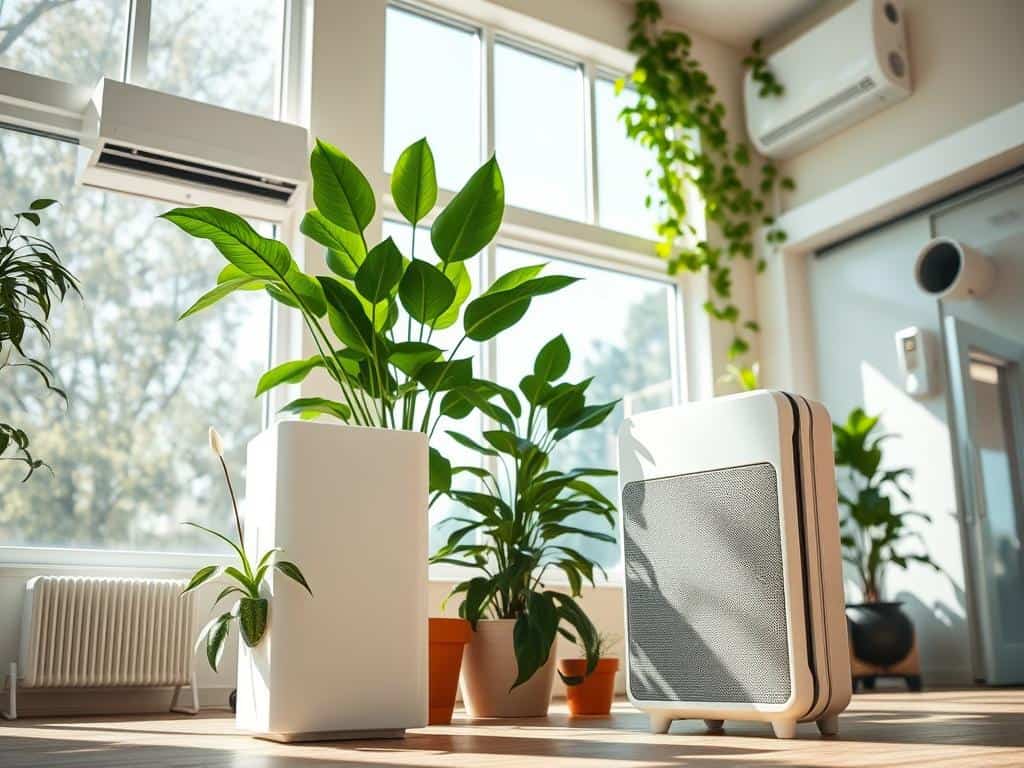
Improving Ventilation for Better Indoor Air Quality
Good ventilation is key to clean indoor air. Without enough airflow, pollutants build up, causing health problems. By improving ventilation, I can fight indoor air pollutants and make my home healthier.
Importance of Proper Airflow
Proper airflow keeps my indoor climate just right. It cuts down humidity, stopping mold and damage. I use exhaust fans when cooking and bathing to remove moisture.
Opening windows for 15 minutes a day boosts ventilation. HVAC systems with a MERV of 6-8 filter better, improving airflow.
Using Air Purifiers and Filters
Air purifiers have made a big difference. HEPA filters in them catch allergens and dust mites. This reduces them in my home.
Spot ventilation helps too, with fans in bathrooms and kitchens removing humidity and gases. Running bathroom fans for 45 minutes after a shower is key. Keeping my HVAC system in good shape is also important. Regular filter changes improve efficiency and air quality.
Conclusion
Improving indoor air quality is key to a healthier home. People spend almost 90% of their time indoors. This means air pollutants can be two to five times worse than outside.
It’s important to know that poor air quality can harm vulnerable groups like kids and the elderly. This makes it urgent to take action.
Strategies like reducing pollutants, improving air flow, and testing air quality can help a lot. Using advanced technologies, like iWave air ionizers, is a great way to keep the air clean. It’s easy to use and helps remove many pollutants.
Being proactive about indoor air quality helps create a sustainable living space. It promotes long-term health and comfort. Taking these steps not only makes my home healthier but also improves my quality of life. It protects my family and future generations.
