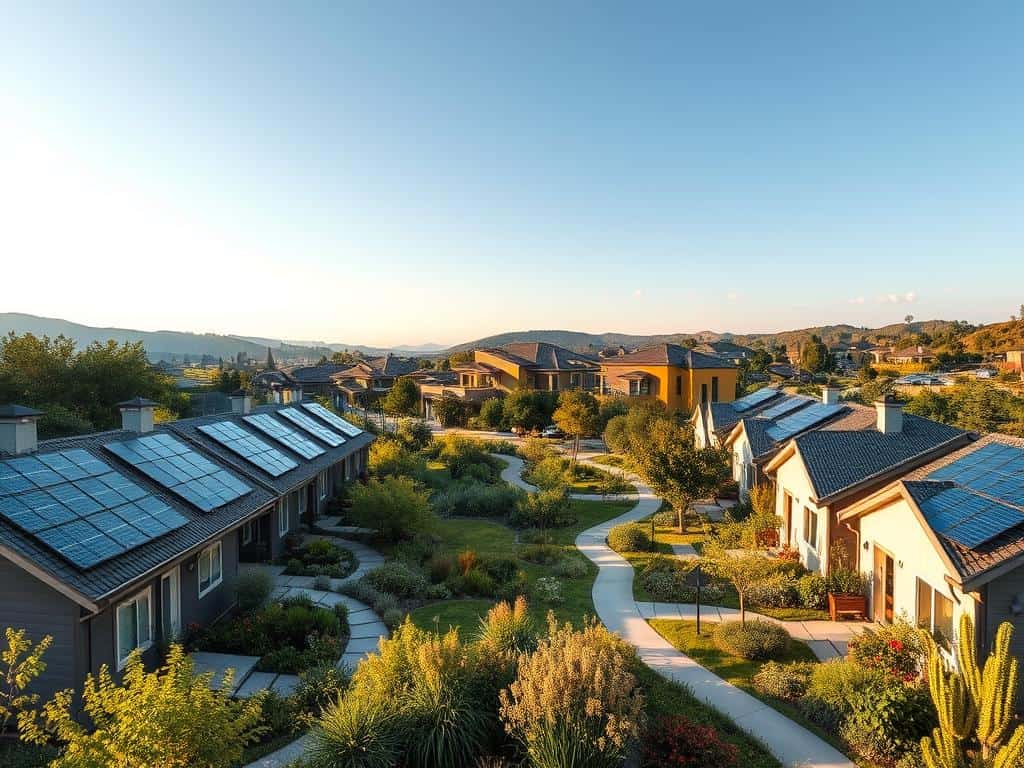
In 2019, homes in the United States used about 20% of the country’s energy. This led to a lot of greenhouse gas emissions. Many people now want to build eco-friendly homes to lower their carbon footprint. These homes are key in today’s world, where we’re all trying to reduce emissions and protect the environment.
Building a home that’s good for the planet is possible. It just needs careful planning and the right materials. We’ll look at how to do this in this article.
We’ll cover the main steps to building an eco-friendly home. You’ll learn about the benefits these homes offer. We’ll also explore sustainable design and materials for energy-efficient living.
Plus, we’ll discuss new trends like modular homes. These homes are becoming popular because they’re better for the environment. By following these steps, we can create homes that are good for both us and the planet.
Key Takeaways
- Building an eco-friendly home significantly reduces greenhouse gas emissions.
- Sustainable design and green architecture enhance energy efficiency.
- Increasing interest in modular homes results in lower carbon footprints.
- Innovative materials can greatly contribute to energy-efficient homes.
- Considering the long-term benefits optimizes costs associated with energy use.
Understanding Eco-Friendly Homes and Their Benefits
Exploring eco-friendly homes shows their key role in sustainable living. They aim to reduce environmental harm and boost efficiency. Key features include passive solar design, energy-saving insulation, and renewable energy.
What Makes a Home Eco-Friendly?
Eco-friendly homes use sustainable materials and cutting-edge tech to cut down environmental impact. They use efficient insulation to save energy. Adding solar panels helps reduce energy use.
These homes also use materials like timber and straw bale. They focus on using resources locally, cutting down on transportation needs.
Environmental and Economic Benefits of Eco-Friendly Homes
Eco-friendly homes offer more than just looks; they save money too. Owners see a 20-30% drop in energy bills. The green building market is growing fast, making sustainable homes more affordable.
These homes also protect the environment and cut down on greenhouse gases. They use systems for collecting rainwater and recycling greywater. This lowers water bills and helps the planet.
Choosing Sustainable Design Principles
Using sustainable design principles is key to making eco-friendly homes. It’s important to know the six ecological principles for building and renovating. These principles help reduce environmental impact, improve energy use, and make homes healthier.
Six Fundamental Ecological Principles of Sustainable Design
The six principles aim to make buildings blend with nature. First, we use a site’s natural features to reduce harm. Second, we focus on renewable energy and less fossil fuel use. Third, we save water by using it wisely.
Fourth, we choose materials that are sustainable and recycled. Fifth, we make homes healthier by using materials that reduce pollutants. Lastly, we build homes that can stand up to climate changes.
Passive Solar Design for Energy Efficiency
Passive solar design is a smart way to save energy in homes. It uses windows, thermal mass, and building orientation to cut energy use. For example, windows can let in sunlight to warm homes in winter and cool them in summer.
This design can cut energy use by up to 65%. It shows how smart design can make homes comfortable and energy-efficient.
Importance of Indoor Environmental Quality (IEQ)
Good indoor air quality is vital in sustainable homes. Using materials that don’t release harmful chemicals and proper ventilation systems improve air quality. This makes homes healthier and more energizing for those who live there.
Essential Materials for Eco-Friendly Home Construction
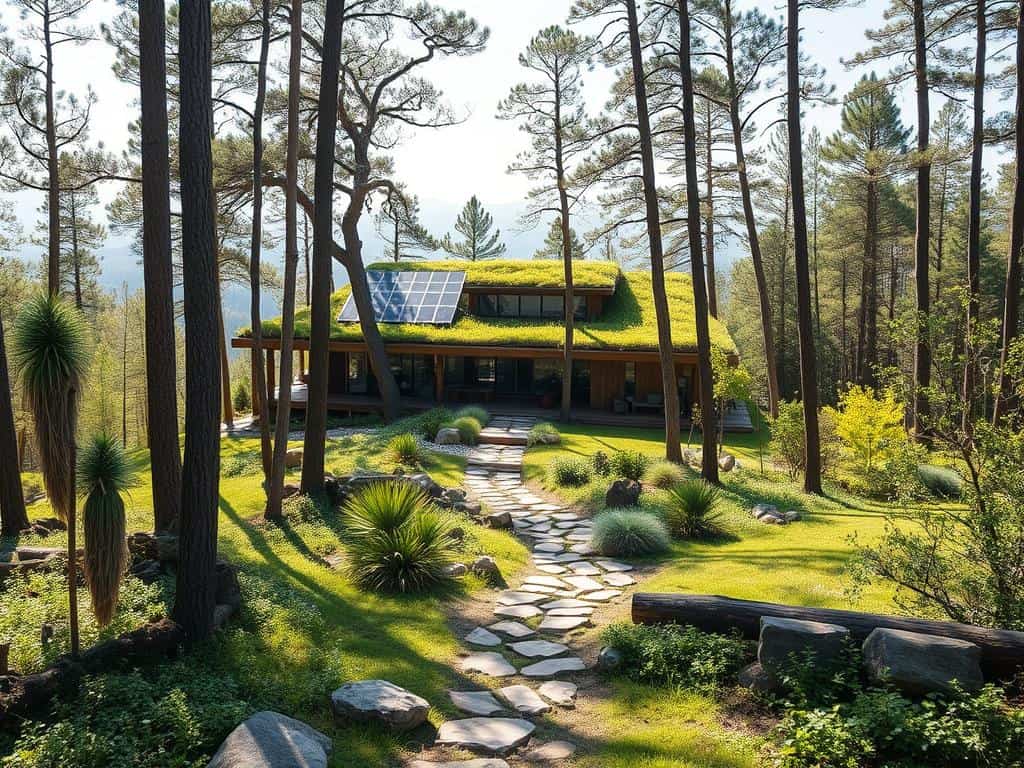
Building an eco-friendly home begins with choosing the right materials. Using eco-friendly materials helps the planet and makes your home last longer. Recycled and reclaimed materials are great for reducing waste and emissions.
These materials also make your home unique and cozy. They add character and warmth to your living space.
Recycled and Reclaimed Materials
Recycled steel is a smart choice because it can be recycled endlessly without losing strength. It’s a favorite among builders. Reclaimed wood from old structures, like barns, looks great and saves trees.
Using recycled glass from bottles and jars is also a good idea. It’s tough and doesn’t harm the environment much. These materials help build homes that are good for the planet.
Energy-Efficient Appliances and Features
Choosing energy-efficient appliances is key to saving energy. I look for appliances with the Energy Star label, like washers, dryers, and fridges. These appliances use less energy and save money over time.
Features like good insulation and passive solar design also help keep your home comfy. They’re important for a cozy indoor climate.
Natural Insulation Options
Natural insulation materials, like cork and hempcrete, make homes more energy-efficient. Cork is safe for people with allergies and is sustainable. Hempcrete is great at keeping homes warm or cool.
Wool insulation can even cut energy costs by up to 20%. Using these natural materials shows we care about the environment.
Conclusion
Building an eco-friendly home is more than a trend; it’s a step towards a sustainable future. By choosing energy-efficient construction, I’m investing in my future and helping the environment. Eco-friendly homes can cut energy use by up to 30%, saving over $2,000 a year on bills.
The benefits of sustainable design go beyond saving money. My eco-friendly home will last longer, needing fewer repairs than traditional homes. Green homes can sell for up to 9% more, showing their value. Plus, they can reduce allergens and pollutants by 50%, making my home healthier.
Starting this home project, I’m guided by sustainable living principles. The growth of green technologies and demand for eco-friendly homes push us towards a greener future. By picking the right materials and systems, I’ll create a home that’s good for the planet and comfortable for me.
