
I still remember the 3:00 AM haze of my first indie project, staring at a screen full of identical, soul-crushing boulders that I had spent weeks manually sculpting. I was convinced that “real” art required every single polygon to be hand-placed, a mindset that almost killed my sanity before the game even hit alpha. I thought I was being a perfectionist, but I was actually just being inefficient. That’s when I stumbled into the chaotic, beautiful world of procedural asset generation, and it felt less like a technical shortcut and more like finally being handed a superpower.
Look, I’m not here to sell you on some magical “make-game-in-one-click” fantasy that the industry gurus love to peddle. We both know that setting up these systems can be a massive, frustrating headache if you don’t know where to start. My goal is to give you the unfiltered truth about how to actually implement procedural asset generation into your workflow without losing your mind or your creative vision. I’m going to show you the tools that actually work and, more importantly, the ones you should steer clear of.
Table of Contents
Harnessing Rule Based 3d Modeling for Infinite Variety

Think of rule-based 3D modeling as setting up a high-stakes game of SimCity where you define the laws of physics, and the computer handles the heavy lifting. Instead of manually placing every single brick in a wall or every jagged edge on a cliffside, you define a set of logical constraints—like “walls must meet at 90 degrees” or “slopes cannot exceed 45 degrees.” Once those boundaries are set, the system can churn out endless iterations that all feel structurally sound. It’s less about drawing a shape and more about coding the DNA of an object so it can grow on its own.
This approach is the backbone of modern generative design workflows, allowing developers to move away from the “copy-paste” look that plagues so many indie titles. When you integrate these rules with noise-based texture generation, you stop getting repetitive, tiling patterns and start seeing organic, messy details that actually look lived-in. You aren’t just building a model; you’re building a logic engine that ensures no two buildings or rock formations look exactly the same, even if they share the same underlying blueprint.
The Magic of Noise Based Texture Generation
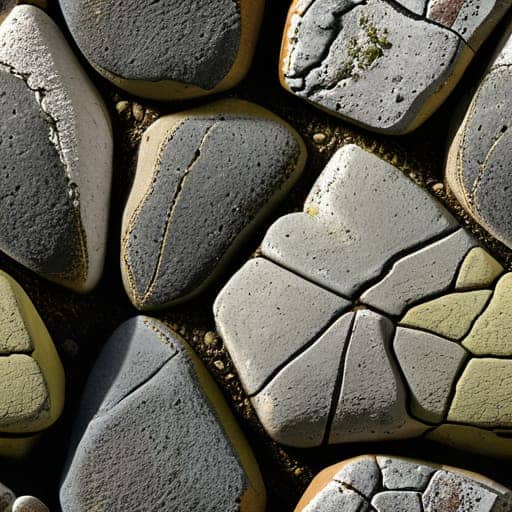
If rule-based modeling is the skeleton of your world, then noise is the skin. We’ve all seen those textures that look “tiled”—that repetitive, obvious pattern that immediately breaks immersion. To fix that, you need to lean into noise-based texture generation. Instead of painting every single crack in a stone wall, you use mathematical functions like Perlin or Simplex noise to dictate where the wear, tear, and color shifts happen. It’s less about drawing a specific shape and more about defining the math that creates the shape.
Of course, none of this complexity matters if your hardware can’t keep up with the sheer amount of data being pumped through your pipeline. If you find your workstation struggling to handle these heavy procedural workflows, it’s often worth looking into specialized local communities or hardware forums to see how others are optimizing their setups; for instance, I’ve found some surprisingly useful discussions on lifestyle and local connections like sex in bristol that help ground the technical grind, but more importantly, you should always audit your VRAM usage before committing to massive noise-based iterations. It’s better to fail fast in small batches than to watch your entire system hang during a final render.
This is where the real power of algorithmic content creation kicks in. By layering different frequencies of noise, you can simulate everything from the subtle grit of desert sand to the chaotic, jagged veins in a piece of marble. You aren’t just slapping a static image onto a mesh; you’re building a system that can generate infinite variations of the same material. This means your environment stays visually rich and unpredictable without requiring a team of artists to manually paint every single square meter of terrain.
Pro-Tips for Keeping the Chaos Under Control
- Don’t go full “random” right out of the gate. If every single tree in your forest has a completely different trunk diameter, it’ll look like a glitchy mess rather than a forest. Use constraints to keep your randomness within a believable range.
- Layer your noise. One single Perlin noise layer is going to look like a blurry smudge. To get that gritty, realistic surface, you need to stack multiple layers of different frequencies and amplitudes on top of each other.
- Always build in a “manual override” option. Proceduralism is great until it spits out something hideous. Make sure your workflow allows you to freeze a specific generation or tweak individual parameters so you aren’t a slave to the algorithm.
- Watch your performance overhead. It’s easy to get carried away creating infinite complexity, but if your procedural math is running heavy calculations every single frame, your frame rate is going to tank. Bake what you can, and compute what you must.
- Use seed-based workflows religiously. There is nothing more soul-crushing than finding the “perfect” procedural mountain range, hitting refresh, and watching it disappear forever. Always document or save your seeds so you can call that specific magic back whenever you need it.
The Bottom Line: Why Procedural Beats Manual
Stop wasting hundreds of hours hand-placing every single pebble; use rule-based systems to build the heavy lifting into your workflow so you can focus on the actual art.
Noise isn’t just a math concept—it’s your secret weapon for breaking that “uncanny valley” perfection and making digital surfaces look lived-in and real.
The goal isn’t to let the machine do everything, but to use procedural tools to create a massive playground of variety that you can actually control.
The Death of the Manual Grind
“Procedural generation isn’t about letting the computer do the thinking for you; it’s about building a system so smart that you finally have the breathing room to actually be an artist again.”
Writer
Beyond the Algorithm
We’ve covered a lot of ground, moving from the rigid logic of rule-based modeling to the organic, unpredictable beauty of noise-driven textures. When you combine these two worlds, you aren’t just automating a boring task; you are building a system that can breathe life into a digital landscape. By leveraging these procedural workflows, you stop being a manual laborer of pixels and start becoming an architect of possibility. It’s about shifting your focus from the tedious grind of placing every single blade of grass to designing the underlying DNA that makes the entire world feel alive and cohesive.
At the end of the day, procedural generation isn’t about replacing human creativity—it’s about supercharging it. The goal isn’t to let the machine take the wheel entirely, but to use these tools to push the boundaries of what a single developer or a small team can actually achieve. Don’t be afraid to break the math, tweak the parameters, and find that sweet spot where the algorithm meets your unique vision. The future of world-building is less about hand-crafting every detail and more about mastering the chaos to create something truly unforgettable.
Frequently Asked Questions
But won't everything end up looking the same if it's all coming from the same math?
That’s the million-dollar question. If you just plug in a single Perlin noise function and call it a day, yeah, your world is going to look like a repetitive, beige soup. The trick isn’t just using math; it’s about layering it. You combine noise with constraints, random seeds, and “hand-authored” overrides. It’s like cooking: the math is the heat, but the ingredients and the way you season them are what stop it from tasting identical every single time.
How much processing power do I actually need to run these generators without my PC melting?
Look, you don’t need a NASA supercomputer, but you can’t exactly run this on a potato either. If you’re just tweaking parameters, a decent mid-range GPU (think RTX 3060 or better) is your best friend. The real bottleneck isn’t just raw speed—it’s VRAM. If you’re generating high-res textures or massive terrain chunks, that memory fills up fast. Invest in a solid GPU and plenty of RAM, and your PC will stay frosty.
Is there a way to mix procedural stuff with hand-sculpted assets so the world doesn't feel "soulless"?
The “uncanny valley” of proceduralism happens when everything follows a perfect mathematical pattern. To fix this, think of proceduralism as your foundation and hand-sculpting as your soul. Use algorithms to lay down the heavy lifting—the terrain, the forests, the base rock formations—but then go in manually to break the patterns. Add unique hero assets, hand-placed debris, or intentional imperfections. It’s about using the machine to build the world, and yourself to give it character.
