
Did you know that after the Voting Rights Act of 1965, Black voter registration in the U.S. jumped from about 1 million to over 3 million in two years? This huge jump shows how equality movements can change society. They push for justice and rights.
A century ago, America was very different. It had racial segregation and women didn’t have the right to vote. But, equality movements have been working hard to change this. They challenge old ways and push for new reforms. Sociologists help us understand how these movements work.
These movements are key in talking about important issues like advocacy and rights. They help shape laws and change how people think.
The fight for equality is never-ending and complex. It shows how important movements are. They bring about real change, raise awareness, and unite people worldwide.
Key Takeaways
- Equality movements have historically transformed societal norms and legal frameworks.
- Significant legislative changes, such as the Voting Rights Act, have increased political representation for marginalized groups.
- Grassroots initiatives are vital for driving awareness and action within communities.
- These movements encourage ongoing discussions about justice and rights in various sectors.
- Public support for equality movements, like Black Lives Matter, reflects a shift in societal attitudes.
- Technological advances can amplify the reach and impact of equality movements globally.
The Role of Equality Movements in Social Change
Equality movements have always been key in changing society and fighting for justice. They link the past to today, showing the ongoing fight for rights of those left behind. Seeing how these movements have grown helps us understand how far we’ve come and how much more we have to achieve.
Historical Context and Progress
Looking back, we see that big changes often come after hard struggles. The Civil Rights Movement, led by Martin Luther King Jr., fought against racism. It led to big wins like the Civil Rights Act of 1964.
The women’s rights movement of the 1960s and 70s also made a big impact. It changed how society views women, improving their rights. The LGBTQ+ rights movement, starting with the Stonewall riots in 1969, has also made a big difference.
Advocacy for Justice and Rights
Advocacy is at the heart of these movements, pushing people to stand up against wrongs and fight for laws to change. The Me Too movement, starting in 2017, brought attention to sexual harassment and assault. It shows how advocacy can lead to big changes.
Activists, inspired by leaders like Susan B. Anthony and Martin Luther King Jr., keep pushing for justice. Groups like Amnesty International, with over 10 million members worldwide, show the global desire for fairness.
Key Drivers Behind Equality Movements
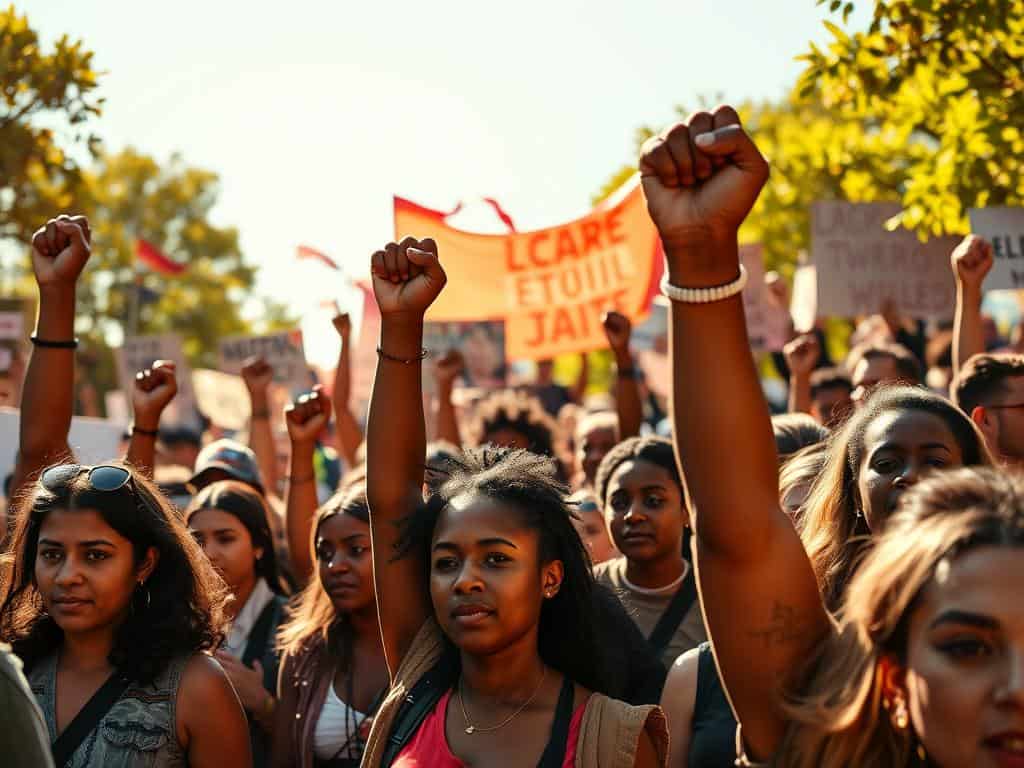
Equality movements have a big impact on society. They start with local efforts to fight inequality and injustice. These efforts raise awareness and push for policy changes.
From past struggles to today’s activism, these movements aim for a fairer society. They show us the power of working together for justice.
Grassroots Initiatives
Grassroots efforts empower communities to fight for their rights. They start with a few people pushing for change. Rosa Parks’ act in 1955 sparked the Montgomery Bus Boycott.
This boycott showed the strength of community action. About 90% of Black residents in Montgomery joined, proving the power of unity for justice.
Impact of Policy Reforms
Equality movements lead to important policy changes. The Civil Rights Act of 1964 and the Voting Rights Act of 1965 were big wins. They ended unfair laws and brought justice to many.
The Freedom Rides were brave acts that tested the law. They faced violence but showed the importance of standing up for rights. These efforts show how grassroots actions and policy changes work together for equality.
Conclusion
Equality movements are key to changing society. They spark important conversations and challenge the status quo. They fight for rights to create a fair world.
Women have played a big role in these movements. From the Civil Rights Movement to today, they’ve paved the way. Figures like Gwendolyn Zoharah Simmons and Diane Nash show how their work is often overlooked. Yet, it highlights the big challenges they face.
These movements push for fairness in many areas, like race, gender, and sexual orientation. The Civil Rights History Project shows how women have shaped social change. They fight against gender bias, showing the importance of standing together for rights and representation.
The fight for equality is ongoing. Each new generation must keep pushing for justice. The journey is tough, but the progress made so far is inspiring. It shows us what we can achieve together.
