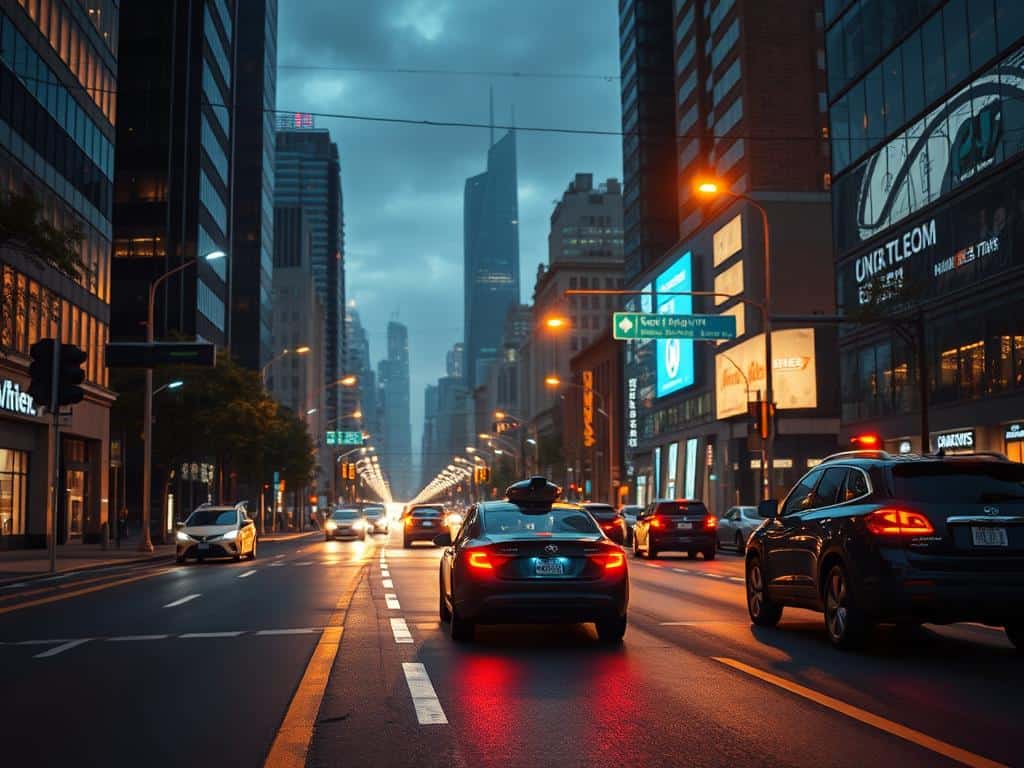
Did you know self-driving cars could cut traffic accidents by up to 90% by 2023? This amazing change relies on computer vision. It’s not just for cars; it’s key in many fields. Computer vision uses cameras and sensors to help cars see and understand their world.
This includes seeing people, signs, and other cars. The mix of AI and machine learning makes these cars make quick decisions. This boosts safety and makes them work better. Let’s dive into how computer vision is changing how we travel.
Key Takeaways
- Computer vision is key for self-driving cars.
- Real-time object detection uses AI and machine learning.
- Many sensors are needed for accurate perception.
- Future updates will make decisions safer and faster.
- Dealing with ethical issues is important for public trust.
Understanding Computer Vision and Its Role in Self-Driving Cars
Computer vision is key to making self-driving cars work. It lets machines understand and make sense of what they see. This is vital for self-driving cars to know what’s around them, like other cars, people, and signs.
Knowing about computer vision helps us see why it’s so important for self-driving cars.
What is Computer Vision?
Simply put, computer vision is how computers see and understand the world. It uses special algorithms to look at pictures and get useful information. Thanks to machine learning, computer vision has gotten much better.
In self-driving cars, it’s used to spot and avoid obstacles.
Machine Learning and AI in Computer Vision
AI in computer vision uses machine learning a lot. Convolutional Neural Networks (CNNs) are great at looking at images. They find important details on their own.
Thanks to better GPUs, we can now do more complex tasks. For example, we can train software to recognize and follow objects.
How Self-Driving Cars Utilize Computer Vision
Self-driving cars use computer vision to drive safely. They can spot moving things like cars and people. They also use data from different sources like LIDAR and cameras.
This helps them detect objects better and guess how fast they’re moving. They can even plan their path ahead. Computer vision is essential for self-driving cars to work well.
Key Technologies in Self-Driving Cars
Self-driving cars rely on key technologies to understand and navigate their surroundings. Object detection is key for spotting road elements. YOLO is an advanced method for real-time object detection, helping vehicles quickly respond to visual data.
Object Detection and Tracking
Object detection and tracking algorithms are vital for self-driving vehicles. They identify and classify objects like pedestrians and other cars, ensuring safe travel. Accurate detection boosts safety and aids in decision-making.
The latest advancements in object detection are improving tracking of moving objects on the road.
LIDAR Data Analysis for 3D Mapping
LIDAR technology is a cornerstone for 3D mapping in self-driving cars. It uses laser measurements to create detailed maps with centimeter accuracy. This is much more precise than traditional methods, which can be off by 1-5 meters.
Such detailed maps help vehicles better understand their environment. This leads to more informed decisions. Combining LIDAR data with other sensors enhances the vehicle’s contextual understanding of road conditions.
Sensor Fusion: Combining Data Sources for Better Understanding
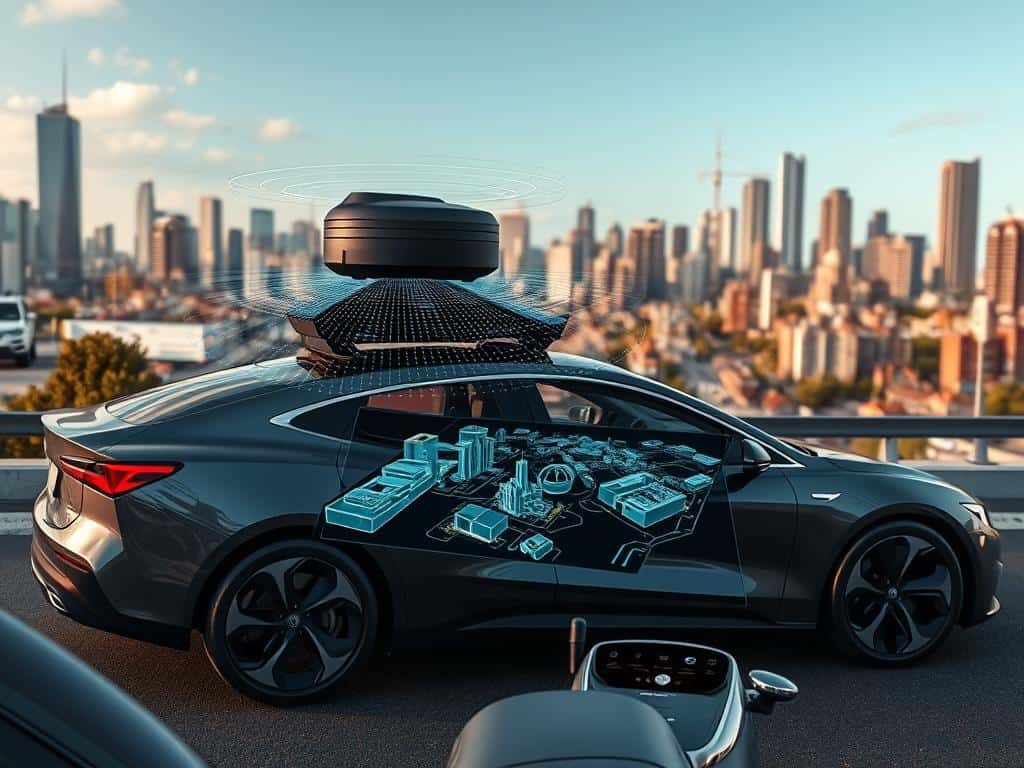
Sensor fusion is essential for self-driving vehicles to perceive their surroundings. It combines data from LIDAR, radar, and visual sensors. This integration allows vehicles to make real-time decisions.
Advanced algorithms and artificial intelligence enable vehicles to adapt to changing environments. This leads to safer navigation. The ongoing development of sensor technology will further improve sensor fusion, making self-driving cars more reliable.
Computer Vision: Enhancements and Challenges
In recent years, computer vision has seen big changes, thanks to new algorithms. Tools like YOLO and Deep SORT are key for self-driving cars. They help spot and track objects in real-time, which is vital for safety on the road.
Advances in Algorithms: YOLO and Deep SORT Explained
YOLO is a big leap in object detection, letting cars see and classify objects fast. This speed is key for navigating through crowded areas. Deep SORT then tracks these objects, helping cars keep an eye on pedestrians and other cars. Together, they help self-driving cars make smart, quick decisions.
Challenges Faced by Self-Driving Cars on the Road
Even with these advances, self-driving cars face big hurdles. Finding enough good data to train models is a big problem. Issues like bad data, wrong labels, and unbalanced datasets make things tough. Plus, things like changing light and unexpected events can confuse the systems.
These problems show we need to keep working on both the tech and how we get data. This is to make sure self-driving cars are safe and reliable as they become more common.
Conclusion
Computer vision is a key player in making self-driving cars and other new technologies better. It’s not just about making cars drive themselves. It’s also about making our roads safer and more efficient.
This technology is also changing healthcare and retail. It helps doctors make better diagnoses and improves how we shop and work. Companies like NVIDIA and Google Cloud are leading the way in making these changes happen.
But, there are challenges to overcome. Making sure everyone has access to these technologies is important. This will help us see the full benefits of computer vision.
Looking ahead, we need to work together to make self-driving cars a reality. We also need to keep improving machine learning. This will lead to safer and more convenient driving in the future.
