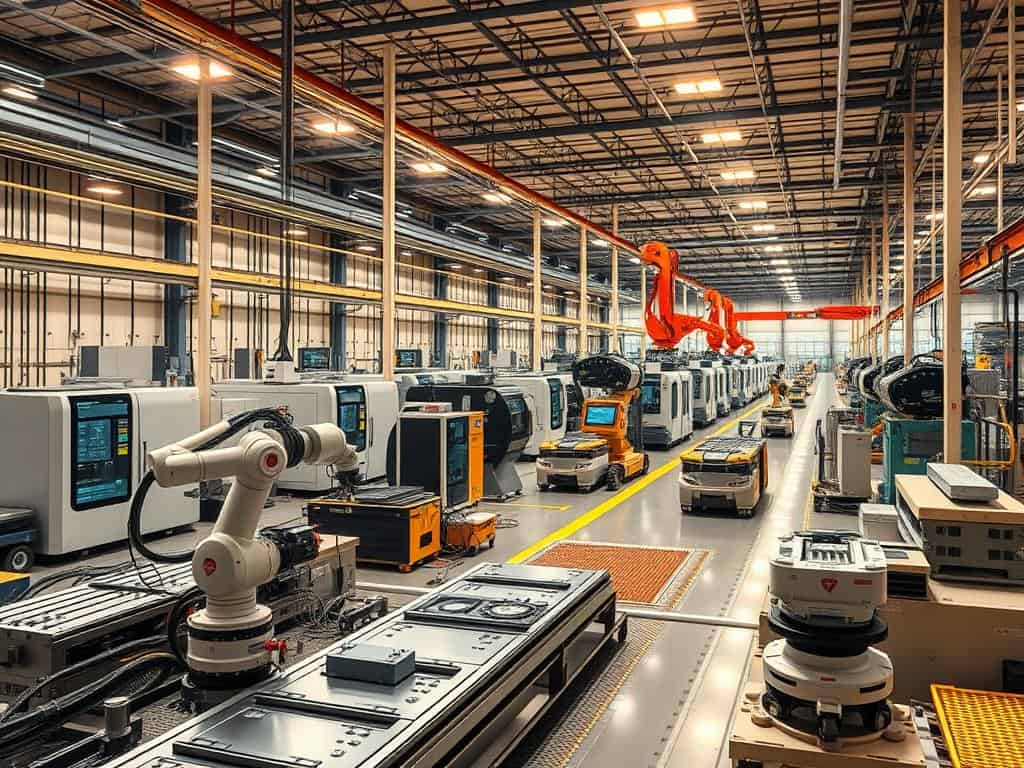
Did you know over 50% of European manufacturers use AI in their work? This shows a big change in the automotive world and beyond. The need for smart manufacturing and automation is clear. As electric cars become more popular, old ways of making cars won’t work anymore.
Companies like Siemens and Deloitte are leading the way. They’re making production better and meeting new demands for custom and flexible products.
Using new tech like robotics, AI, and IoT helps makers keep up with changes and use resources better. This is key to Industry 4.0, changing how we see making things. It makes production more green and cuts costs.
In today’s fast-paced world, being quick and flexible in making things is vital. Knowing and using smart manufacturing is more important than ever.
Key Takeaways
- Smart manufacturing integrates advanced technologies to enhance flexibility and reduce manufacturing costs.
- The automotive industry is rapidly evolving in response to new consumer demands and sustainability priorities.
- Companies are using predictive maintenance and AI to minimize downtime and improve resource allocation.
- Digital twins created through smart manufacturing allow for virtual testing and faster development cycles.
- Industry 4.0 drives innovations that promote operational efficiency across manufacturing sectors.
Understanding Smart Manufacturing and Industry 4.0
Smart Manufacturing is a big change in Industry 4.0. It uses new technologies to make manufacturing better. It combines cyber-physical systems, IoT, and data analytics for a better production process.
This change helps manufacturers work more efficiently and quickly. They can make products faster and with less waste.
Defining Smart Manufacturing
Smart Manufacturing uses connected technologies to improve production. It helps manufacturers work better and less. They can make things faster and with less downtime.
Technologies like AI and machine learning help a lot. They give insights that humans can’t. Cloud computing keeps all the data organized and easy to find.
The Role of IoT in Smart Manufacturing
The Internet of Things (IoT) is key in Smart Manufacturing. Smart sensors send updates on production and conditions. This lets manufacturers check equipment performance anytime.
They can also test production virtually. This helps them make improvements without stopping work. Smart systems track products from start to finish. This ensures everything is used well.
Benefits of Automation in Smart Manufacturing
Automation is changing the game in smart manufacturing. It brings many benefits that boost productivity and improve how things work. By using advanced tech, these systems make things more efficient and help keep improving.
Enhanced Operational Efficiency
Smart manufacturing uses real-time data to make things run better. It connects systems that used to work alone. This makes decisions faster and boosts productivity.
Automated data capture also improves safety and keeps quality high. It gives feedback right away. This means less waste and smoother operations.
Predictive Maintenance and Reduced Downtime
Predictive maintenance is key to less downtime. IoT sensors help spot problems before they happen. This keeps production going without stops.
It also makes machines last longer and work better. Companies using these smart tools make products safer and better.
Flexibility and Customization
Smart manufacturing is very flexible. It can quickly change to meet new market needs. This is key for keeping up with what customers want without losing quality.
With digital tools, making custom products is easier. 3D printing is a great example. It cuts down on time and cost for making complex items.
Conclusion
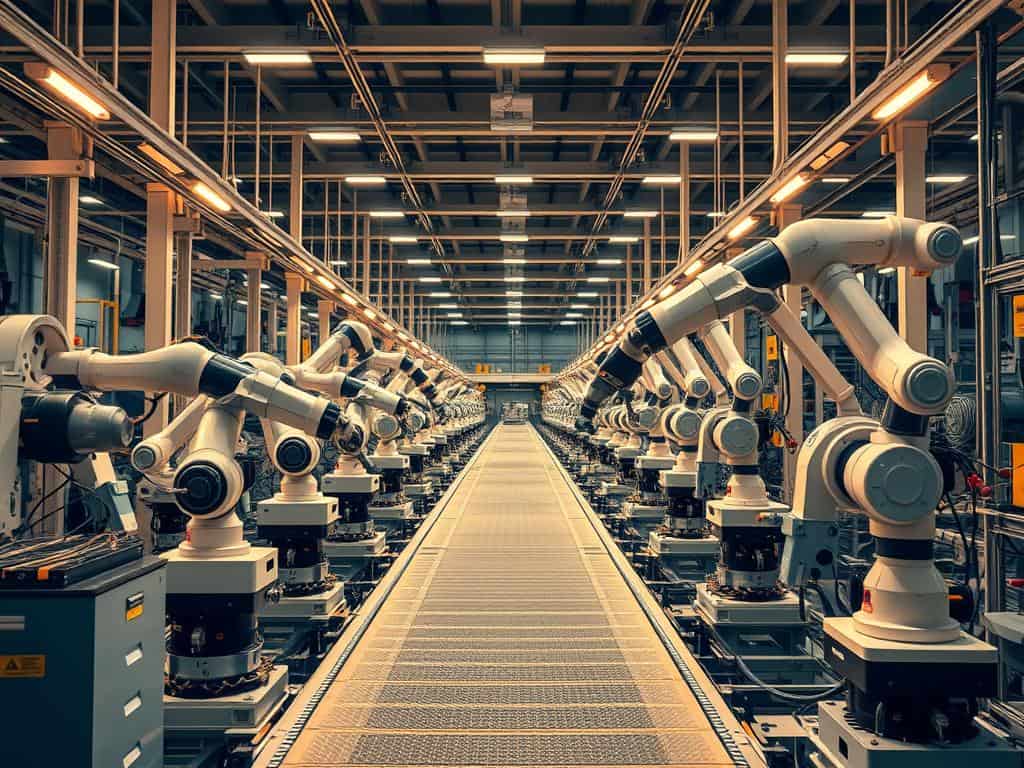
Smart manufacturing changes how we make things, thanks to automation and Industry 4.0. It makes production more connected, efficient, and flexible. This helps solve problems that old ways of making things face, like in car making.
Using smart manufacturing means more than just new tech. It’s about keeping up in a world where everyone competes globally.
Smart manufacturing brings big benefits, like better work flow and less time stopped. It’s key for the future of making things. Working with groups like the Manufacturing Extension Partnership helps a lot. They offer help to big and small makers alike.
Cloud and edge tech are making industrial automation better. This shows a move towards working together more in making things. I know there are challenges, like learning new skills and linking systems. But the benefits are worth it, making smart manufacturing key for Industry 4.0 success.
