
Did you know leatherworking can be a profitable hobby? Many turn their skills into a business. This craft mixes art with usefulness, making it fun to create unique items.
From wallets to belts, making your own leather goods is rewarding. There are many leather types and tools available. I think anyone can start, even if they know nothing about it.
Exploring leatherworking, I aim to show you fun and beautiful beginner projects. These crafts are enjoyable to make and look great.
Key Takeaways
- Leatherworking is a blend of artistry and practicality.
- You can create unique handmade items, making it satisfying and rewarding.
- Many DIY leather projects are accessible for beginners and can be completed in a day.
- Essential tools for leatherworking are often minimal, making it budget-friendly.
- Leatherworking can be turned into a source of income for passionate crafters.
Introduction to Leatherworking
Leatherworking is a skill that lets people make useful and beautiful items. It involves sewing, stamping, and dyeing leather. This way, I can make everything from simple wallets to detailed bags.
The best part is its flexibility. I can try many projects, each with its own level of challenge and interest.
What is Leatherworking?
Leatherworking is about shaping leather into various products. With simple tools and techniques, I can make items that are both useful and creative. The projects can be easy or complex, depending on my skill level.
Benefits of Leatherworking
Leather crafting has many advantages. It’s affordable, making it easy for many to start. Learning basic skills opens up a world of projects, blending function and art.
Starting with simple projects, like a card wallet, can be done in hours. More detailed pieces might take weeks. This flexibility lets me choose how much time to spend on each project.
Understanding different leathers is key. Veg tan leather is thicker and lasts longer but takes longer to make. Chrome tan leather is faster and cheaper. Knowing this helps me make better projects, showing the benefits of leather crafts.
As I get better, I’ll learn techniques like saddle stitching. This makes my pieces last longer and work better.
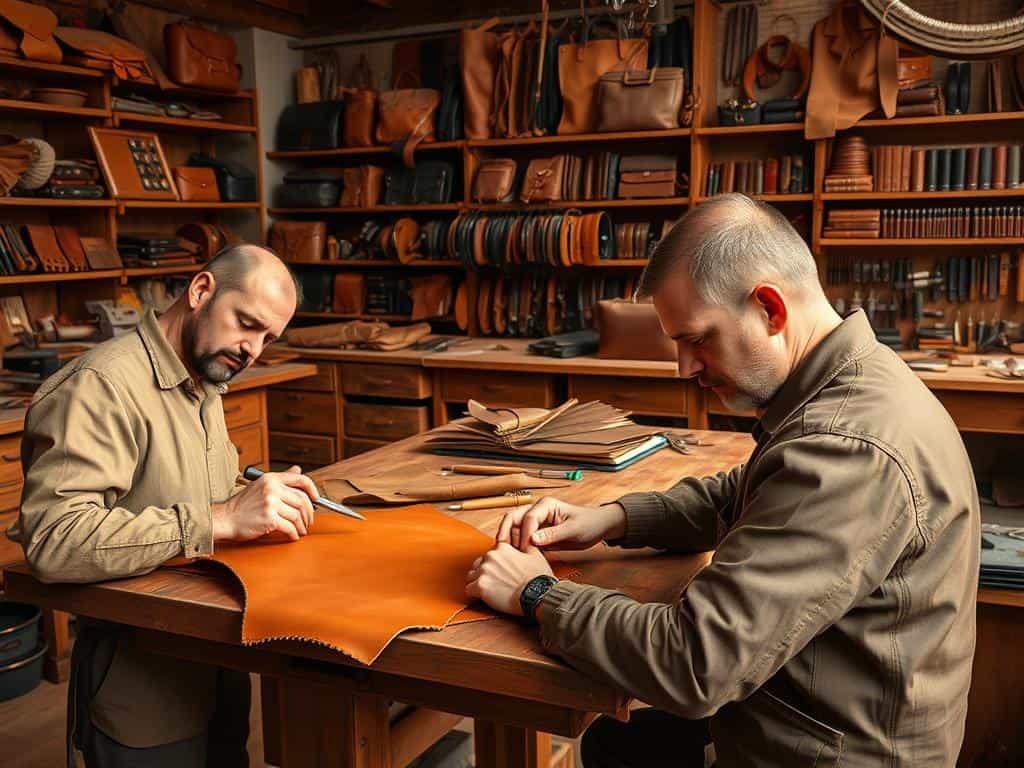
Getting Started with Leatherworking
When I started leatherworking, learning about materials and tools was key. I found out that different leathers change my projects a lot. Choosing the right tools helped me make better designs. Every project I picked taught me something new as a beginner.
Types of Leather
My first step was to learn about the various leathers. I found that vegetable-tanned leather is great for dyeing and tooling. It has a natural look that many artists love. On the other hand, chrome-tanned leather is cheaper but not as durable.
This knowledge helped me pick the right leather for my beginner projects.
Essential Tools for Beginners
Getting the right tools was important for me. A rotary cutter makes cuts easy, and a self-healing mat protects my work. Diamond chisels help make stitch holes, making my leather goods last longer.
Basic tools like stitching needles, a plastic mallet, and an edge burnisher are also essential. They let me make high-quality leather items.
Choosing the Right Projects
I started with simple projects like making wallets. This let me practice without feeling too stressed. Each project taught me new skills, from cutting to finishing.
Conclusion
Leatherworking is a great way to show your creativity and learn new skills. I’ve learned that knowing about different leathers, like veg-tan, is key. This knowledge helps me pick the right materials for my projects.
Having the right tools, like knives and thread, makes my work area better for creating. These tools help me make unique, useful items that show off my style. Places like Tandy Leather Factory teach me how to work safely and effectively.
As I keep learning about leatherworking, I’m excited for new techniques and designs. This craft makes me happy, both when I’m making something and when I see the finished product. Every project helps me appreciate the skill and tradition behind leatherworking.
