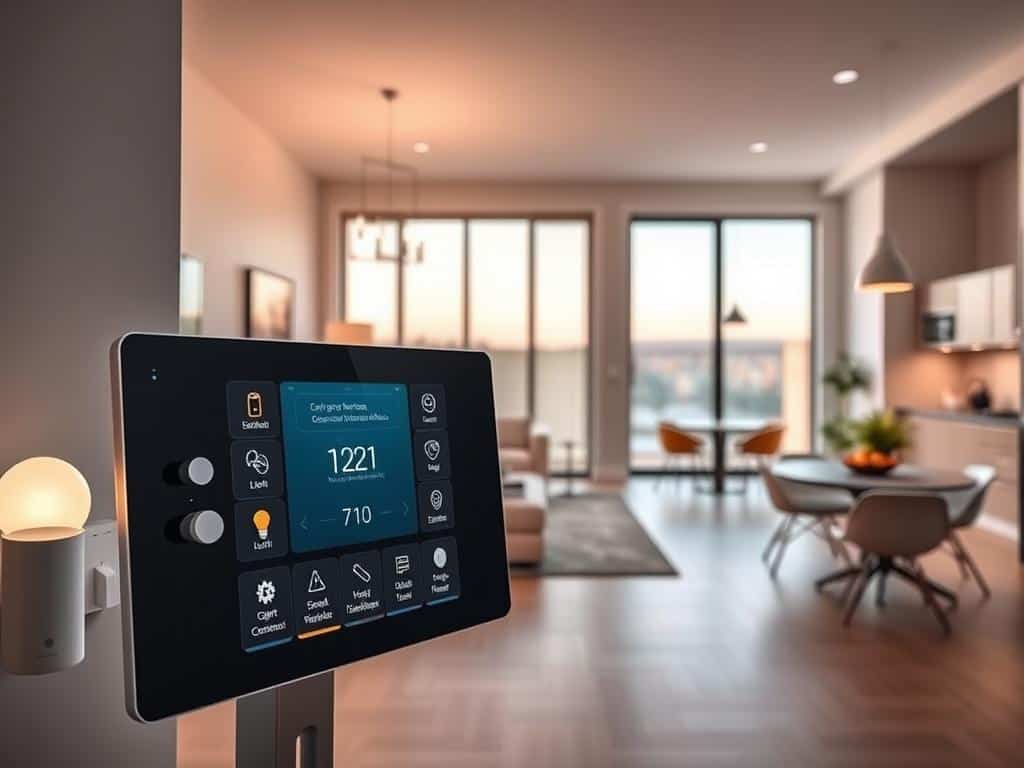
Did you know that by 2025, 48% of homes will use smart home technology? The market is growing fast, from $80 billion in 2022 to $135 billion. I was excited to turn my home into a smart one.
Choosing devices was overwhelming at first. I looked at Google Home, Amazon Alexa, and Apple HomeKit. Amazon Alexa has many compatible products, making it a top choice for many, including me. Matter, supported by big names, promises easy connections between devices.
Creating my dream smart home didn’t need a big change all at once. I started with small steps, adding IoT devices one by one. This made my life easier. Good Wi-Fi was key to making everything work smoothly.
Key Takeaways
- By 2025, smart home adoption is expected to reach 48% of households.
- The global smart home market is projected to grow to $135 billion.
- Amazon Alexa offers the widest range of compatible smart home products.
- Gradual integration of smart devices leads to a more manageable setup.
- Reliable Wi-Fi is essential for effective smart home automation.
- Matter standard aims for interoperability among various smart home devices.
Assessing Your Smart Home Needs
Figuring out what you need for a smart home is key to making your life better with tech. Start by looking at what you really need and want. Then, focus on the most important areas like security, ease of use, and saving energy.
Identify Priorities for Integration
Look at your home and see what needs to be automated. Maybe it’s time to update your security or make your home more energy-efficient. Picking the right areas to automate first will make a big difference.
Understanding Daily Routines and Pain Points
Think about your daily activities and what’s not working well. Identifying these issues can help you see how smart home tech can make things better. For example, bad lighting in the evenings was a big problem for me. Fixing this with automation made my evenings much better.
Setting Clear Goals for Smart Home Technology
Now that you know what’s important, set goals for your smart home. Focus on key devices like smart lights or thermostats. This plan helps solve current problems and prepares you for more tech in the future.
Exploring Smart Home Devices
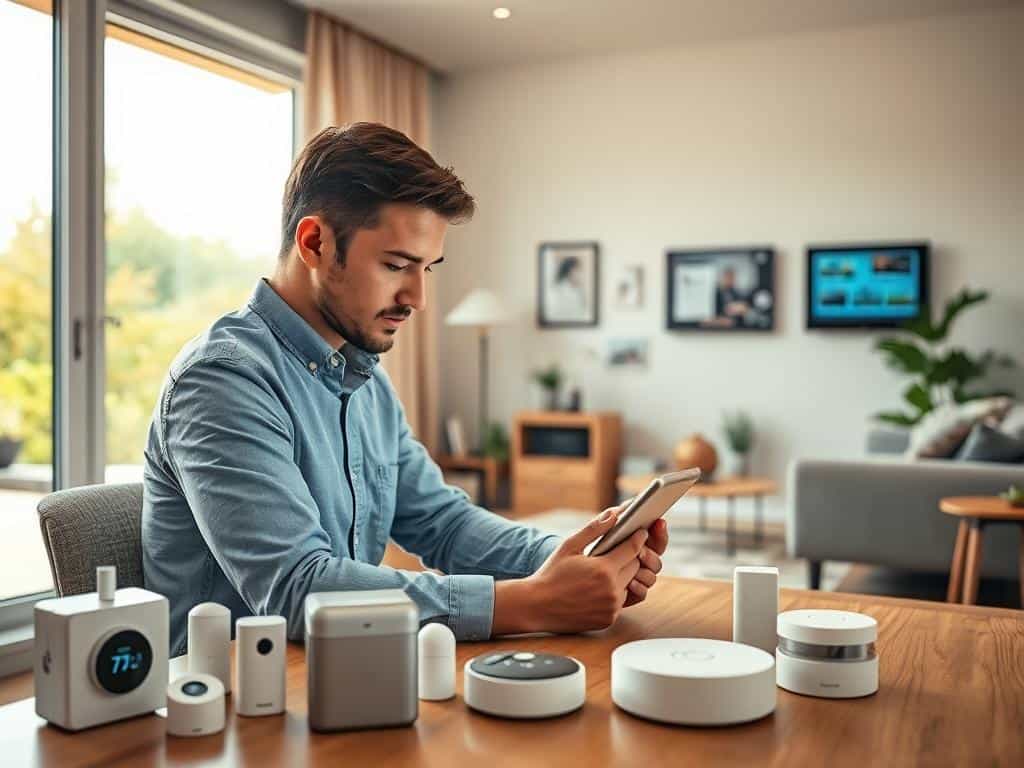
Exploring smart home technology has shown me many devices that make life easier. These include smart lighting, climate control, and entertainment systems. Each one offers unique benefits that can change how we live.
Smart Lighting for Enhanced Ambiance
Smart lighting, like Philips Hue, lets me change my home’s lights easily. I can pick colors and brightness with just a tap or voice command. This not only makes my home look better but also saves energy.
With smart lighting, I can set the mood for any time of day. It’s simple and makes my home feel just right.
Smart Thermostats for Climate Control
Smart thermostats, like Google’s Nest, are key in my home. They control the temperature based on my habits. This saves up to 12% on heating and 15% on cooling.
They also let me see how much energy I use. This helps me adjust and save even more, making my home more comfortable and eco-friendly.
Smart Speakers and Entertainment Systems
Smart speakers, like Amazon Echo and Google Home, are central to my entertainment. They let me play music and podcasts with just my voice. They also manage other smart devices in my home.
These systems make entertainment easy and fun. They also improve security with features like smart doorbells and cameras. My home is now both fun and safe.
