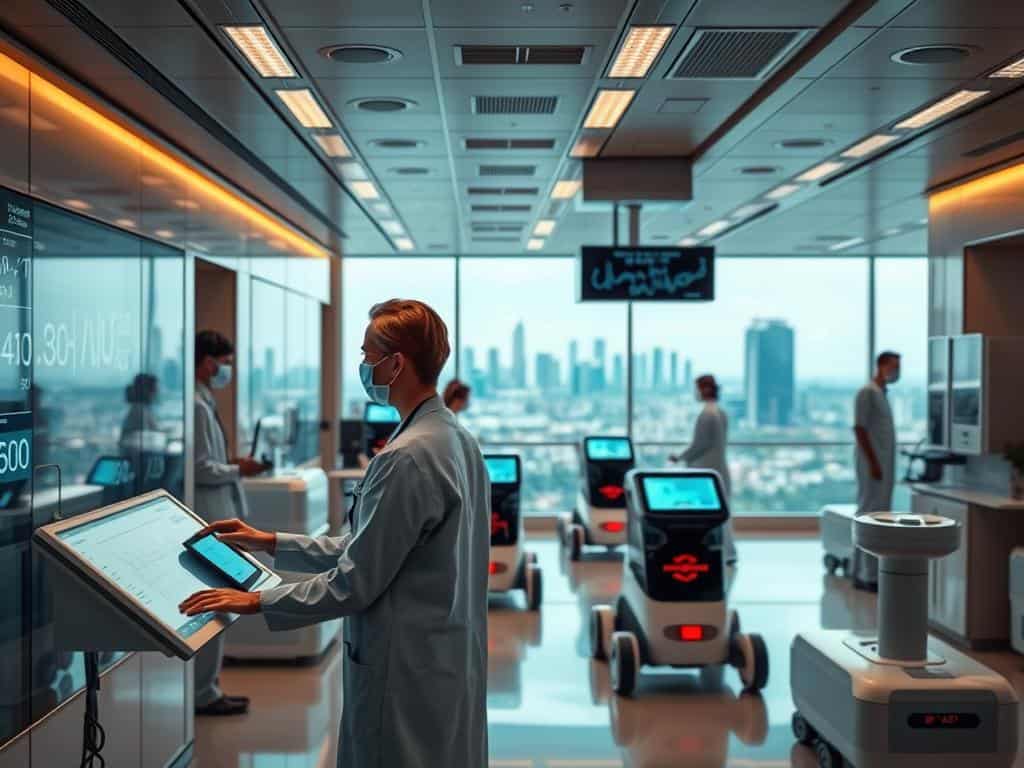
Did you know that automated eligibility verification can cut processing time from hours to seconds? This shows how automation is changing healthcare, making it more efficient. It tackles big issues like high costs, more patients, and tired staff.
Automation isn’t just about robots doing tasks. It makes things run smoother, improves care, and saves time. In this article, I’ll dive into how automation is changing healthcare for the better.
Key Takeaways
- Automation reduces processing time, making things run smoother.
- AI helps cut down on mistakes and better manages data.
- Quick claims processing means better money flow and health.
- Automation boosts patient happiness and cuts down waiting times.
- New tech will keep making healthcare better and faster.
- More leaders see how tech can help with staff shortages.
Understanding Automation in Healthcare
In today’s fast-evolving healthcare landscape, healthcare automation is key for better efficiency and accuracy. It lets medical systems work better with less human help. This means doctors and nurses can spend more time on patient care, not just paperwork.
Definition of Healthcare Automation
Healthcare automation includes many solutions to make medical processes better. It uses AI-powered tools and software to change how healthcare works. These tools help make things more accurate, cut down on boring tasks, and make workflows smoother.
Types of Automation Technologies
Many automation technologies are changing the healthcare world. Software helps with electronic health records and billing, saving time on boring tasks. Machine learning also helps by analyzing lots of medical data, making diagnoses better and improving patient care.
Robotic process automation (RPA) uses bots for tasks that need to be done a lot. This lets healthcare staff focus on more important, personal care for patients.
Benefits of Automation in Healthcare Systems
Automation in healthcare brings big wins for everyone involved. It makes operations smoother and improves how services are delivered.
Increased Efficiency and Productivity
Automation boosts efficiency and productivity a lot. It automates tasks like billing and scheduling, freeing up staff to focus on patient care. This leads to better care and outcomes.
It also cuts down on costs. Healthcare can save a lot on admin expenses, which are a big chunk of costs.
Improved Data Management
Automation helps manage data better. It fixes issues with data silos and manual errors. This is a big deal for healthcare, where over 50% of issues come from these problems.
It makes data more accurate and reliable. This helps doctors make better decisions, improving care overall.
Enhanced Patient Satisfaction
Automation also makes patients happier. It brings in automated reminders and online tools for better communication. About 80% of patients prefer digital services over in-person visits.
It lets patients get quick answers and schedule appointments online. This makes their healthcare experience better and more satisfying.
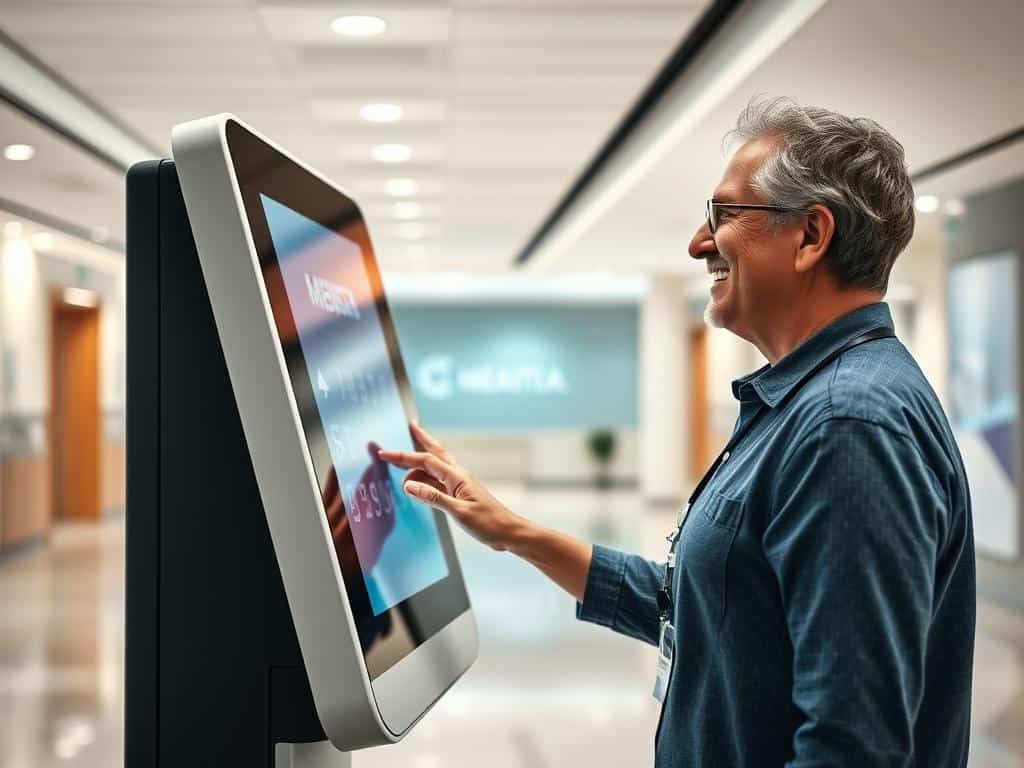
Digital Transformation in Healthcare
The healthcare world is changing fast, thanks to AI. These changes make things run smoother and help patients get better care. AI is changing how we work, talk to patients, and give care.
Impact of AI on Healthcare Automation
AI has changed healthcare for the better. It looks at lots of data to find better treatments. This makes things faster and more accurate.
It also makes patients happier and saves money. With 92 percent of Americans wanting easy access to their medical records, managing data well is key. This makes patients more involved and happy.
Market Growth and Projections
The healthcare automation market is growing fast. It was worth about $35.2 billion in 2022 and could hit nearly $90.88 billion by 2032. This shows how much we rely on AI and automation.
Healthcare spending hit $4.5 trillion in 2022. With AI, we could save $200 billion to $360 billion. This shows why investing in healthcare tech is so important.
Conclusion
The healthcare world is changing fast, thanks to new tech like healthcare automation and AI. This change is not just a trend; it’s a must for top-notch care. EHRs, telemedicine, and wearables are making healthcare better and more accessible.
Looking ahead, these new tools will make care more personal and efficient. Automation will free up doctors to focus on what matters most: caring for patients. This will lead to better health results and happier patients.
But, the path to a fully digital healthcare system is tough. We must keep patient data safe and make sure care stays human. By using tech wisely, we can make healthcare better for everyone involved.
