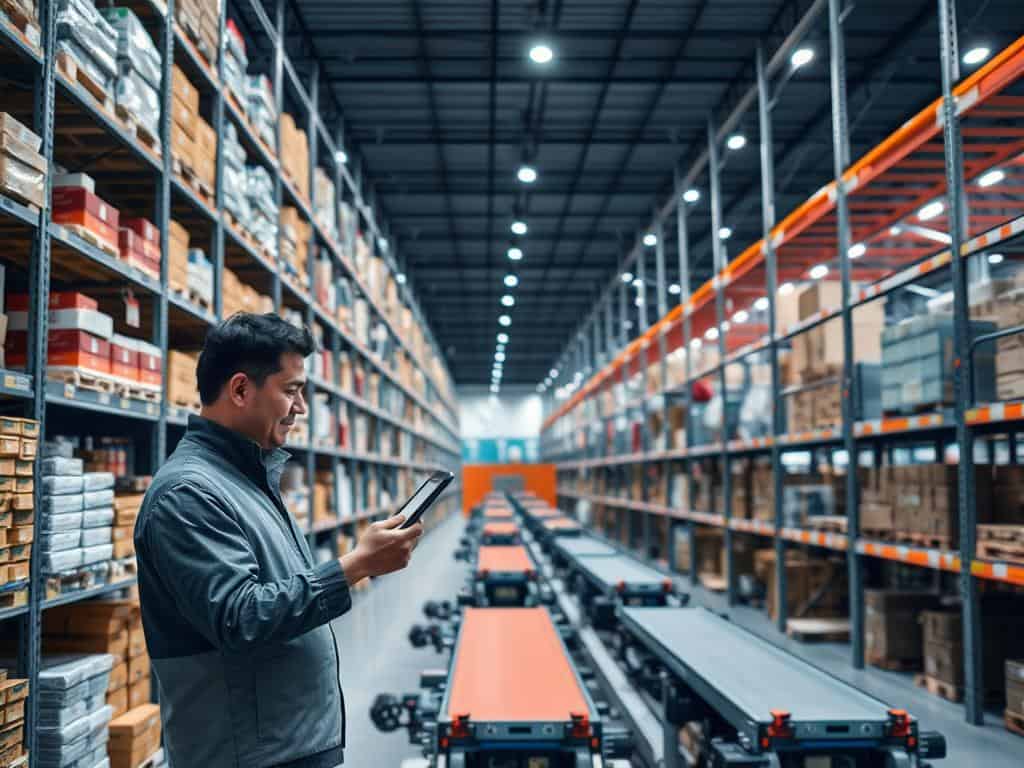
By 2025, 80% of retail leaders plan to use smart automation. This shows how big the change is in the retail world. Already, 40% of them are using some form of smart automation.
This change is happening fast. Companies want to work better and make customers happier. As people want shopping that feels personal, those using AI will do well.
Using retail technology is not just a trend. It’s changing how businesses talk to customers and run things. It’s something retailers must do to stay ahead.

Key Takeaways
- By 2025, 80% of retail executives anticipate using intelligent automation technologies.
- Currently, 40% of retail executives utilize some form of intelligent automation.
- AI and automation will enable targeted assortments in global multichannel fashion retail.
- Retailers harnessing AI technology tend to outperform those who do not.
- AI in inventory management improves customer satisfaction while minimizing waste.
- AI enhances personalization, leading to better customer experiences and increased loyalty.
The Evolution of Retail Technology
Retail technology has changed a lot in the last 20 years. Now, more stores use online channels and tech to meet customer needs. E-commerce is growing fast, making up about 13% of all sales. It’s expected to grow even more.
This change means retailers must focus on giving customers a seamless shopping experience. They need to offer a mix of online and in-store options to please everyone.
From Traditional Retail to Digital Transformation
Years ago, most shopping was done in stores. But now, thanks to digital transformation, things have changed a lot. Brands that adapt well have an edge over others.
Using tech like data analytics, machine learning, and AI is key. These tools help tailor shopping experiences. AI in retail is growing fast, with big plans for the future.
Current State of Retail Innovation
Innovation is driving retail growth today, thanks to AI. For example, generative AI could make a huge difference for fashion and luxury brands. It could boost profits by $150 billion to $275 billion in just a few years.
This tech lets brands connect with customers in meaningful ways. Many shoppers like getting personalized messages, like special offers. There’s a big demand for smarter chatbots and tech that predicts what customers might like.
Using these advanced technologies improves how stores work and makes customers happier. Retailers that engage with customers in many ways see big benefits. Those using three or more channels see a huge jump in sales.
In this important time, it’s key for retailers to listen to what customers want. Investing in the right technology is essential for success.
AI in Retail: Streamlining Operations and Enhancing Customer Experience
AI is changing the retail world, making inventory management and checkout processes better. Retailers use AI to analyze data and improve efficiency. This leads to better decisions and a more personalized shopping experience.
Optimizing Inventory Management
AI is key for managing inventory in retail. It uses predictive analytics and real-time tracking. This helps retailers keep the right amount of stock, avoiding shortages or too much stock.
Microsoft Fabric Retail Data Solutions helps manage large amounts of data. This makes it easier to keep track of inventory levels. Brands like Lush have seen cost savings and better customer service with AI.
Transforming Checkout Processes
AI also makes checkout faster and better for customers. Automated systems and self-checkout options are now common. They reduce waiting times and improve service during busy times.
Microsoft Copilot Studio makes integrating retail applications easy. This streamlines operations, making transactions smooth and efficient. Happy customers mean higher satisfaction ratings and loyalty.
Practical Strategies for Implementing AI and Automation
In today’s fast-paced retail world, creating a good automation strategy is key for businesses to stay ahead. Finding the right AI solutions is the first step to using these technologies well. Retailers need to match AI tools with their goals to get the most value and efficiency.
Identifying the Right AI Solutions
When thinking about implementing AI, it’s important to know what your business needs. Things like what you want to achieve, what your customers expect, and your budget are all important. Solutions like AI chatbots can help with lots of customer questions, freeing up people for more important tasks.
This change not only makes things more efficient but also makes customers happier.
Building a Complete Automation Strategy
A full automation strategy means working together with teams from IT, finance, and operations. This ensures AI technologies work smoothly together. It’s also important to keep data quality high and train employees well to accept new tools.
Regularly checking how well AI is working and looking at things like Mean Time to Resolution (MTTR) helps find ways to get better. By doing this, businesses can save money and improve how they serve customers.
Conclusion
AI is changing retail in big ways, making businesses work differently and connect with customers in new ways. Looking back, we see how important AI has become for today’s shoppers. Retailers must use these technologies well to improve shopping and work better.
Walmart and Sephora are great examples of AI in action. They use AI for better supply chains and to suggest products that customers will like. By using these tools, retailers can grow a lot. The AI market in retail is expected to hit $15.3 billion by 2025, growing fast.
AI keeps getting better, helping businesses and making shopping better for everyone. To succeed, retailers need to keep using AI and make shopping more personal and efficient. With technology and a focus on people, the future of retail looks bright and focused on the customer.
