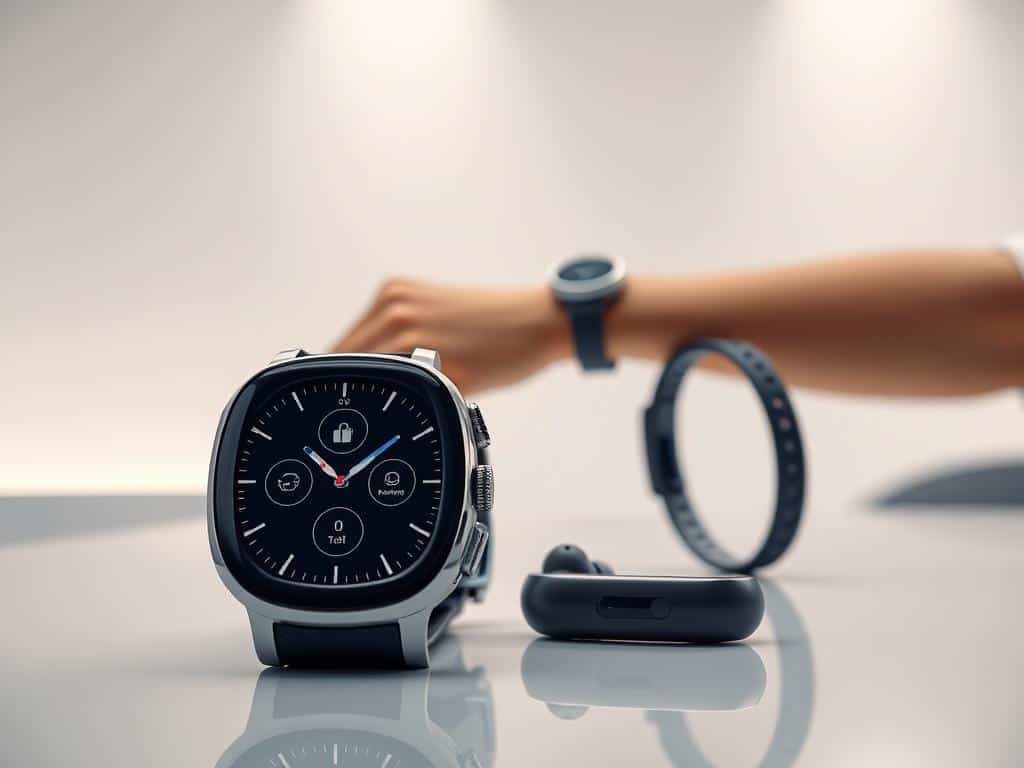
Did you know over 50% of people in the U.S. own a wearable device as of 2023? This shows how smart wearables have become a big part of our lives. They’ve changed from simple fitness trackers to advanced health tech tools. These devices keep an eye on our health and give us important info in real-time.
The COVID-19 pandemic has made these devices even more important. They help track heart rate, activity, and oxygen levels. This is key for spotting symptoms and understanding long-term effects of illnesses like COVID-19. As they get better, they’re making health care more personal and proactive, changing how we take care of ourselves.
Key Takeaways
- Wearable technology in health is growing, with a market projected to hit $61.4 billion by 2025.
- Real-time monitoring from wearables can reduce hospital readmission rates by 20% for chronic disease patients.
- Integration with telemedicine has increased remote consultations by 50% in 2020.
- Wearables can enhance patient engagement by up to 80%, leading to better health outcomes.
- 70% of healthcare providers see the future of wearables in patient monitoring.
The Evolution and Impact of Smart Wearables
The history of wearable technology is truly fascinating. It started in the 1960s with the first wearable computer. The Casio calculator wristwatch was a big step, combining usefulness with new ideas. By 2014, smartwatches and fitness trackers became a big hit, changing how we live.
Today, smart wearables are everywhere. By 2022, over 1.1 billion devices were in use worldwide. About 21% of adults now own a smartwatch. This shows how much people rely on these gadgets every day.
Health-focused wearables are also popular. Around 30% of adult Americans use them for health reasons. This shows a big interest in health innovation, with 80% of users wanting to share their data with doctors.
The future looks bright for smart wearables. The market is expected to grow fast, reaching USD 528.7 billion by 2036. A big 57% of people plan to buy smart wearables soon. This shows how much people want to track their health.
Smart Wearables: Integration of Automation in Health Tech
Smart wearables have changed how we manage our health. They let us track important health metrics in real-time. Features like heart rate tracking and sleep quality assessments are making health data more accessible.
Real-Time Health Monitoring Features
Smart wearables give us instant health insights. They collect data continuously, helping us manage our wellness. The global market for these devices is expected to hit $70 billion by 2028.
Medical-grade wearables get U.S. FDA clearance. This shows they’re reliable for making health decisions. It also shows how much people value accurate health data.
The Role of Wearable IoT Devices in Telemedicine
Wearable IoT devices are key to telemedicine’s growth. They help monitor health remotely and offer personalized care. This reduces the need for in-person visits.
Remote monitoring boosts patient involvement in their care. It lowers readmission rates for chronic conditions. As tech improves, healthcare and patients work together more closely, thanks to personal health data.
Conclusion
The wearable technology market has grown a lot, reaching $70 billion in 2020. This shows how smart wearables are changing how we manage our health. They are making it easier to keep track of our health through automation.
These devices are getting better at tracking our health. They can now monitor things like heart rate and blood pressure. This is making a big difference in how we understand our health.
Looking ahead, smart wearables will keep getting better. They will be able to sense more things and give us more accurate data. Even though there are challenges, like getting approval and keeping users interested, these devices are becoming essential for our health.
These innovations are exciting because they let us take better care of ourselves. They make it easier to stay healthy and active.
As technology and health merge, smart wearables will play a big role. They will help us manage our health better. This is not just a trend; it’s a new way of taking care of ourselves.
It’s important to understand how these devices work. This way, we can use them to their fullest. They are changing how we see technology and health.
