
Did you know the global market for healthcare automation is expected to hit $40 billion by 2026? It’s growing at 10.5% each year. Despite this, healthcare has been slow to adopt new tech compared to other fields. But, I’ve seen how vital automation is for better care and efficiency.
The COVID-19 pandemic showed us the need for faster, more efficient healthcare. Automation, like AI in diagnosis, is changing how we get medical help. It lets doctors spend more time on care, not just paperwork.
As medical tech grows, so does its impact on safety and efficiency. Automation cuts down on paperwork, letting doctors focus on care. This shift is making healthcare better and more patient-focused.
The time for healthcare automation is now. Let’s explore its many uses and benefits.
Key Takeaways
- The healthcare sector is gradually adopting automation, moving towards a more efficient service model.
- Automation can lead to a significant reduction in administrative costs, improving financial sustainability.
- AI and machine learning tools enhance accuracy in diagnosis and reduce human error.
- Automated systems can improve patient engagement and satisfaction significantly.
- Efficient data management and secure access enhance patient safety and operational effectiveness.
- Implementation of chatbots can address routine patient inquiries, freeing up staff for complex tasks.
- Automation fosters remote patient care viability, making healthcare more accessible.
The Role of Automation in Healthcare
Automation is changing healthcare for the better. It tackles big challenges and makes things more efficient. This leads to better care for patients and smoother workflows.
Streamlining Administrative Tasks
Automation cuts down on paperwork for healthcare workers. A big problem is burnout from too much paperwork. Systems like electronic health records (EHR) help with this.
44% of EHR time is spent on paperwork. This shows we need better solutions. Automation helps with scheduling, billing, and more. This lets staff focus on what matters most: patient care.
Enhancing Patient Care and Safety
Keeping patients safe is key in healthcare. Barcode systems are used in 98.7% of US hospitals to prevent errors. Automation helps catch mistakes early, ensuring patients get the best care.
This technology makes healthcare safer. It also helps healthcare providers stay focused on their work.
Optimizing Resource Usage
AI in healthcare makes the most of resources. It improves data sharing and automates tasks. This saves money and frees up resources for more important things.
Adapting to these changes is vital. The World Health Organization predicts a shortage of 14.5 million healthcare workers by 2030. Better operations can help meet this challenge and improve patient care.
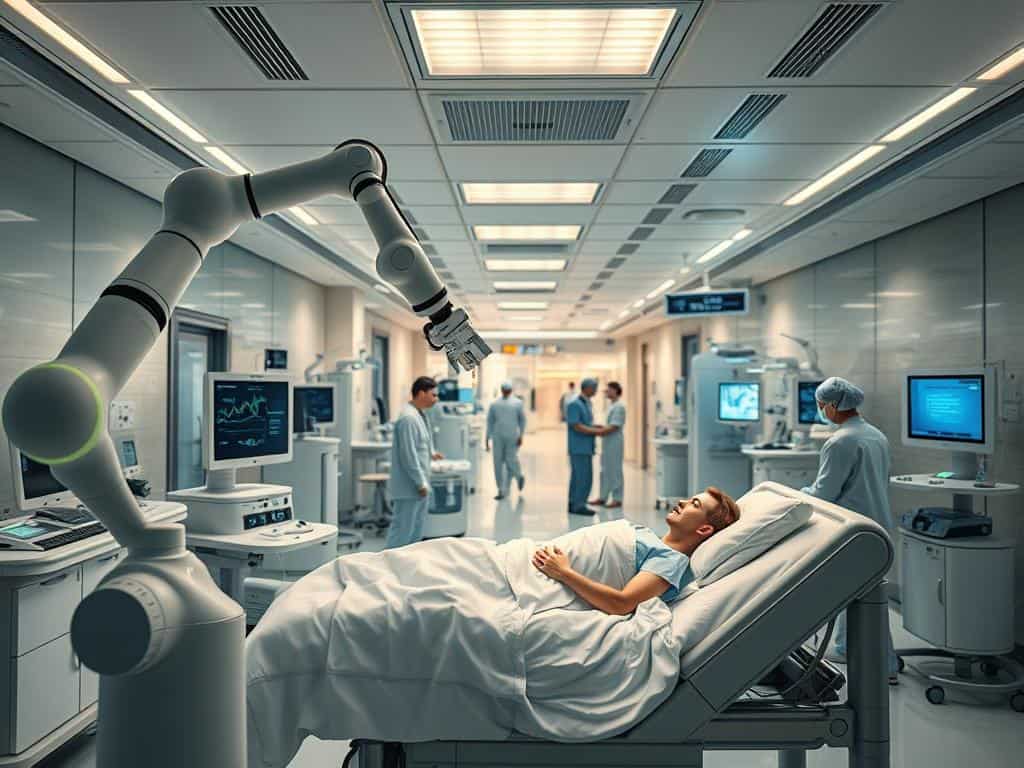
Types and Benefits of Automation in Healthcare
The healthcare world is changing fast, thanks to automation. This technology makes things more efficient and helps patients get better care. It’s key for improving how we work and care for patients today.
Automated Monitoring Systems
These systems use sensors and cameras to watch over patients. They’re great for keeping an eye on those at high risk, like after surgery. They quickly alert doctors to any problems, making care safer.
Robotic Surgery and Precision Medicine
Robotic surgery makes operations more precise and less invasive. This means patients recover faster and face fewer risks. It’s a big step towards treating each patient as an individual.
AI-Enhanced Diagnostics
Artificial intelligence is changing how we diagnose diseases. AI tools look at medical data to spot things humans might miss. This leads to more accurate diagnoses and better care for everyone.
Improved Data Management
Electronic health records (EHRs) make sharing patient info easier. This helps doctors work together better, cutting down on delays. It also makes sure everyone has the right info at the right time, reducing risks.
